


This rice recipe—known as Persian Rice—is one of the most essential elements of Iranian cuisine. Rice is an inseparable part of the Iranian diet; without rice, many stews and kababs lose their meaning.
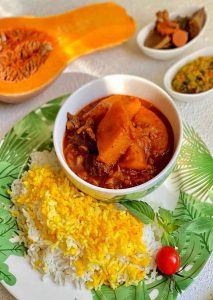
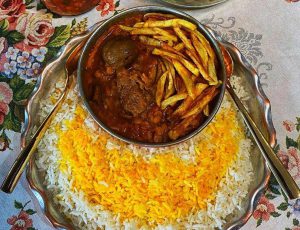
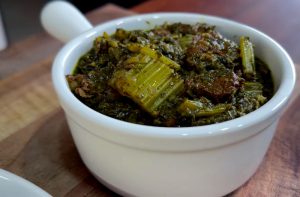
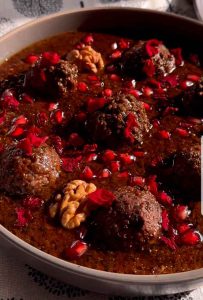
Rice or chelow is served alongside dishes such as Ghormeh Sabzi, Gheimeh, Fesenjan, and also as Chelow with kebabs. Mixed rice, such as Loobia Polo and Adas Polo is also made using Persian-style rice.
Prep time: 2–3 hours (including soaking)
Cook time: 1 hour
Serves: 4
What is Tahdig?

Tahdig, pronounced (Tah-deeg), literally means “bottom of the pot.” It is the golden, crispy layer that forms at the bottom of the pot and is considered the most delicious part of the meal. This crispy layer can be made with saffron rice, potato slices, lavash bread, or a mixture of yogurt, rice, and saffron. It is beloved by Iranians and fans of Persian cuisine.
Essential Equipment
To achieve perfect tahdig and fluffy rice, proper equipment is essential:
-
Non-stick pot: This is the most important item. A non-stick pot gives the best result for a golden, crispy tahdig and prevents rice from sticking. Thick pots with very heavy lids (like Dutch ovens) are not ideal because they trap too much moisture and cause the rice to become sticky and the tahdig to soften.
-
Damkesh (cloth-wrapped lid): A kitchen towel or traditional damkesh wrapped around the pot lid absorbs condensation during steaming, preventing water from dripping back onto the rice.
How to Bloom Saffron?

Saffron is key to the aroma, flavor, and golden color of Persian rice. To get the most out of this precious spice, it must be bloomed correctly:
-
Grinding: Grind the saffron threads into a coarse powder using a mortar and pestle.
-
Blooming: Place the powdered saffron in a small bowl and add a few tablespoons of hot water.
-
Resting: Allow it to sit for at least 10 minutes so it fully releases its color and aroma.
Ingredient:
| Ingredient | Amount |
|---|---|
| Basmati Rice | 2 cups |
| Salt | 2 tsp (for soaking) + 3 tbsp (for boiling water) |
| Bloomed saffron | 2 tsp |
| Oil (or oil + butter mix) | 2–3 tbsp |
| Water | As needed |
According to Serious Eats, “Long-grain basmati rice becomes light, fluffy, and separate when cooked properly, which makes it ideal for Persian-style steamed rice.”
How to make Persian rice for beginners: Step-by-Step Instructions
Parboiling the Rice
-
Rinsing and soaking: First, clean the rice, place it in a bowl, and rinse until most of the starch is removed and the water becomes nearly clear. Add 1 tsp salt and soak for about 2 hours.
-
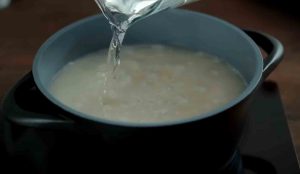
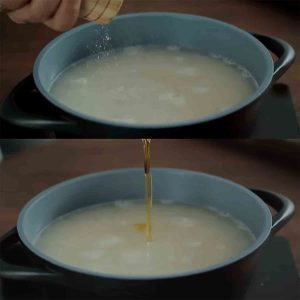
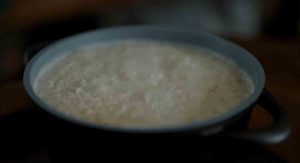
Boiling water: Choose a suitable pot (for 2 cups of rice, a 3-liter pot is ideal). Fill it halfway with water and bring it to a boil. Add 3 tablespoons of salt; the water must taste salty so the rice absorbs flavor.
-
Adding rice: Gently add the soaked rice and stir with a slotted spoon to keep the grains separate.
-
Testing doneness (Al Dente): Boil for 7–10 minutes. Take a grain and press it—it should be soft on the outside and slightly firm at the center.
-
Draining: Strain the rice immediately and rinse briefly with cold water to stop the cooking.



Preparing Tahdig and Steaming

-
Drying the pot and heating oil: Dry the pot completely and heat the oil or oil-butter mix.
-
Making the tahdig:
-
Potato or Lavash: Place potato slices or lavash bread at the bottom of the pot.
-
Yogurt & Saffron Tahdig: Mix 1 cup of parboiled rice with yogurt, oil, and saffron, then spread it as the first layer.
-
-
Adding the rice: Gently mound the rice into a pyramid shape.
-
Creating vents: Use the handle of the spoon to create holes for steam circulation.
-
Steaming: Wrap the lid in a Damkesh and steam for 40–60 minutes over low heat.
-
Serving: Gently mound the rice onto a platter. For the tahdig, invert the pot onto a dish so the golden crust remains intact.
Tips for making golden crispy Tahdig
-
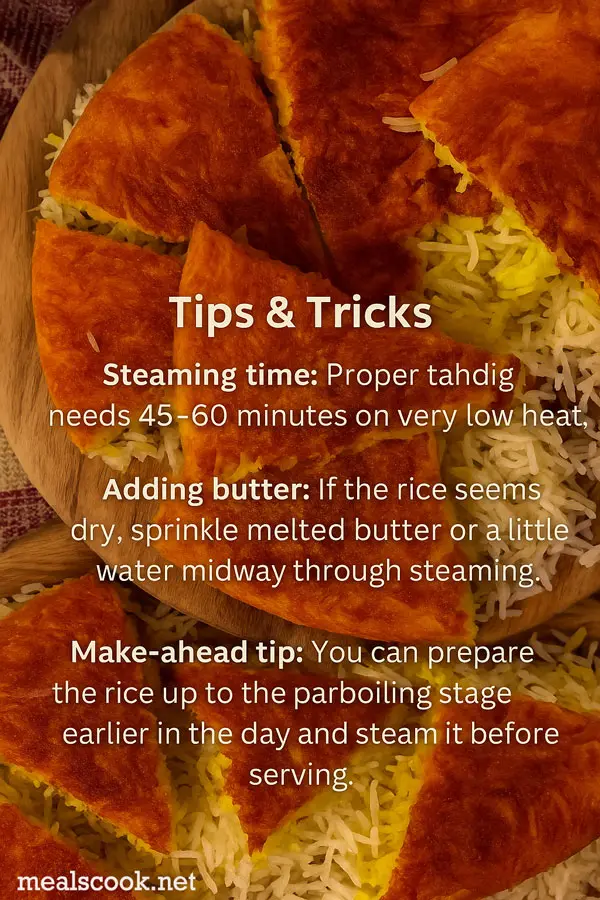
Steaming time: Proper tahdig needs 45–60 minutes on very low heat.
-
Adding butter: If the rice seems dry, sprinkle melted butter or a little water midway through steaming.
-
Make-ahead tip: You can prepare the rice up to the parboiling stage earlier in the day and steam it before serving.

FAQ
1: What is Persian rice called?
The plain steamed version is called Chelow; mixed rice dishes with additional ingredients are called Polo.
2: What kind of rice do Persians eat?
Usually, long-grain Basmati rice remains separate and fluffy after steaming.
3: What makes Persian rice different?
It is cooked in two stages: parboiling, then long steaming, which creates separated grains and a crispy tahdig.
4: Can I use a rice cooker for tahdig?
Most rice cookers prevent browning and will not create authentic tahdig.
5: What is tahdig served with?
It is served with Iranian stews (Ghormeh Sabzi, Gheimeh), kebabs, or meat dishes.




My question is, draining rice better or cooked rice? Which method does not lose the properties of ricr
Tnx
Hi dear Niam, The best way to cook rice is to cooked it, and this method does not lose the minerals and nutrients of rice.