
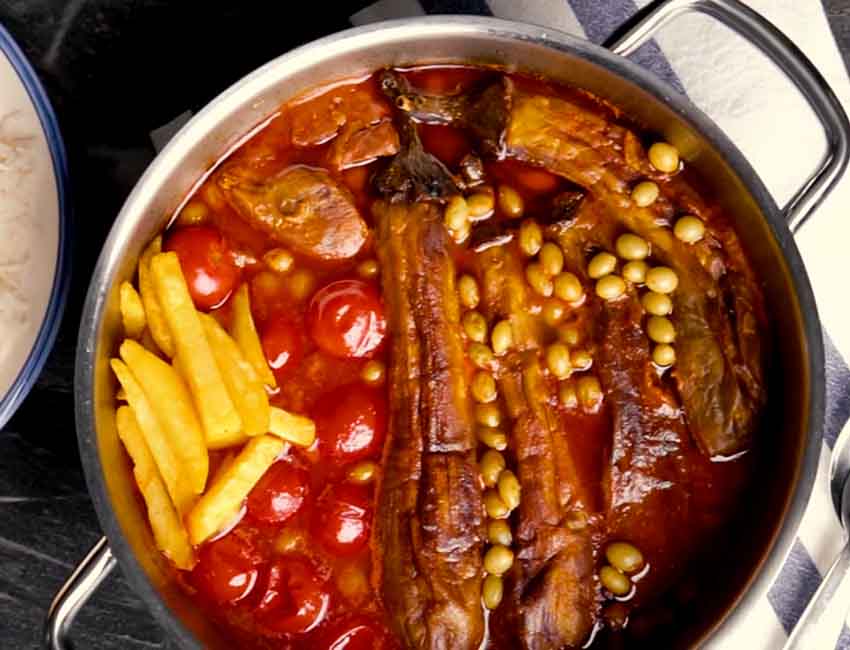
I always associate Khoresht Bademjan (Persian Eggplant Stew) with cherished childhood memories, warm family gatherings, and comforting food. I vividly remember my mother cooking this stew in the kitchen, as the mild, mouthwatering aroma of fried eggplants filled the entire house.
The heavenly combination of pan-fried eggplant and tomatoes is delicious on its own, but when simmered with tender meat and a rich tomato sauce, it becomes truly irresistible.
When the eggplants cook down in the savory sauce, they give this dish a rich, appetizing color and a velvety texture. Served over fragrant Persian steamed rice topped with saffron, this dish is a quintessential Iranian classic.
What is Khoresh Bademjan?
Khoresh bademjoon, or khoresh-e bademjan, is one of the famous Iranian stews. Iranian eggplant stew is made from eggplant, meat, tomatoes, tomato paste, and spices, along with Persian rice or Persian polo.
Khoresht e bademjan is one of the authentic Iranian stews that satisfies lovers of oily and thick foods well, and also because of the eggplant.
It has a unique taste with a different aroma and smell compared to other stews, but it is made similarly to khoresh gheymeh. This food is also cooked with mutton, veal, chicken, and turkey.
Preparing a delicious eggplant stew is very easy and does not require advanced cooking skills, but because this stew relies on gentle reduction to become thick, it needs to be cooked over gentle heat for a long time to develop properly.
Soup jo with chicken is usually served before this dish for better digestion.
Imagine one day that you have guests and you want to prepare a dish that does not take much time to prep, while allowing you to adjust the ingredients to your taste.
Yes, this dish is Persian eggplant stew, which fills the house with its pleasant aroma.
As the name of this stew suggests, eggplant is the main ingredient. Eggplant is one of the most important ingredients in Persian stews and dishes such as khoresh gheymeh, Kashk-e bademjan (Persian eggplant dip), Mirza Ghassemi, Dolmeh bademjan, and eggplant lasagna.
This dish is very similar to khoresh gheymeh, with the difference that yellow split peas are used in khoresh gheymeh, but split peas are not used in traditional khoresht bademjoon.
Of course, in many homes, khoresh gheymeh is also made with yellow split peas, while Yatimcheh is another similar eggplant dish.
For: 4 people
Preparation: 20 minutes
Cook for: 2 hours
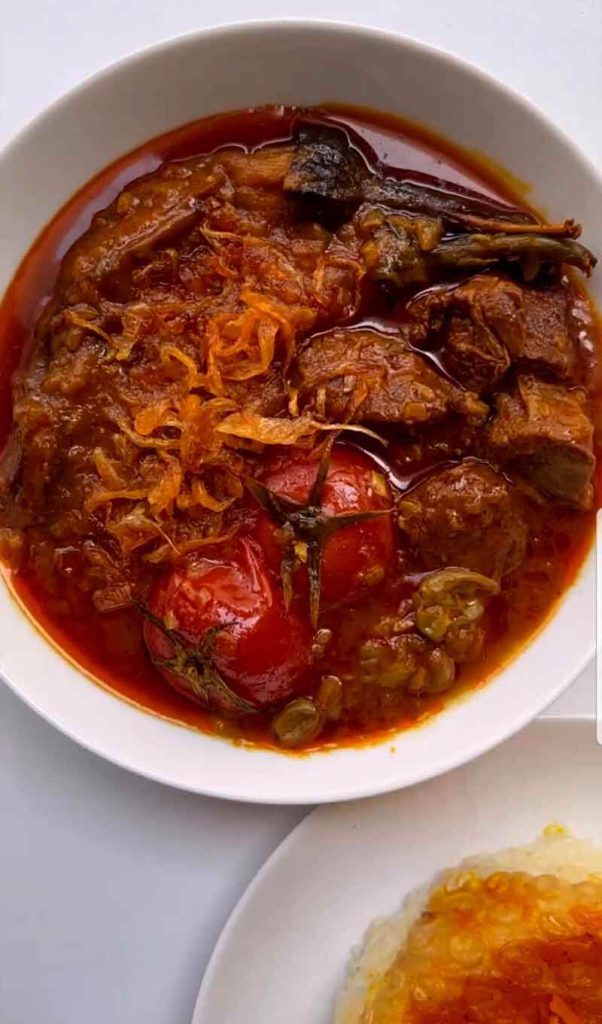
Ingredients:
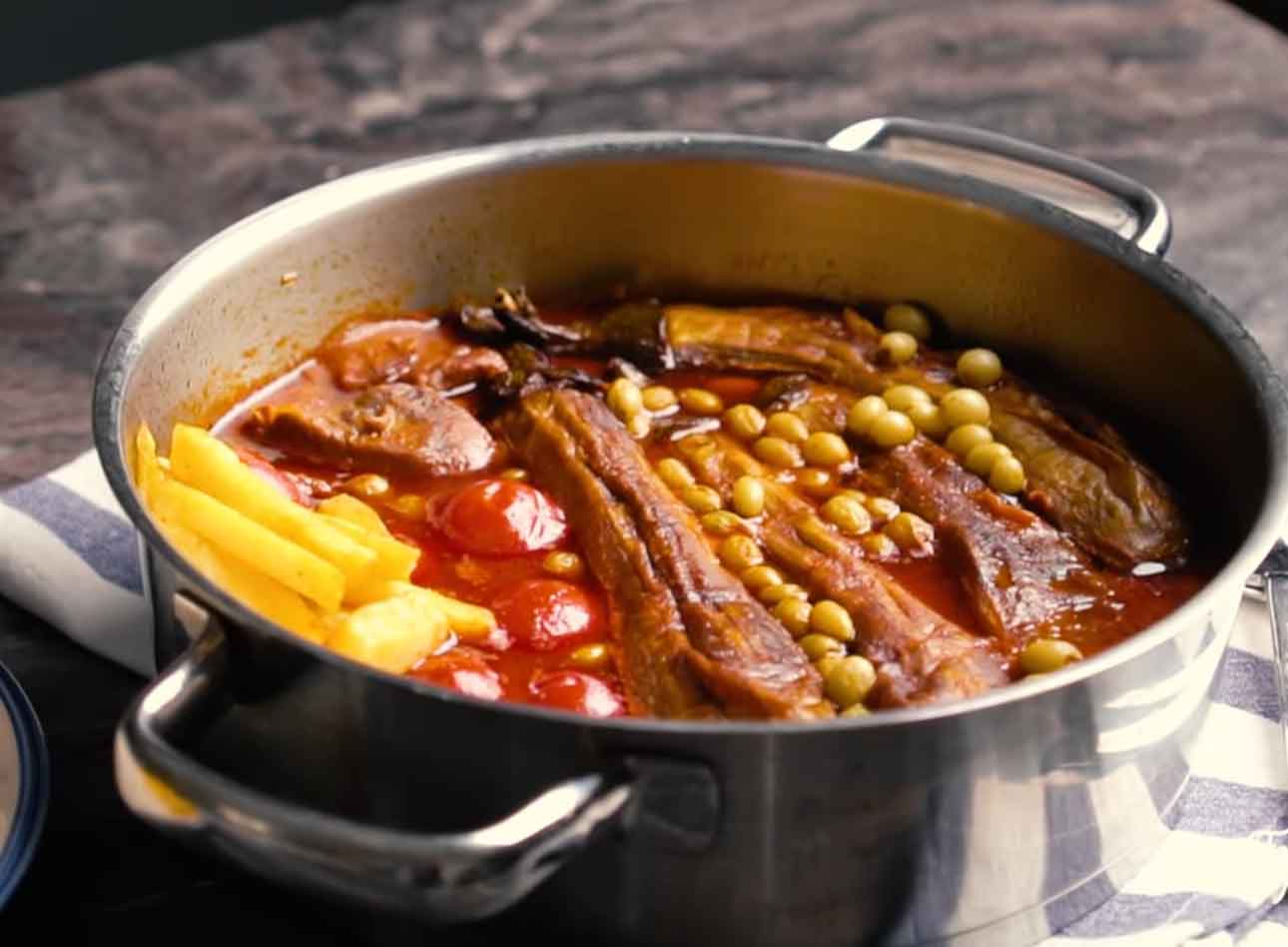
Instruction:
1. To prepare delicious Iranian eggplant stew, first peel the onions and finely dice them. Heat a frying pan with some oil and fry the onions until golden brown
2. Peel and finely mince the garlic, add it to the fried onions, and sauté for 1 to 2 minutes. Be careful not to burn the garlic.
3. Add the turmeric powder, cinnamon powder, and thyme powder, and sauté for 1 minute until evenly combined. Next, wash and cut the meat into stew-sized cubes, then add them to the pan.
4. Sauté the meat over medium heat just until it changes color; over-frying will make the meat tough and slow to cook. After the meat changes color, add the tomato paste and sauté for 2 minutes until its raw smell is gone.
Then transfer everything into a cooking pot with a little oil.
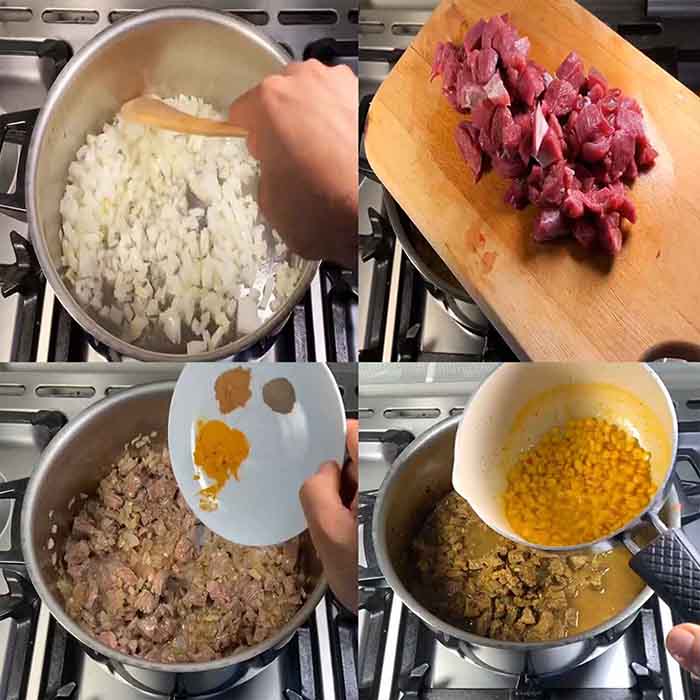
5. Sautéing the tomato paste in oil ensures your finished stew has a vibrant, deep color. Next, add 3 cups of boiling water to the pot and increase the heat so the liquid comes to a boil.
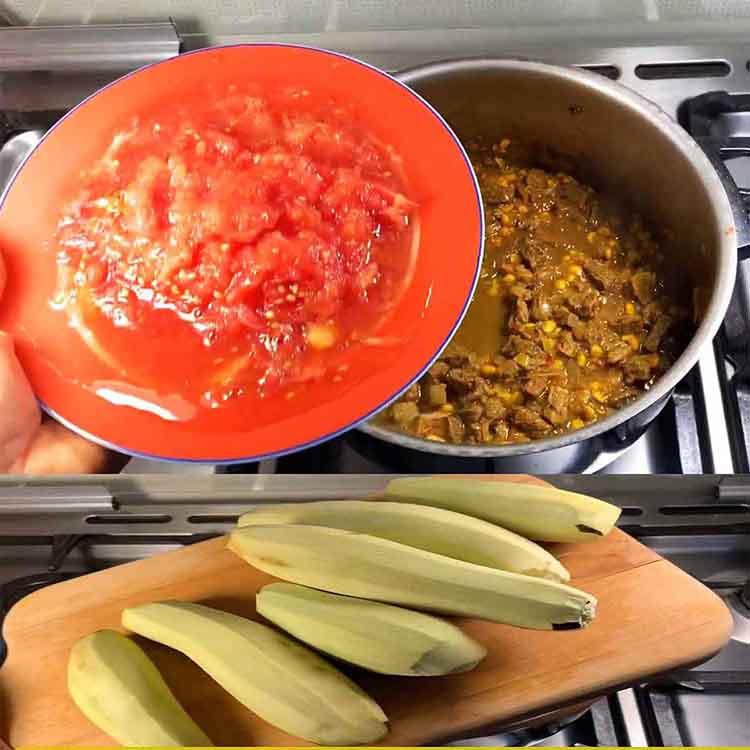
6. After the water boils, reduce the heat to low, cover the pot, and let the meat cook for 1.5 to 2 hours until tender.
While the meat is cooking, prepare the eggplants: peel them and slice them lengthwise in half.
7. Arrange the eggplants on a tray and sprinkle them with salt. In addition to removing any natural bitterness, this helps them absorb less oil during frying. After 30 minutes, rinse and pat the eggplants completely dry.
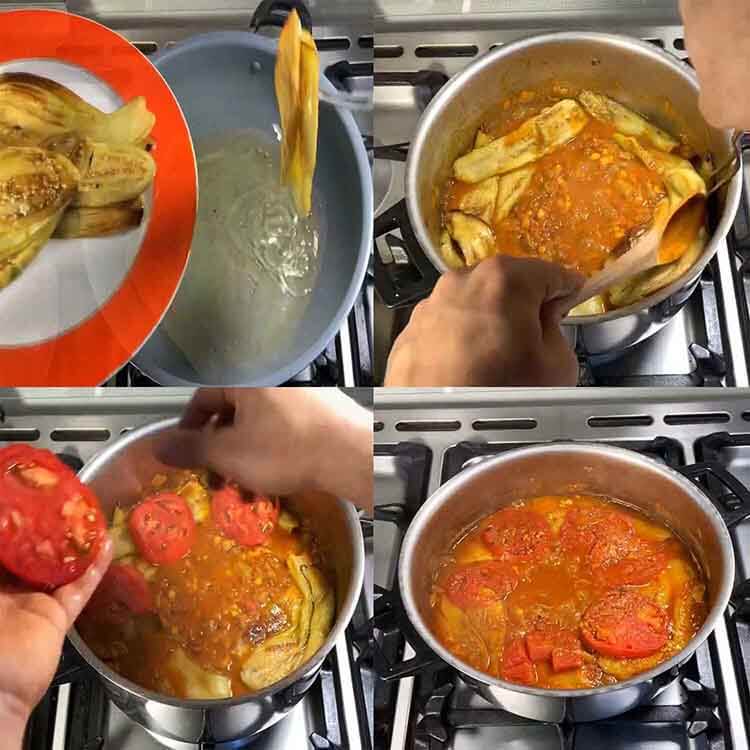
8. Fry the dried eggplants in oil until golden brown on both sides. Place the fried eggplants on paper towels to absorb excess oil. At this stage, cut the tomatoes in half and lightly sauté them in the pan.
9. Once the meat is fully cooked, add salt, black pepper, and brewed saffron to the stew, and stir gently.
10. Add the fried eggplants along with the sautéed tomatoes to the pot. After adding the eggplants, do not stir the stew aggressively so they keep their shape.
In this stew, the signature ingredient is “Ghooreh” (unripe sour grapes), which gives the dish its authentic sour flavor. If you do not have unripe sour grapes, you can add 2 to 3 tablespoons of fresh lemon juice to taste.
11. Eggplant stew (bademjan stew) should be served with a thick, reduced sauce rather than excess broth. After adding the eggplants, let the stew simmer on low heat for another 30 minutes to settle and release its oil.
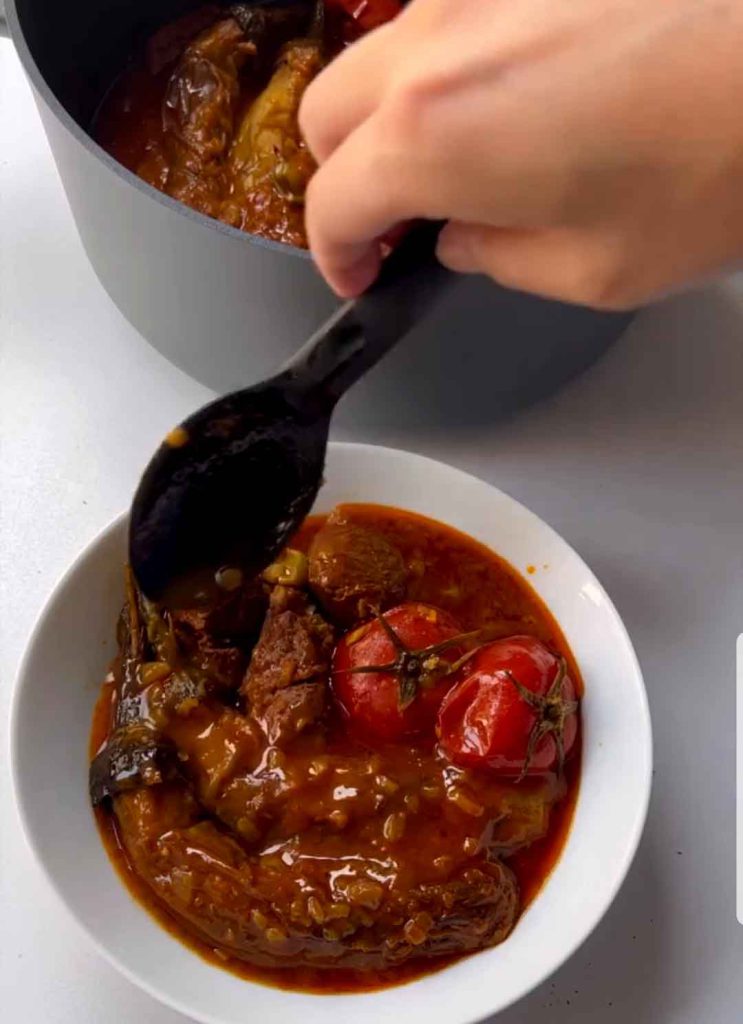
Khoresh Bademjan with Chicken Recipe :
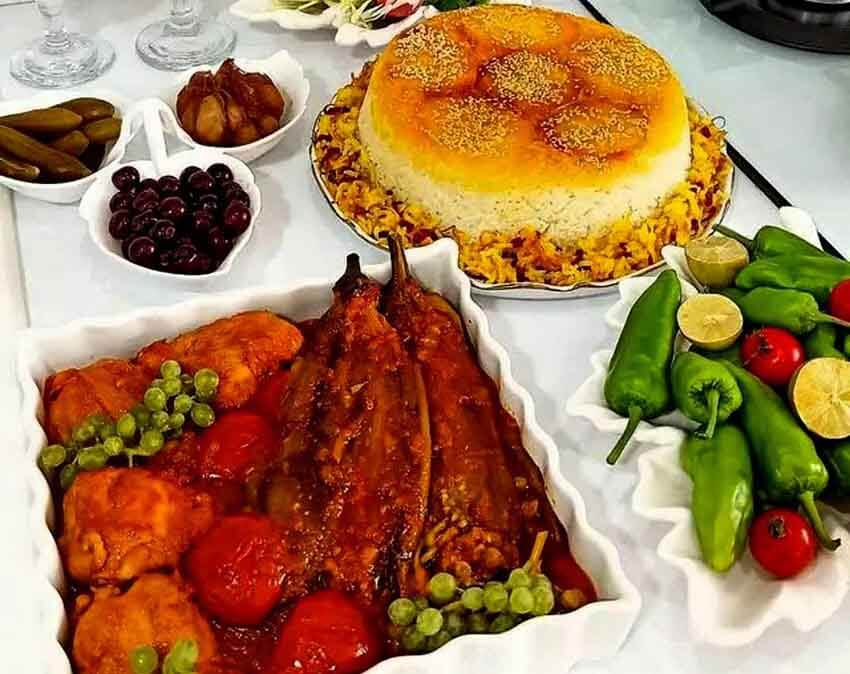
In Iran, we have another popular version of this stew made with chicken instead of red meat. Khoresh bademjoon with chicken is delicious, lighter, and has many fans.
The base ingredients and steps are the same; simply brown the chicken pieces first, cook them in the tomato sauce for 45 to 60 minutes until tender, and add the fried eggplants and tomatoes during the last 20 minutes of simmering.
How to Prepare Eggplant Stew with Yellow Split Peas:
As mentioned earlier, traditional Khoresh Bademjan does not include yellow split peas. However, if you want a richer, more colorful, and thicker stew, you can add a small amount of yellow split peas to this recipe.
For the ingredient quantities listed above, you can add about 5 ounces of yellow split peas. Soak the yellow split peas for at least 2 hours and change the water several times to reduce swelling and improve digestion.
Notes:
Bademjan Shekam Por is a dish that includes ingredients similar to this Iranian stew.
The important thing about cooking yellow split peas is that they should be cooked separately with onion first. Then discard the extra water and add them to the stew only after they are fully cooked. If you cook yellow split peas together with the meat from the beginning, the stew may lose its original flavor and taste more like soup.
Adding spices at the right time is important. In most cases, it is better to briefly fry the spices in oil to release their aroma. However, turmeric should not be fried for too long in oil; it is enough to sauté it briefly over low heat.
If saffron is added too early, part of its aroma and color will be lost, so it is better to add it near the end of cooking. Also, in meat stews, salt should usually be added at the end of cooking. During the last 30 minutes, add the spices along with the saffron and let the stew simmer gently so the flavors blend well.
FAQ :
1. How many calories does khoresh bademjan have?
Khoresh bademjan calories are 45cal in 1 spoon.
2. What is bademjan in English?
Bademjan means Eggplant in English.
3. How do you cook khoresh bademoon if you use chicken meat?
To prepare khoresh bademooan with chicken meat, it is enough to add twice the mentioned amount (800 grams) of thigh meat or chicken breast in pieces, and instead of stewed meat, add to the roasting onions. Other cooking steps are the same as when you used stewed meat to prepare this stew.
4. How many people are the amounts mentioned in this khoresh bademjan recipe for?
The amounts mentioned for each of these ingredients are enough for four people.
5. What is served with khoresh bademjan?
Along with this khoresh, salad shirazi, sabzi khordan,zeytoon parvardeh, mast o khiar are served.







Hi
Can i make this with zucchini?
Hi dear smilo, Yes you can make this stew with zucchini, But instead of eggplant stew, you made zucchini stew
What do you think is the best way to fry eggplants and use the main flavor of olive oil?
I have tried many ways to fry eggplant, such as frying eggplant in an air cooker, etc. But the best way to have the old and original taste of eggplant is to fry it with oil in a pan.