

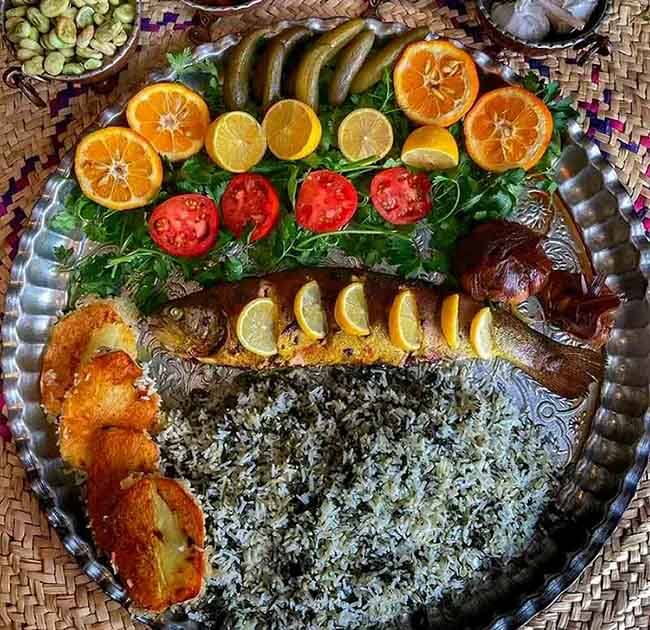
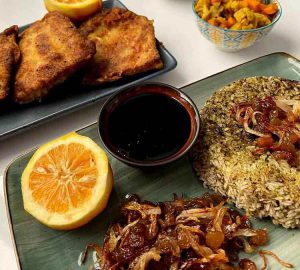
Sabzi polo ba mahi salmon is a famous Persian dish consisting of vegetables(sabzi), Persian rice(polo), and fish(mahi). It is delicious and is cooked on Nowruz Eid. It is suitable for special Iranian parties.
The combination of fresh vegetables with garlic gives a great aroma to the food. Fried marinated salmon, which is beautifully placed next to this Iranian pilaf, provides an excellent dinner for parties and Eid nights.
One of the most festive Iranian seafood dishes that Iranian ladies, including my mother and my wife, usually prepare for Yalda Night and Nowruz Eid every year.
Important ceremonies and parties of Iranians and Persian speakers should be accompanied by a classy dish related to it. Let it be a special night, and sabzi polo ba mahi is one of these dishes
just as sabzi polo ba mahi salmon reminds us of Nowruz Eid, Samanu is also one of the main parts of the 7sin table and Nowruz Eid.
how to cook sabzi polo ba mahi salmon recipe
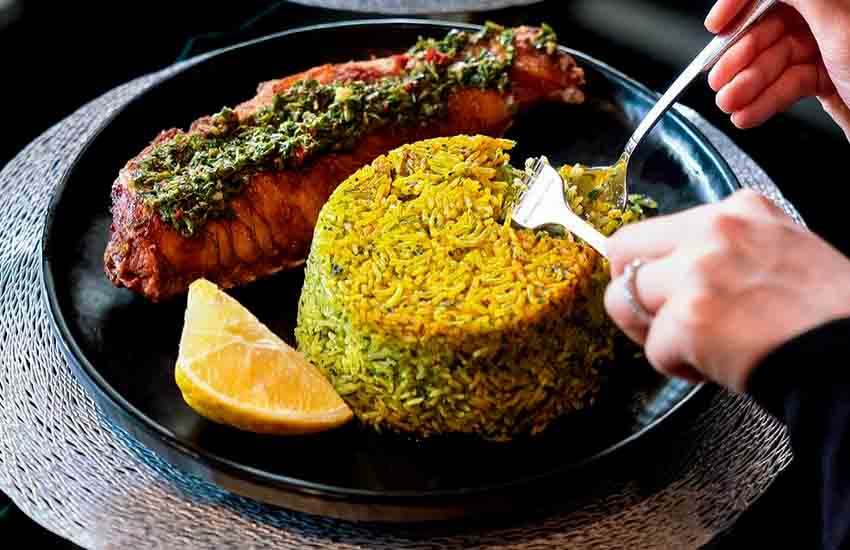
Sabzi Polo ba Mahi is a delicious food that must be served in Nowruz. Its life as a special food for Eid night is very short compared to the thousands of years of Nowruz.
In the old days, Iranians used to cook and eat foods other than their regular and daily food, such as Fesenjoon or Shirin polo, on the night of Nowruz Eid. In fact, it is not known when sabzi polo ba mahi became a constant staple of the table on the night of Eid.
Ingredient:
- 1 cups rice
- 2.2-pound salmon
- 1.1 pound Aromatic vegetables(leek,parsley,coriander,dill and garlic leaves)
- 1.1-pound Butteror liquid oil
- as needed Lemon juice
- 1 pcs Peeled and sliced onion
- 1 pcs Cloveof peeled and chopped garlic
- as needed Garlic powder, salt, and black pepper
- 2 tbsp Thickbrewed saffron
- as needed Fresh lime for garnish
Instruction:
- Vegetable preparation: After cleaning, wash the vegetables well and put them in a colander to drain completely. Then chop them using a sharp knife or chopper.
- Rice preparation: Soak the rice at least 3 hours in advance with lukewarm water and 2 teaspoons of salt.
- Place a pot full of water on medium heat until the water boils. Drain the water from the rice and pour it into a pot of boiling water along with a little salt. Drain the rice when it is ready.
- Wash and dry the pot. Then pour a tablespoon of butter,2 tablespoons of water, and a tablespoon of brewed saffron into it and let it heat up.Use lavash bread for tahdig.Place the lavash bread in the bottom of the pot so that it fills the entire bottom of the pot.
- Pour a two to three-cm layer of rice on the bottom of the bread and fill it with a layer of vegetables so that the rice is completely covered. Stir the rice and vegetables with a fork.
- Put the layers of rice and vegetables in the pot in the same way until the rice and vegetables are finished. Place the chopped garlic next to the rice.
- Make some oil and water and pour a tablespoon of brewed saffron on the rice or use melted butter. Put the lid of the pot on the stove and increase the gas flame until the rice is steamed. Then reduce the gas flame until the rice is completely cooked.
- Fish preparation: Wash the fish well. Then pour chopped onions, lemon juice, turmeric, salt, black pepper, and garlic powder into a bowl and put the fish in these ingredients for 1 hour. Turn the fish in these ingredients several times until they are well seasoned.
- Place the pan on a medium gas flame until it is completely hot. Then pour oil in it and let the oil get hot. Place the fish in the oil and after one side is fried, turn the fish over so that the other side is also fried.
- After frying, hold the fish on top of the pan with a slotted turner for a few moments to remove excess oil.
- After steaming the rice, turn off the flame. Then put the bottom of the pot in cold water until the bottom of the pot is completely separated from the pot.
- Put the sabzi polo ba mahi in a dish and place the fish along with the kuku sabzi and some fresh lime wedges. Enjoy your meal!
My experience table:
| My level of interest is from 1 to 10 | 10 |
| The ease of cooking | Hard |
| Served for | Dinner, Launch |
| Suggest for | Daily meal, party meal |
| What is served with? | Lemon, Orange, seer torshi |
The history of sabzi polo ba mahi on Eid night:
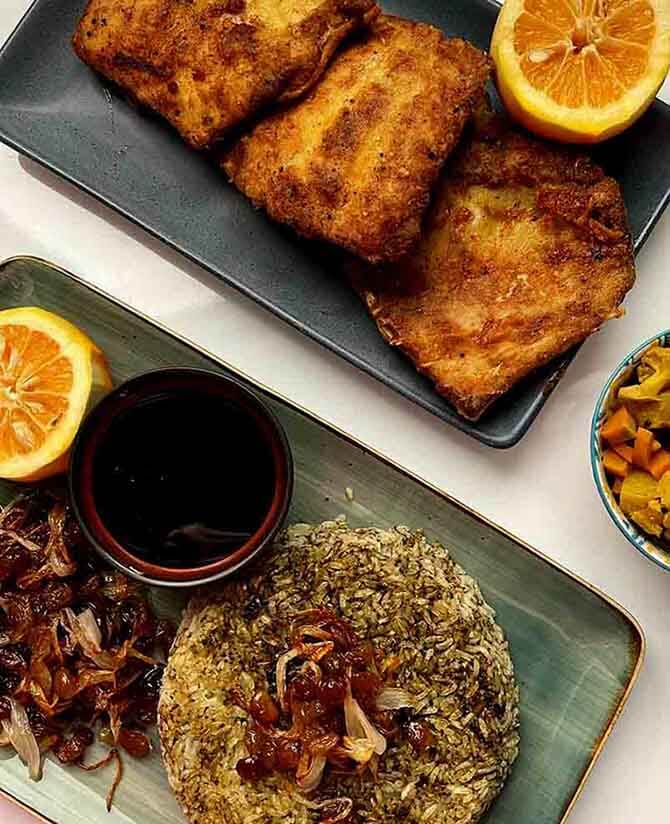
The life of sabzi polo ba mahi as a special food for Eid night is very short compared to the thousands of years of Nowruz.
In the old days, Iranians used to cook and eat foods other than their regular and daily food such as khoresh e fesenjoon or Shirin polo on the night of Nowruz Eid, and in fact, it is not known since when sabzi polo ba mahi became a constant staple of the table in the night of Eid.
Of course, according to some narratives and legends, the reason for eating fish in Nowruz is the story of finding the ring of Hazrat Suleiman in the belly of a fish, which we will tell you now.
Hazrat Suleiman had a ring with the help of which he was able to bring demons and fairies to his service. In the meantime, the demon threw Solomon’s ring into the sea so that he would no longer be able to control them.
Then he disguised himself as Solomon and sat on the throne. Solomon told the story to the people, but no one believed him.
After this incident, Suleiman took refuge in the sea and turned to fishing. After some time, Suleiman caught a fish found his lost ring in its belly, and put it back in his hand.
The news reached the people and they realized that the real Solomon was outside the city and that the person sitting on the throne was actually a demon.
On the 13th day of Nowruz, the people pulled the demon down from the throne and went outside the city to bring Solomon back.
Rice in Persian Food
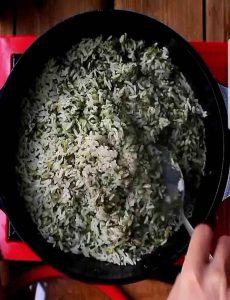
Rice has a special place in the table of Iranians, and for this reason, types of rice such as Loobia Polo, Zereshk Polo, Reshteh Polo, Morasa Polo, and sabzi polo are abundantly seen in Iranian cooking.
Sabzi polo ba mahi is one of the most delicious Iranian pilaf, which is usually eaten with fish, chicken, or fried meat; But sabzi polo ba mahi is an important and special dish that is considered an important Iranian tradition to eat on night of Nowruz Eid together with kuku sabzi.
Sabzi polo is made with rice, herbs (leek, dill, parsley, coriander, fenugreek, and fresh garlic), saffron, salt, and oil, and it is a very nutritious food.
Of course, some people prefer to serve this pilaf with chicken or meat on the same Eid night; But the common option to serve with sabzi polo has been fish for a long time.
Whitefish, Salmon fish, stuffed fish, and tila pila are among the fish that can be served with sabzi polo.
But do you know how to prepare sabzi polo ba mahi on Eid night?
Be with us so in this article we will provide you with the method of preparing sabzi polo with salmon and stuffed fish so that together we can cook one of the traditional and delicious Iranian dishes with techniques and secrets.
10 Notes on rice Sabzi polo ba mahi:
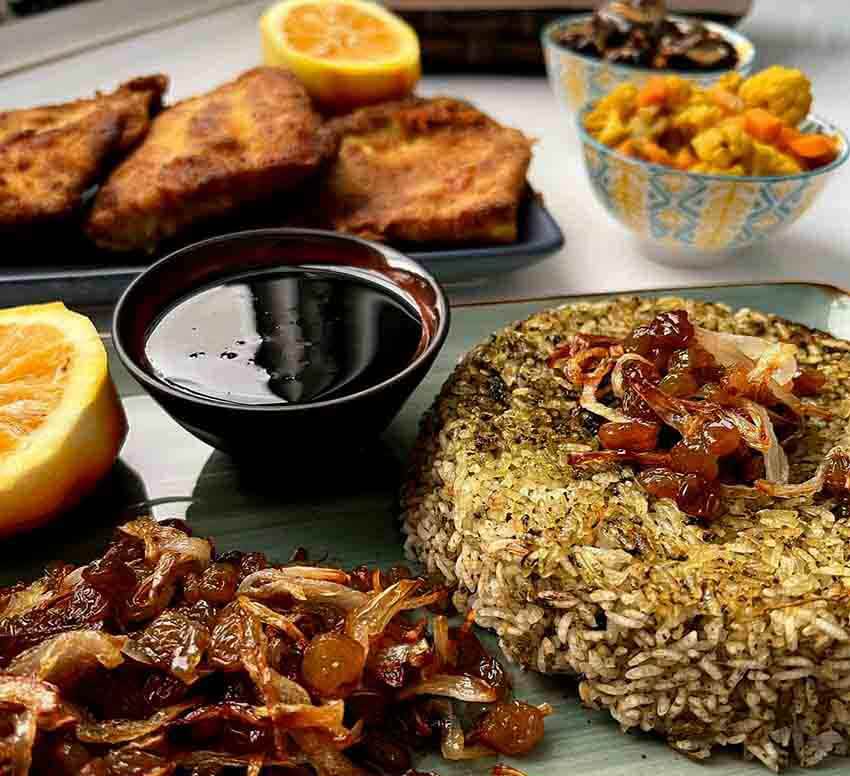
- The heat of boiling Persian rice should not be low and the gas flame should be medium to high.
- Do not leave the pot lid while the rice is boiling and let the rice water boil again.
- sabzi polo is usually made in the normal way but if your rice is quality Iranian rice, it can also be made in the form of kate.
- Adding some smoked or northern rice to sabzi polo rice gives it a wonderful aroma.
- Drain the rice when you press the grain of rice between two fingers, it is soft around and the kernel is a little raw.
- You can also use potatoes for Tahdig; Of course, the best tahdig for vegetable pilaf is tahdig noon.
- Instead of melted butter, you can also use a few pieces of butter so that while the rice is steaming, they melt little by little and go into the rice.
- Using fresh garlic will give the rice a good taste and aroma, don’t forget to add fresh garlic.
- You can add the vegetables to the rice before draining and drain immediately to mix the vegetables and rice well.
- Some people add some grated onion to the drained rice in addition to chopped garlic.
7 Tips for vegetables in Sabzi polo ba mahi:
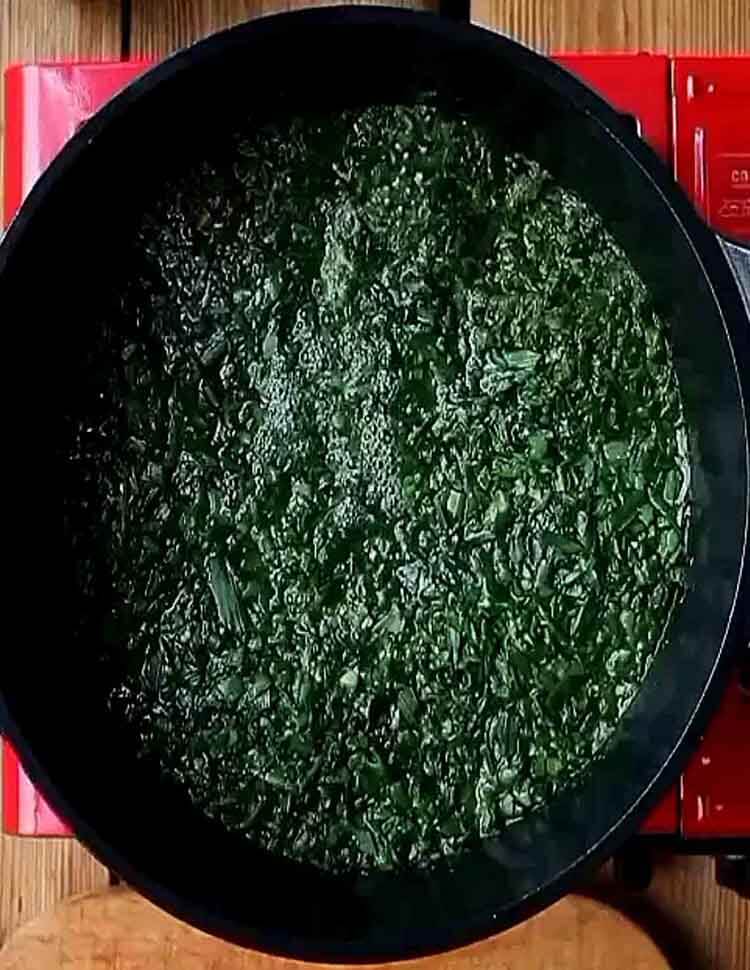
- The vegetable used for Sabzi polo ba mahi should not be chopped too finely.
- Before chopping, dry the vegetable well so that it does not leak water while chopping.
- It is better to use fresh vegetables to cook sabzi polo. Note that vegetables lose some of their useful vitamins and minerals during chopping, frying, and cooking.
- The vegetables used in Iranian sabzi polo are leeks, dill, parsley, and coriander; But you can also use a little fenugreek and fresh garlic for more flavor. The proportion of leeks, parsley, and coriander is equal, and a little more dill should be added to the vegetables.
- In some recipes, first, the chopped vegetables are fried in a little oil until they are slightly fried. Note that the vegetables should only be fried for a few minutes and there is no need to change the color.
- The northerners also use a little chochag in adding vegetables to this pilaf.
- If you don’t have access to fresh herbs, you can use a few spoons of dried dill.
13 Tips for Fish on Sabzi polo ba mahi:
- Be sure to buy fresh fish. if the fish smells very bad or the gills are open, you can be sure that the fish is rotten. Also, pay attention to the eyes of the fish. Fish eyes should be fresh, clear, and shiny. Rotten or old fish have dull and slightly gray eyes.
- If you want to use the fish later, after washing, dry the fish juice with a clean towel to completely remove the moisture from the fish. Then put the fish on the cellophane and cover it completely. Put the cellophane fish on the aluminum paper and cover it completely. Finally, put a sticker with the name of the fish and the date on the cellophane and store it in the freezer. You can also store fish in a zip lock in the freezer. The fish has a shelf life of about 6 months in the freezer.
- To defrost the fish, do not place it in the Solardome or the microwave; Because it spills water and smells bad. To defrost the fish, put it in a tray and put it in the refrigerator so that the fish gradually defrosts at the temperature of the refrigerator.
- To clean the fish, first remove the scales with the tip of a knife or peel the fish. Then separate the head and tail of the fish and divide it lengthwise into three to four pieces. Cut each piece of fish in half and remove the backbone. Finally, remove the skin under the belly, which is thinner than the back of the fish.
- If you feel that your hands and the sink smell after cleaning the fish, apply lemon peel or wash rice on the sink and hands to remove the bad smell of the fish.
- The combination of onion with spices and lemon juice is a unique sauce for fish that makes its texture more crispy and removes the fishy smell. You can use this sauce to season any other fish.
- For fish sauce, you can use a combination of grated onion juice, thick brewed saffron, juice of fresh lime, salt, pepper, and garlic powder. Soak the fish in these ingredients for half an hour and put them in a zip lock in the refrigerator until they are well seasoned.
- In some recipes of sabzi polo ba mahi, salt, coriander seeds, limo Amani powder, black pepper, red pepper, flour, onion powder, paprika powder, ginger, nutmeg, dried tomato, thyme, and garlic powder are used to season the fish.
- To prepare the fish, it can be rolled in a mixture of one cup of flour, one tablespoon of salt, two teaspoons of turmeric, and one teaspoon of pepper and then fried in oil.
- Each side of the fish should be fried in oil for about three to four minutes.
- You can put them on a kitchen towel or greaseproof paper to catch the extra oil from the fish.
- Instead of salmon, you can use other fish such as white fish, perch,tila pila, and koli.
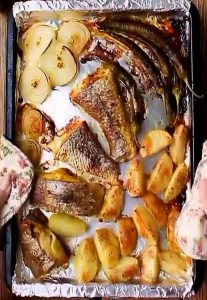
- If you want to prepare the fish in the oven, arrange the pieces of fish in the oven tray and cook for 20 minutes at 190°C.Be sure to put foil on the bottom of the oven tray so that you can clean it more easily later.
How to prepare Sabzi polo ba mahi with other fish:
Sabzi polo ba mahi is eaten with white fish in the north of the country. How to prepare sabzi polo with white fish is the same as sabzi polo with salmon.
Of course, white fish only needs a little salt for seasoning, and you can also add black pepper and thick brewed saffron to it if you wish. How to prepare sabzi polo with tila pila fish is also very simple and you can make this dish in the same way as mentioned in the article.
4 Tips for Serving Sabzi Polo ba mahi:
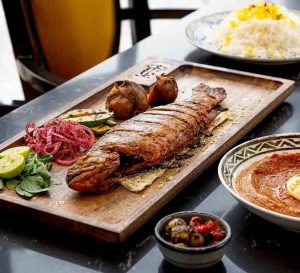
- The nature of fish is cold and it is better not to eat this food with yogurt or Persian Doogh doogh to avoid problems such as heartache or stomachache.
- Instead of yogurt, eat fish with raw or steamed vegetables Zeytoon Parvardeh, Sir Torshi, Naz Khatoon, and Torshi Liteh.
- Water,low-sweet lemon juice, and mint syrup are the best drinks to serve with fish.
- Fresh parsley can also be used for decoration.
12 benefits of sabzi polo ba mahi:
- Fish is a rich source of omega-3, protein, taurine amino acid, vitamins A and vitamin D, as well as minerals such as magnesium, manganese, phosphorus, selenium, zinc, and iodine. Maintaining and improving people’s health is one of the most important benefits of consuming fish and including it in the weekly diet.
- It is interesting to know that the health effects of fish are multiplied when combined with vegetables. Vegetables are rich in vitamins A and C, and antioxidants that strengthen the effects and function of omega-3 in the body.
- Prevention and treatment of cardiovascular diseases: Fish leads to the prevention and treatment of cardiovascular diseases by reducing blood pressure, reducing triglycerides, reducing the risk of atherosclerosis, reducing the risk of diabetes, and increasing HDL cholesterol (good cholesterol).
- Decrease in blood concentration: Platelets and cells that cover the inner surface of the vessels play a major role in blood coagulation and clot formation. By affecting these platelets, Omega 3 prevents their accumulation in the initial stages of clot formation and leads to a decrease in blood concentration. This feature is very important for people who have undergone open heart surgery; Because fish prevents blockage of newly transplanted vessels and prevents new heart events in these people.
- Reducing the risk of depression, anxiety, and mental illnesses.
- Strengthening brain function and memory, prevention of dementia, and prevention of Alzheimer’s disease.
- Preventing irregular heartbeats.
- Anticancer
- Treatment of constipation
- Blood sugar control
- Hematopoiesis
- Maintaining the body’s resistance to microbes
FAQ
1. What is served with sabzi polo ba mahi salmon?
With this food is served sir torshi, Zeytoon Parvardeh, Torshi Liteh, and lemonade.
2. What fish do Southerners in Iran use to make this food?
Southerners choose Sangsar fish and halva fish. Herbs used for southern include fenugreek and spicy herbs.
3. What is the reason for believing in the custom of eating fish on Eid night?
People believe that eating this food is an excuse to start the year with more energy and motivation because of its benefits and vitamins. Eating rice is also a sign of life due to being blessed with fish, and some people consider vegetables to be a sign of blessing and fertility.
4. Why does the fish become dry?
Using too much salt when flavoring causes its moisture to decrease and it becomes dry during frying, and frying the fish too much causes the fish to be roasted and dry.
5. What is the best fish for making sabzi polo ba mahi for children?
The best fish for sabzi polo ba mahi for children are Salamon, shir fish, and halva fish. Shir fish has fewer bones and blades and is rich in iodine and vitamin D.
6. What are the best types of fish to cook for sabzi polo ba mahi?
Types of black halva and white halva, shoor fish, shir fish, salmon, etc are among the best types of fish for cooking sabzi polo ba mahi on Eid night.
7. In the method of preparing fish in the oven for sabzi polo ba mahi, how long should the fish be left in the oven?
Allow 30 to 40 minutes to cook soft and juicy fish in the oven, and 50 to 70 minutes for more crispy and fried fish. These times depend on the cut and thickness of your fish. While cooking the fish in the oven, check it regularly.
8. What is the most important point in the preparation of a simple sabzi polo?
One important thing you should know about how to prepare sabzi polo ba mahi is to use special vegetables for pilaf and not chop the vegetables too finely.
Did you like this recipe?
- If you have experience eating Sabzi polo ba mahi, please say your comment.
- If you are looking for vegetarian food, I suggest you only sabzi polo.
- You can ask me questions about Sabzi polo ba mahi in the comments. I will answer your questions as soon as possible.
- if you make this food and love the taste of it, please share your pic with us on Facebook & mail.



Hi
Thanks for your perfect recipe
I have question…Can we use another type of fish instead of salmon?
hi my dear justina,yes you can use any type of fish that you like for making sabzi polo ba mahi