


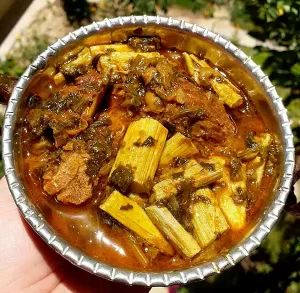
Khoresh Karafs is one of the most nutritious Iranian stews. Persian Celery Khoresh (Stew) is prepared with celery, meat, onions, mint, parsley, and spices.
Unlike the bitter taste of celery juice, which has been used for weight loss since ancient times, Iranian celery stew has a delicious flavor.
I had never heard of Khoresh Karafs, or celery stew, until my wife made a great recipe for me.
The taste of my first celery stew has never left my mind. The wonderful flavor and aroma of fresh celery combined with ghooreh make this stew truly special.
Just try this recipe once, and it may become a regular meal in your weekly menu. I even prepare this stew for my guests, and they have the same opinion after tasting it. This stew is often served alongside herb-based stews such as Khoresh Ghormeh Sabzi.
What is Khoresh Karafs?
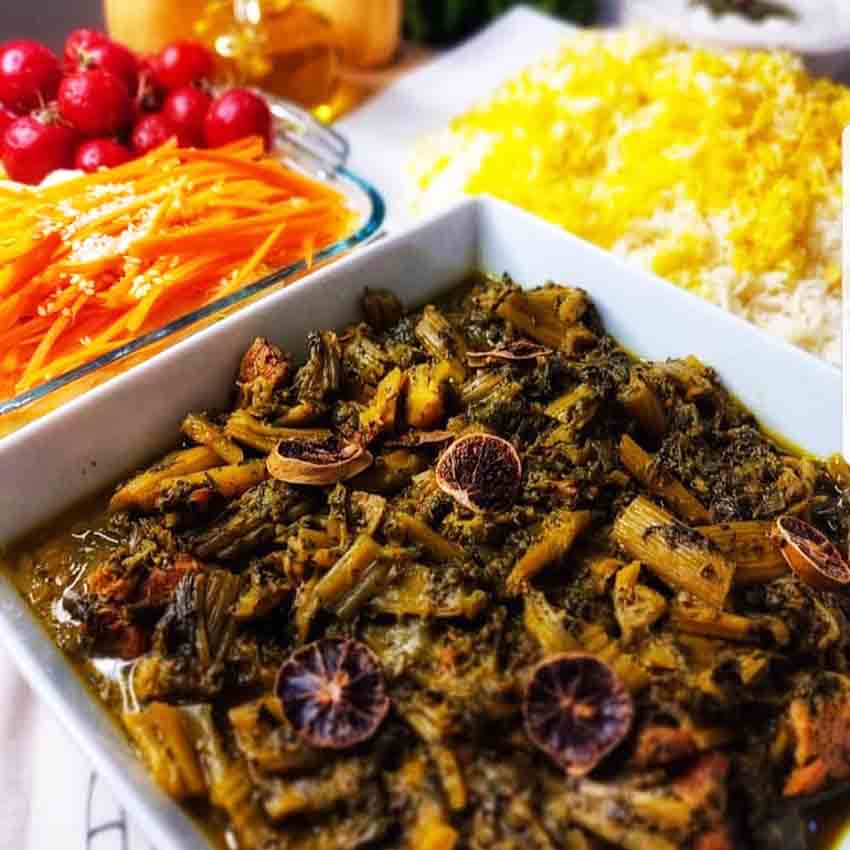
Khoresh Karafs is a Persian stew made with celery, a vegetable rich in vitamins. The history of celery goes back to ancient Greece.
A French proverb says that if people knew about the benefits of celery, they would plant it on all of their farms.
Every year, more than 1 billion pounds of celery are produced in the United States, which shows the importance of this valuable vegetable. It is a low-calorie plant rich in minerals.
This vegetable can be a good choice for people who want to include more vegetables in their meals. For all these reasons, Persian celery stew can be an important option among many Iranian dishes.
If you are a fan of Persian sour stews, I suggest trying Khoresh Gojeh Sabz, a sour Iranian summer stew with a unique and delicious flavor.
For: 4 people
Preparation time: 20 minutes
Cooking time: 3 hours 30 minutes
Ingredients:
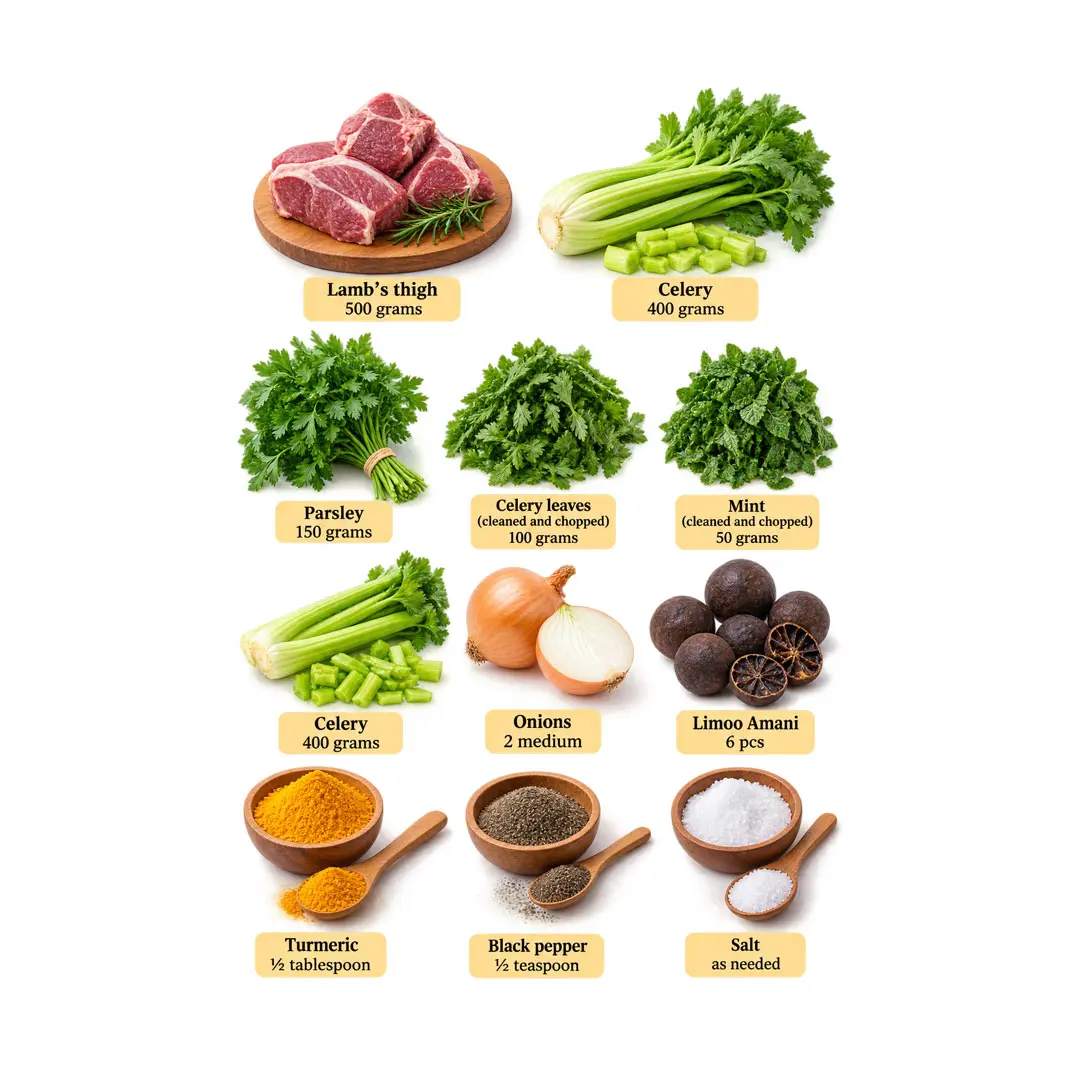
| Lamb’s thigh | 500 grams |
| Celery | 400 grams |
| Parsley | 150 grams |
| Celery leaves (cleaned and chopped) | 100 grams |
| Mint (cleaned and chopped) | 50 grams |
| Celery | 400 grams |
| Onions | 2 medium |
| Limoo Amani | 6 pcs |
| Turmeric | ½ tablespoon |
| Black pepper | ½ teaspoon |
| Salt | as needed |
Instruction:
1. Prepare the celery and herbs
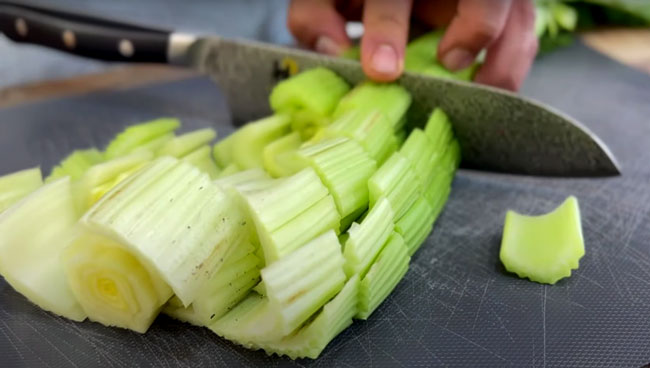
To make Persian celery stew, I use fresh celery and herbs. First, wash the celery, parsley, mint, and celery leaves well. Let them dry completely, then chop them.
Be careful with the amount of mint. Using too much mint can make the stew bitter.
You can chop the herbs by hand or use a food processor. If you use a knife, chop them finely. If you use a food processor, add a few drops of oil to help prevent the herbs from releasing too much liquid.
2. Prepare the meat
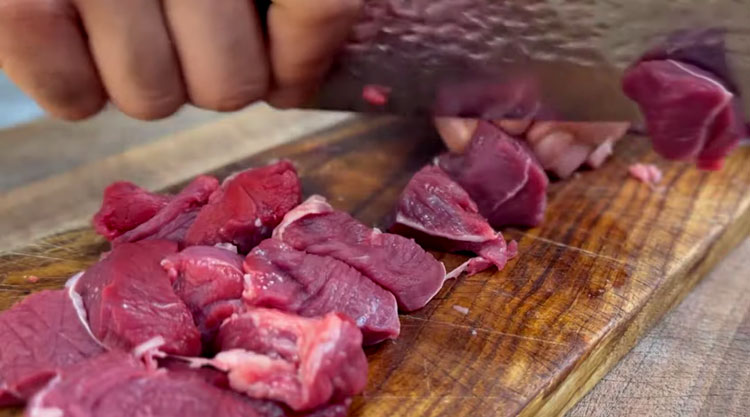
For this recipe, I use lamb thigh because it becomes tender and adds a rich flavor to the stew. Do not cut the meat into very small pieces, as it will shrink while cooking.
3. Soak the Limoo Amani
Pierce the dried limes a few times with a fork or a sharp knife. Place them in a bowl of water and use a small plate to keep them fully submerged.
Let them soak for about one hour. This helps reduce their bitterness before adding them to the stew.
4. Brown the meat
Heat 4 to 5 tablespoons of oil in a pan. Add the meat and cook until it changes color and is lightly browned on all sides.
5. Sauté the herbs
In a separate pan, add the parsley and mint without oil first. Heat them gently until their extra moisture evaporates.
Then add a little oil and sauté the herbs over low heat. Do not fry them for too long, as this can make the herbs bitter.

6. Sauté the celery
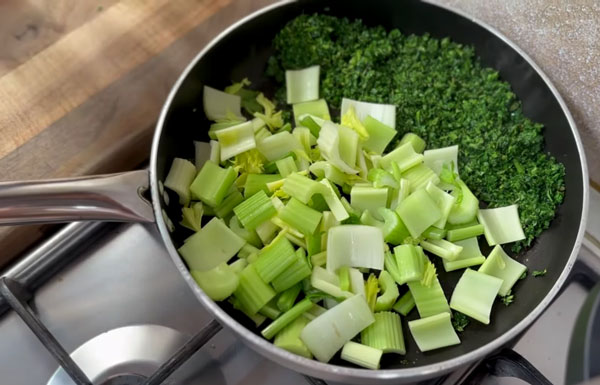
Next, add the chopped celery and celery leaves to the pan. Heat them until their moisture evaporates, then add a little oil and sauté them gently.
The celery leaves should be chopped, but they do not need to be as fine as the parsley and mint.
If you prefer, you can chop the celery leaves together with the parsley and mint and sauté them all at the same time.
7. Prepare the stew base
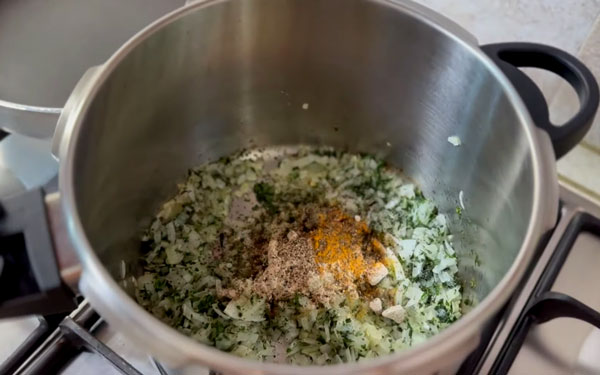
Peel and finely chop the onions. Heat some oil in a large pot and sauté the onions until golden.
Add the turmeric and cook it briefly with the onions until fragrant. Then add the black pepper.
I usually add salt near the end of cooking, after the meat has become tender, so I can adjust the seasoning properly.
8. Combine the ingredients
Add the browned meat, sautéed herbs, and celery to the pot with the onions.
To give the stew its signature tangy flavor, I use verjuice, also known as ghooreh. However, this depends on your taste. You can use only Limoo Amani if you prefer.

9. Cook the stew
Add the soaked dried limes to the pot, then pour in boiling water. Cover the pot and bring the stew to a boil.
Once it starts boiling, reduce the heat and let it simmer for up to 4 hours, or until the meat is tender and the stew has thickened. Add salt during the final stage of cooking.

10. Serve
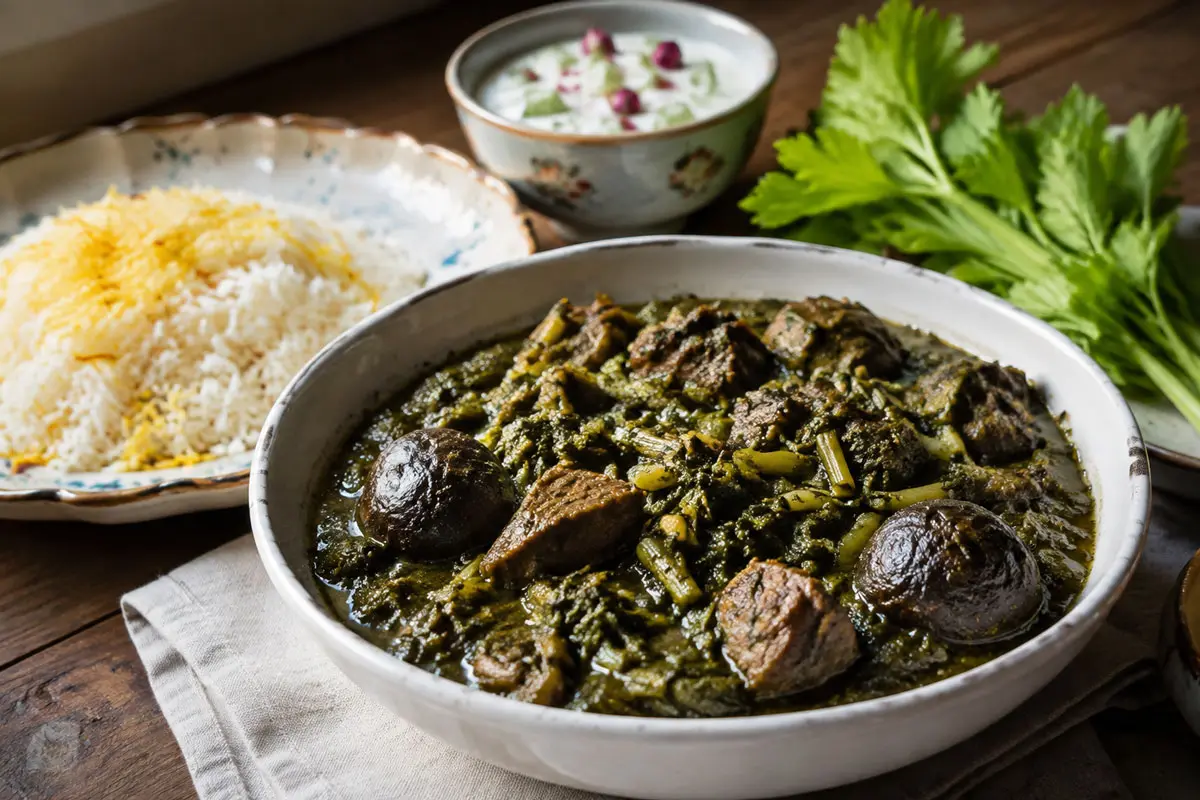
When the stew is ready, transfer it to a serving dish and enjoy it hot with your family.
My Personal Tip
In my experience, the most important part of Khoresh Karafs is controlling the mint. I always use much less mint than parsley because too much mint can easily overpower the celery and make the stew taste bitter.
I also add the dried limes gradually and taste the stew near the end, since celery, verjuice, and Limoo Amani can create a stronger sourness than expected when combined.

What is served with Khoresht Karafs?

This excellent stew is served with Iranian rice, along with various salads and desserts. One of these side dishes is Zeytoon parvardeh, and another is Torshi albaloo.
Pickled cherries, because of their sour taste, are very suitable for this dish.
Among the Iranian pickles, we can also refer to Torshi liteh, which is excellent and appropriate with the chopped pieces of various fruits and eggplants with vinegar.
Also, pickles help food digest faster and make you feel light after eating.
You can also use dairy products and drinks with this stew. Dairy products such as Persian Doogh and Mast o khiar are also used with this dish on Iranian tables.
Notes :
- To prepare this stew, choose crisp, fresh celery, and avoid buying celery that is dark green.
To prepare celery, take its thick leaves, clean them, and arrange the stem and small leaves.
The amount of mint should be 1/4 of the amount of parsley so that the stew does not become bitter. - To cook Celery and meat stew, use young, thin celery; do not use green, hard celery. If you are using lamb, you can fry the celery with the lamb at the beginning.
- But if you use veal, it is better to add chopped celery and herbs after an hour of cooking the meat to prevent them from being crushed.
- Be sure to pay attention to the fact that the vegetables used in the stew must be completely dried after washing and then chopped. Otherwise, they will be crushed during cooking.
- If you want to use the tomato paste in the Iranian celery stew, add it after the meat is fried.
- To make this stew more sour, you can use a little Ghare Ghoroot in this stew.
- Adding too much water to the celery stew will make it not glazed enough.
FAQ
1. What is Khoresh Karafs?
It is a traditional Persian stew made with celery, fresh herbs (parsley and mint), onions, and meat. It is known for its distinctive fresh, herbal flavor and a mild tanginess that comes from adding dried limes or verjuice.
2. How can I avoid making this stew bitter?
The bitterness in this stew usually comes from over-frying the herbs or using too much mint. To prevent this, sauté the mint and parsley gently over low heat, and be careful not to exceed the amount of mint suggested in the recipe. Also, avoid frying the herbs for too long, as gentle cooking is key to keeping the flavor fresh.
3. Can I use chicken instead of lamb in this recipe?
Yes, you can substitute lamb with boneless chicken pieces. Keep in mind that lamb thigh adds a richer flavor due to its fat content, so the stew might taste slightly different with chicken. Also, since chicken cooks much faster, you won’t need to simmer it for as long as you would with lamb.
4. Why do we soak the dried limes (Limoo Amani) before adding them to the stew?
Soaking the dried limes in water for about an hour helps remove their bitterness. Piercing them with a fork or a knife before soaking makes this process even more effective, ensuring that you get the tangy flavor without the bitter aftertaste.
5. What side dishes pair well with Khoresh Karafs?
Like most Persian stews, it is traditionally served with steamed rice. For side dishes, Zeytoon Parvardeh, Torshi Albaloo (pickled cherries), or Torshi Liteh are excellent options that complement the tangy and herbal notes of the stew. You can also serve it with Mast-o-Khiar or Persian Doogh.





Can you provide some tips for preparing celery stew, so that it has the best taste and quality?
Hi dear Zeynab, tnx for your comment, Yes Although we have written many tips for Persian celery stew. But I will definitely write more tips for you in the next updates.