

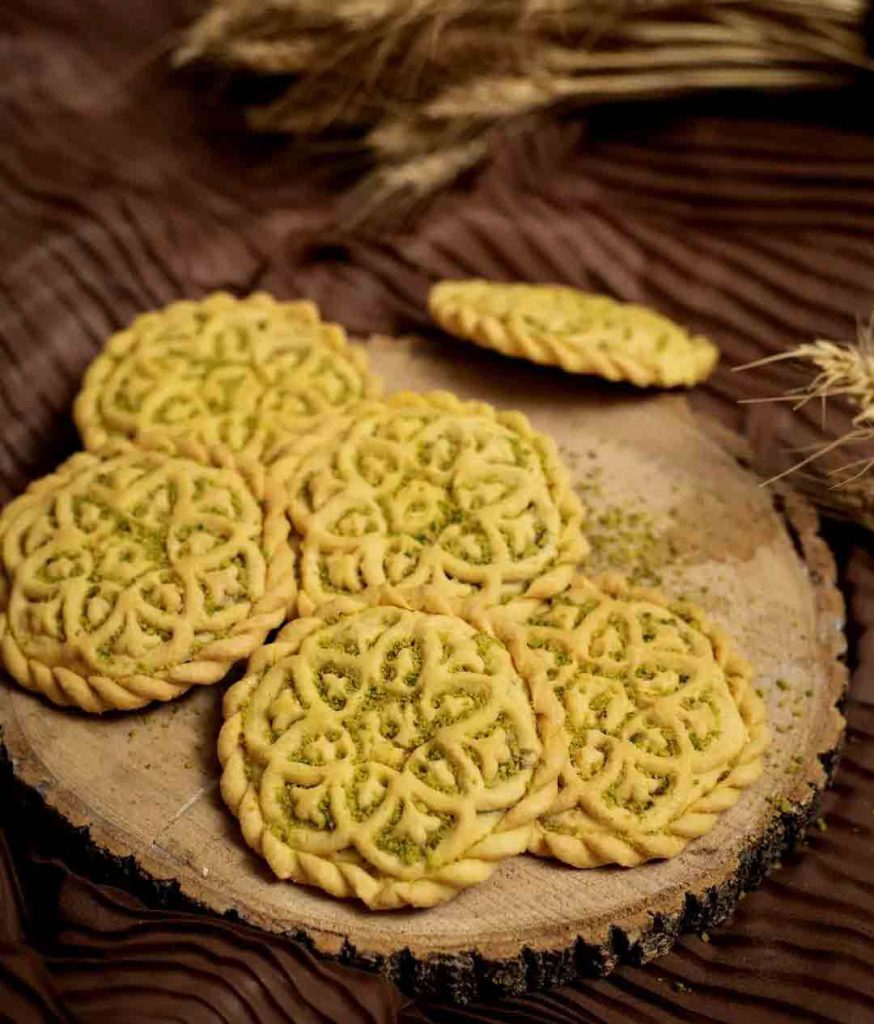
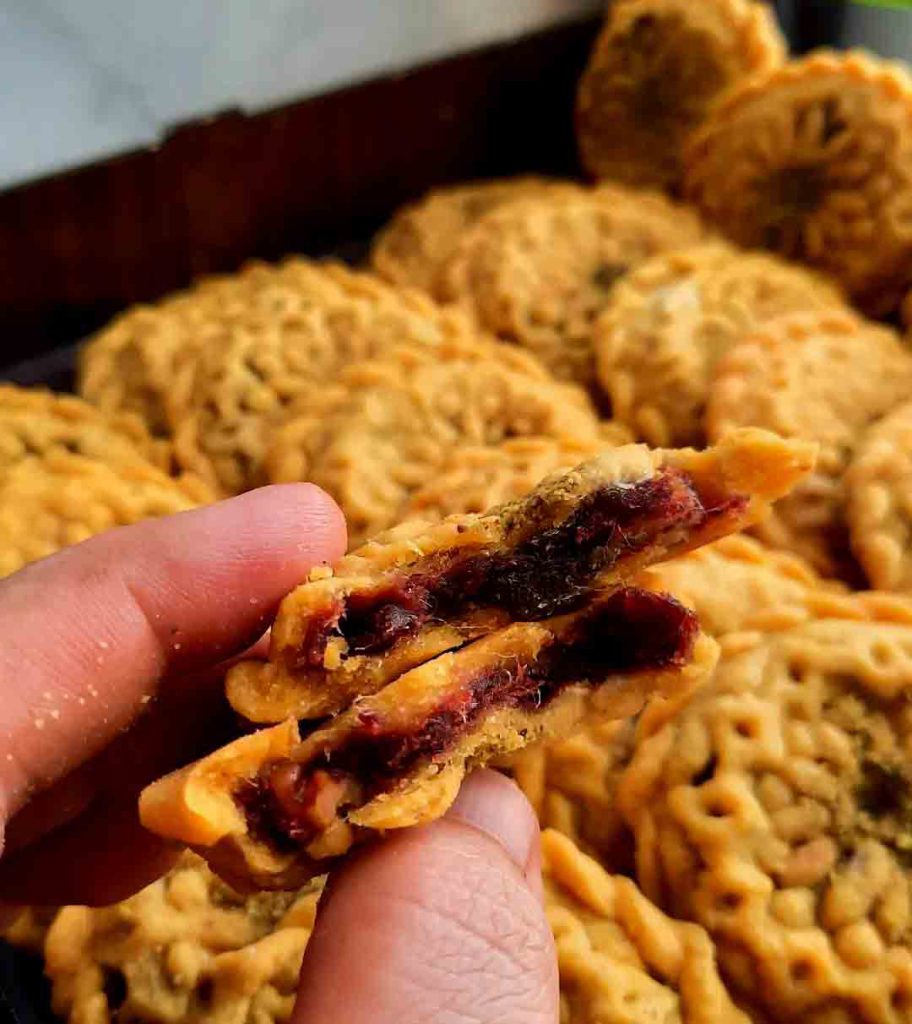
Kolompeh is a traditional Persian date-filled cookie from Kerman, made with a soft, buttery dough and a fragrant filling of dates, walnuts, cinnamon, and cardamom.
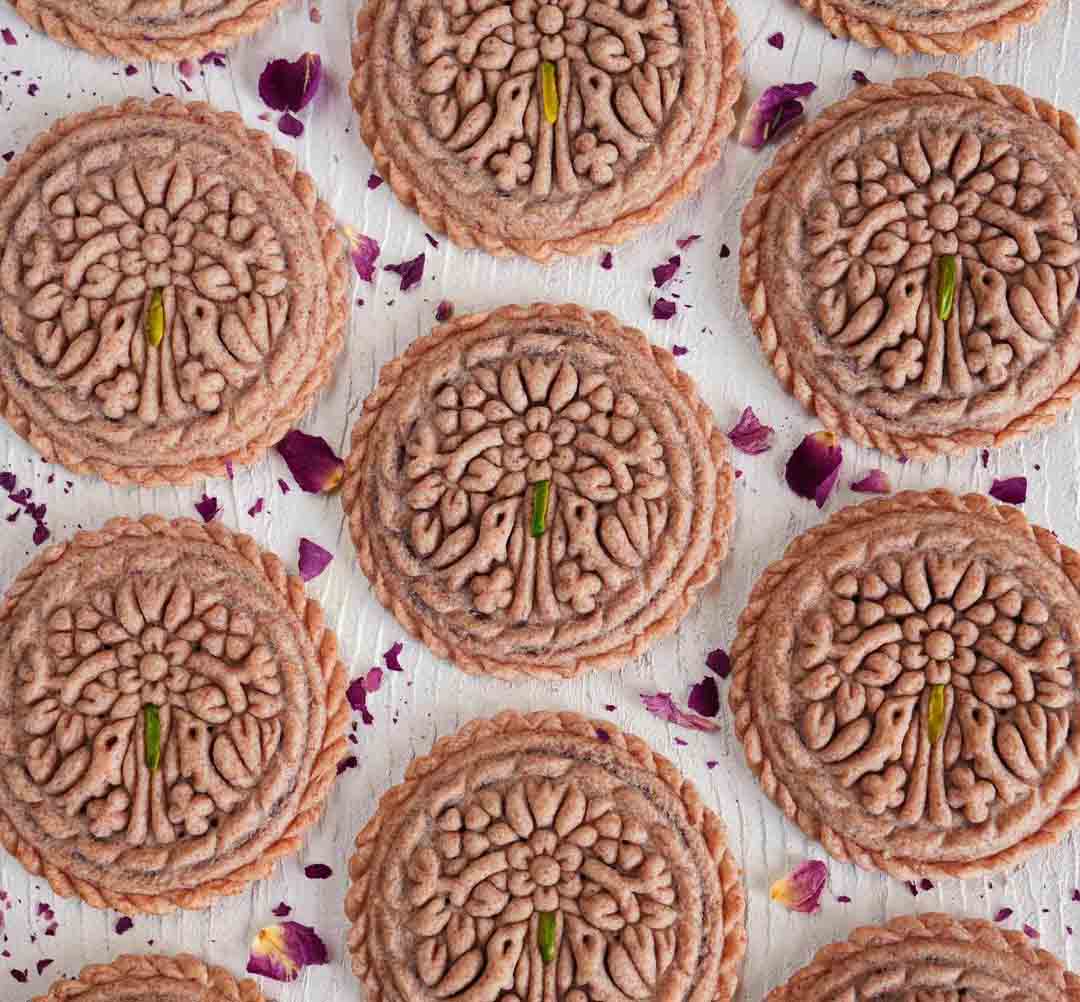
These beautiful stamped cookies are often served with Persian tea, especially during holidays and family gatherings.
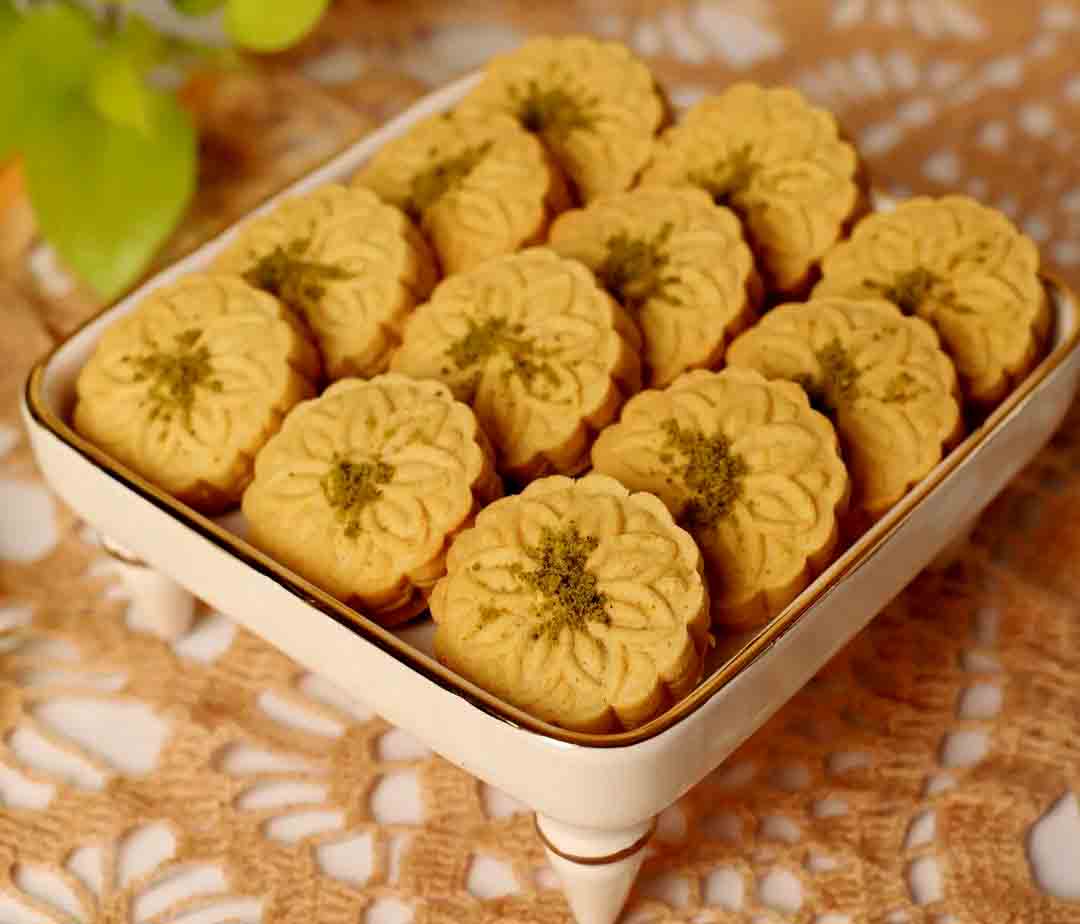
A Glimpse into History and Origin
Traditionally, Kermani women would prepare Kolompeh for special occasions like Nowruz (Persian New Year), using local palm dates, pure oil, and baking them in wood-fired ovens. The original Kolompeh had a simple shape but a heavenly aroma that filled the whole house.
While some say Kolompeh originated in the city of Bam, today it’s proudly made across Kerman and recognized as one of the region’s main souvenirs, alongside pistachios and Komach sweets.
What Makes Kolompeh Special
Kolompeh is made of two main layers:
-
The Outer Dough – soft and buttery, prepared from flour, saffron, egg yolk, and baking powder, resembling Koloocheh.
-
The Inner Filling – a smooth blend of ground dates, chopped walnuts, cinnamon, and cardamom, sometimes flavored with cloves or ginger.
This combination gives Kolompeh its signature taste — sweet but balanced, rich yet light, aromatic and unforgettable.
If this is your first time preparing this deliciously sweet dish, stay with Meals Cook until the end of this article.
For: 20 people
Preparation time: 1 hour
Cooking time: 20 minutes
Ingredient:
| Category | Ingredient | Amount / Note |
|---|---|---|
| For the Dough | Pastry flour | 250 g (≈ 2 cups) |
| Solid oil or local butter | 125 g | |
| Yogurt | 100 g | |
| Egg yolk | 1 | |
| Baking powder | 1 tsp | |
| Brewed saffron | 1 tbsp (or as needed) | |
| Full-fat milk | ½ cup (optional) | |
| Powdered sugar | 100 g (optional, for sweeter dough) | |
| For the Filling | Dates (pitted) | 200 g |
| Chopped or ground walnuts | ½ cup | |
| Cardamom | ½ tsp | |
| Cinnamon | ½ tsp | |
| Cloves or nutmeg | A pinch (optional) | |
| For Decoration | Sesame seeds or crushed pistachios | As needed |
Instruction:
Step-by-Step Kolompeh Recipe
1. Prepare the Dough
-
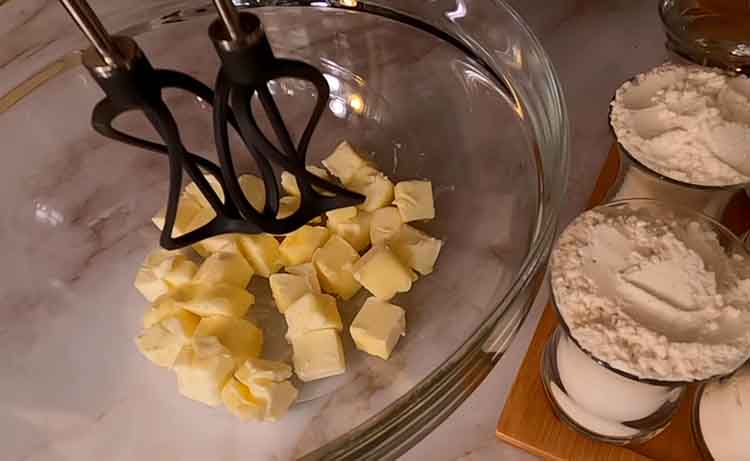
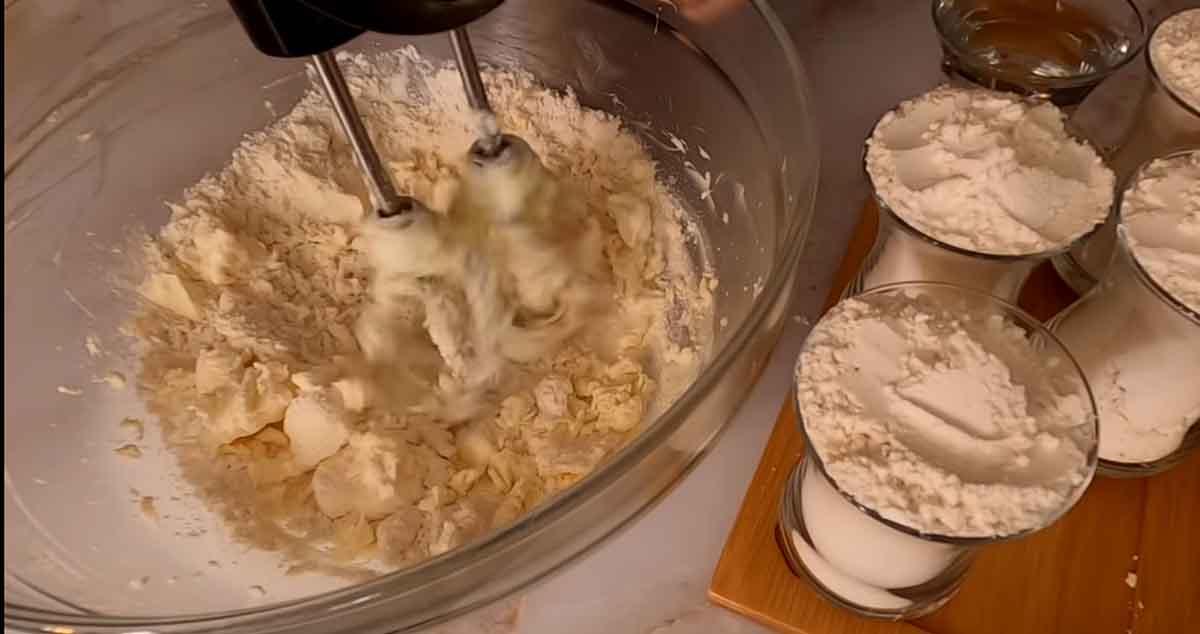
Sift the flour and mix it with solid oil or butter until it forms a crumbly mixture.
-
In a separate bowl, mix yogurt and baking powder, then add egg yolk, saffron, and milk.
-
Combine the mixtures and stir gently — do not knead too much.
-
Cover the dough with plastic wrap and refrigerate for 1–2 hours.
2. Prepare the Filling
-
Remove pits from the dates. If they’re hard, soak them briefly in hot water.
-
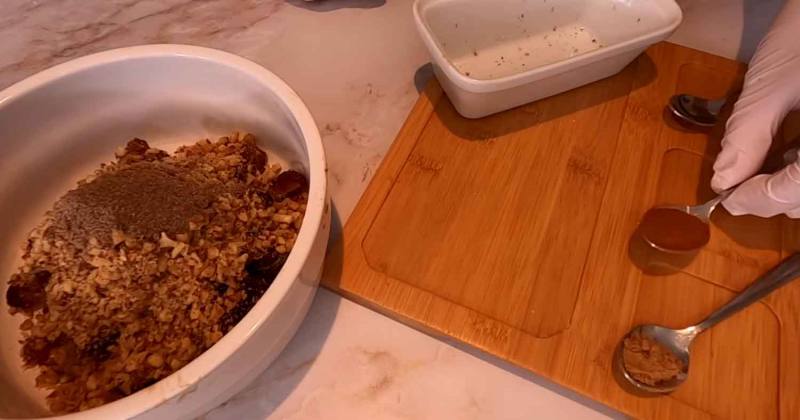
Mash or blend the dates with walnuts, cinnamon, and cardamom until smooth.
3. Shape the Kolompeh
-
Roll out the dough on a floured surface to medium thickness.
-
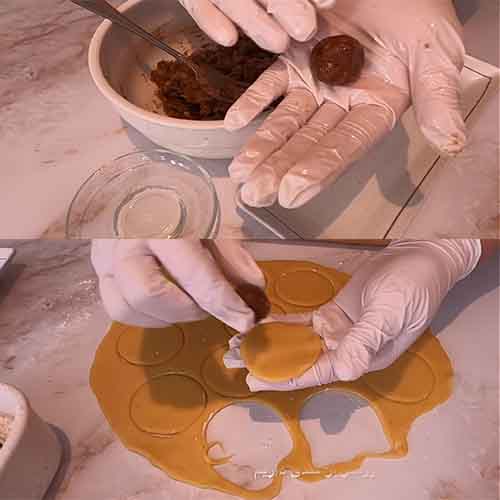
Place a small spoonful of filling on one piece of dough, then cover with another.
-
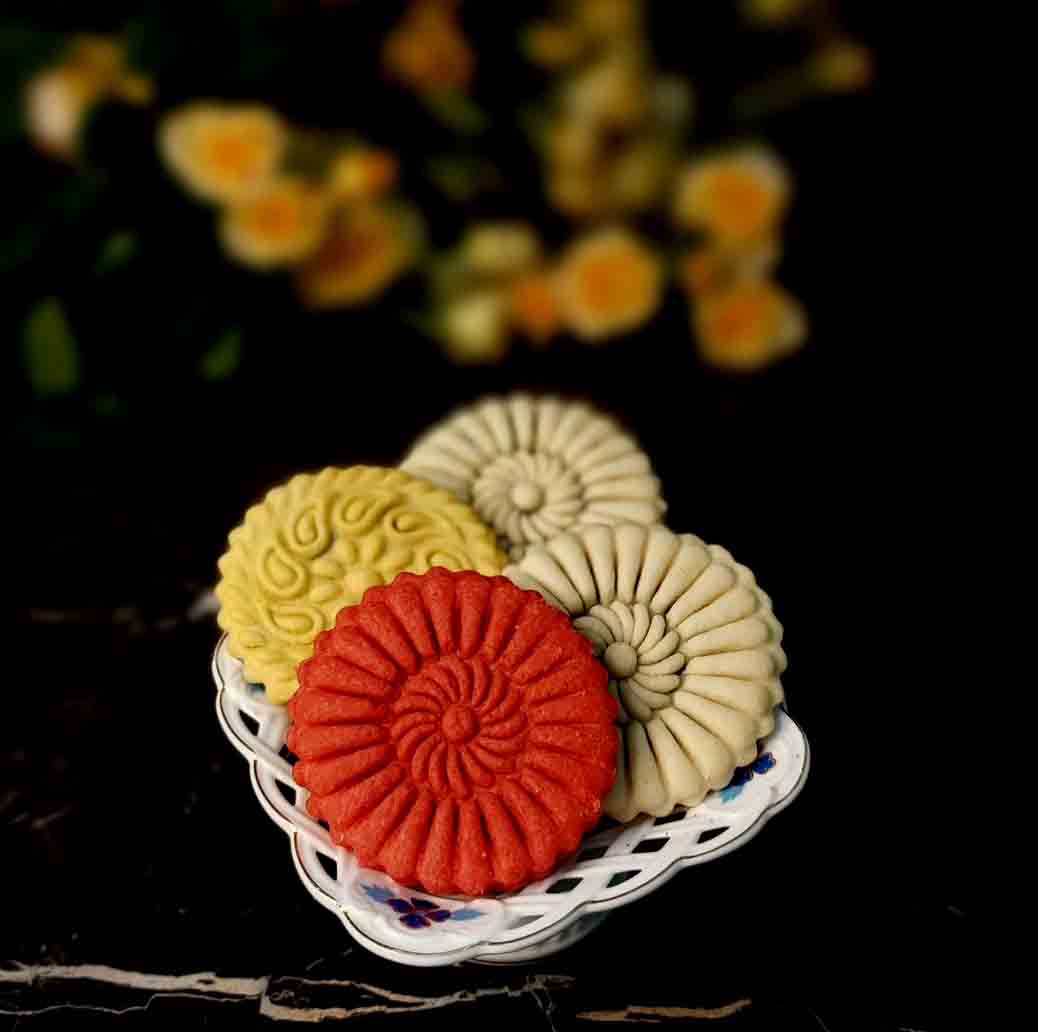
Press gently using a Kolompeh mold or cookie cutter to shape and design them.
(If you don’t have a mold, you can design it manually with a fork or knife.)

4. Bake
-
Preheat the oven to 180°C (350°F).
-
Place the cookies on a baking tray lined with parchment paper.
-
Bake for 15–20 minutes, until slightly golden (they shouldn’t darken too much).
5. Garnish
-
While still warm, sprinkle sesame seeds or pistachio powder on top for decoration.
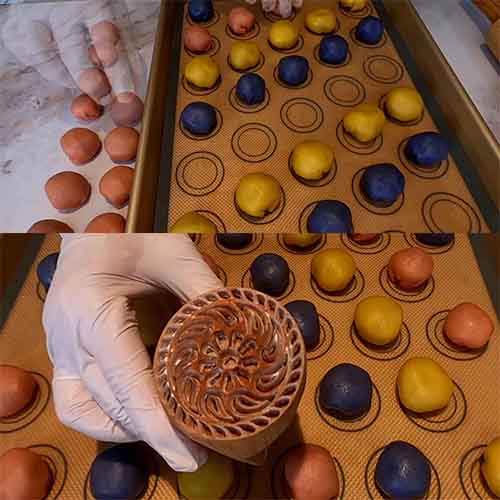
You can also use rose leaves, almond slices, or ground nuts. We have seen this decoration method in the article on how to make qurabiya sweets.
Notes:
-
Helpful Tips for Perfect Kolompeh
-
Don’t over-knead the dough; a light mix ensures a tender texture.
-
Saffron color: Add more saffron for a richer golden hue.
-
Sticky dough? Add a bit more flour until it’s easy to handle.
-
Soft filling: Soak fresh dates briefly before blending.
-
Storage: Keep in an airtight container — stays fresh for weeks.
-
Serving: Perfect with Persian tea, sour cherry tea, or Shir Khorma.
-
Modern Varieties
Today, Kolompeh comes in many creative forms:
Walnut Kolompeh
Sesame Kolompeh
Pistachio Kolompeh
Loqmeh (bite-size) Kolompeh
Each offers a unique texture and aroma — but all share that same nostalgic taste of Kerman.
FAQ
1. Can I make Kolompeh with chickpea flour?
Yes! You can replace wheat flour with chickpea flour for a gluten-free version.
2. Is Kolompeh good for children?
Absolutely. It’s rich in nutrients, energy, and natural sugars — great for kids and students.
3. Which city is Kolompeh originally from?
Historically from Bam, but now a symbol of Kerman Province as a whole.
4. Do I need to knead the dough?
No. Mix gently, then let it rest in the fridge for about 2 hours.
5. What can I serve with Kolompeh?
It pairs beautifully with hot Persian tea, rose tea, or borage flower tea.
Final Thoughts
Kolompeh is more than just a cookie — it’s a piece of Kerman’s culture.
From its fragrant saffron aroma to its soft date-walnut heart, every bite tells the story of Iranian tradition and hospitality.
Try baking it at home, enjoy it with tea, and experience one of Iran’s sweetest treasures — straight from Kerman to your kitchen.







Hi dear thanks for this cookie date
I have a question that can i use walnute and date in this cookie?
Hi dear Soozan
I hope you are great
Yes, you can add walnuts or walnut powder along with dates
You can do this depending on your taste
Thank you for this delicious recipe. I don’t have time to peel dates. Can I use dates with the skin?
Thank you dear Sara for your beautiful comment
You need to remove the skin of the dates
If it is hard, soak it the night before
So that the skin of the dates can be removed more easily
Do you think how many kolompeh can be prepared with this recipe?
Hello, my dear friend, you can usually make 20 Kolompeh with this amount of ingredients
This Traditional Kolompeh recipe easy looks great, but I’m wondering — how do you keep the date filling from drying out or leaking while baking? I’ve tried other kolompeh recipes before, and they never turn out as soft and flavorful as the ones from Kerman. What’s the trick in your version, Meals Cook?
That’s such a great and detailed question — thank you for noticing!
You’re right, in our traditional kolompeh recipe, the dough itself doesn’t include sugar — the natural sweetness comes mainly from the date filling, which is enhanced with cardamom, cinnamon, and cloves for aroma and depth.
However, the combination of saffron, butter, and milk gives the outer layer a mild sweetness and rich flavor even without added sugar.
If you prefer a slightly sweeter taste, you can add one tablespoon of powdered sugar to the dough — but the authentic Kermani-style Kolompeh keeps the sweetness light to highlight the flavor of the dates and spices.
That balance is what makes this dessert both traditional and perfectly satisfying.