
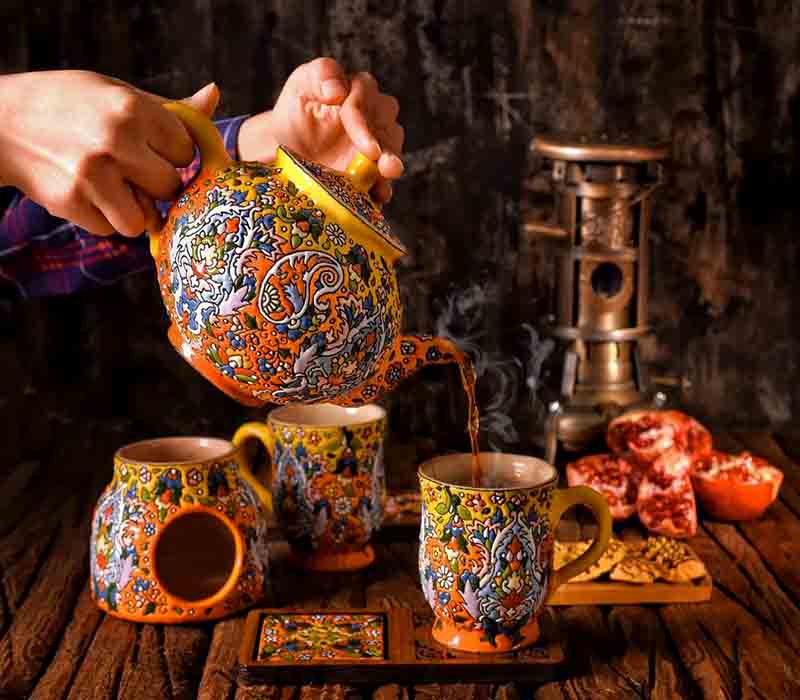
Persian tea (Chai) is more than just a drink; it is the heartbeat of Iranian hospitality. From morning breakfast with fresh bread and cheese to afternoon gatherings and late-night chats, tea is always present.
Unlike mass-produced commercial teas, authentic Iranian tea is grown in the lush, mountainous regions of Northern Iran, offering a natural, chemical-free flavor that needs no artificial additives.
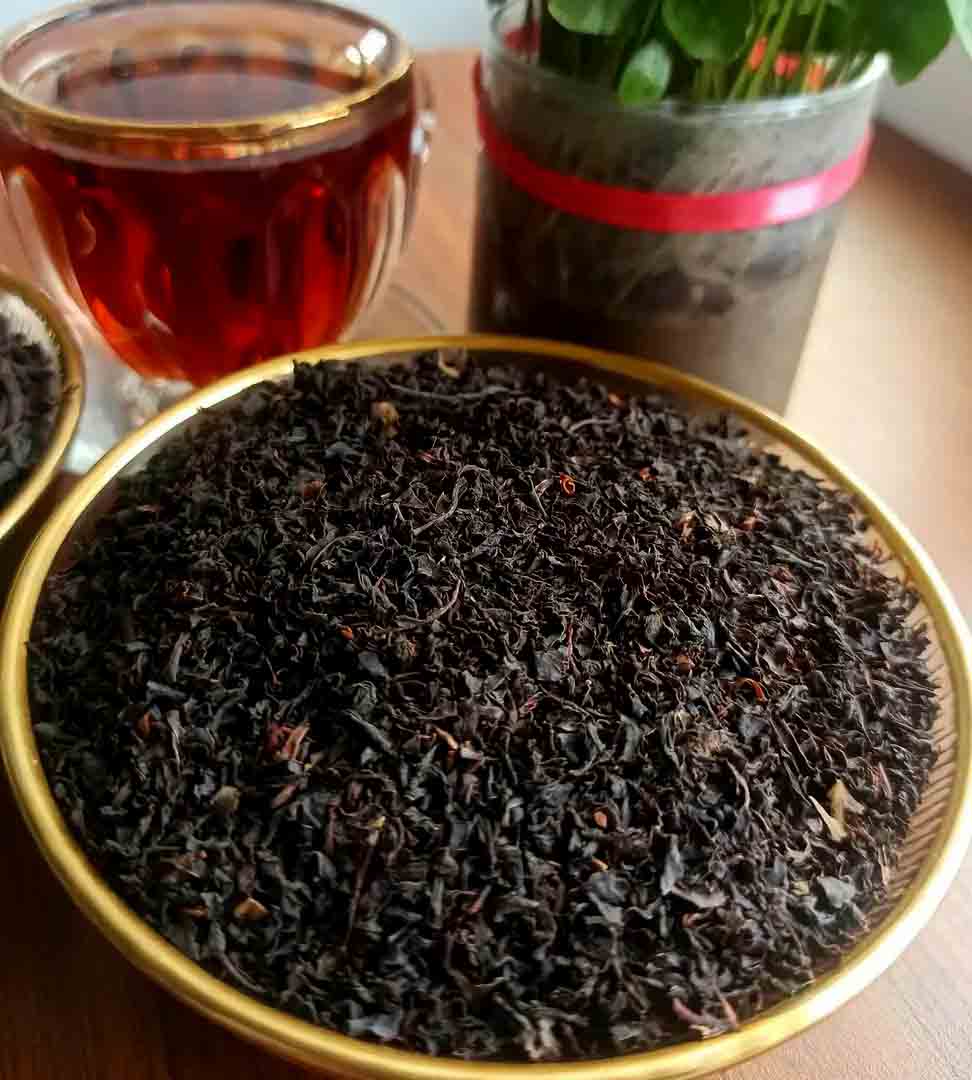
Persian Tea Ingredients
To brew a classic cup of Persian tea, you will need:
- 2 teaspoons loose black tea
- 2 cups boiling water
- Sugar cubes, for serving (optional)
- Persian rock candy, for serving (optional)
How to Brew the Perfect Persian Tea
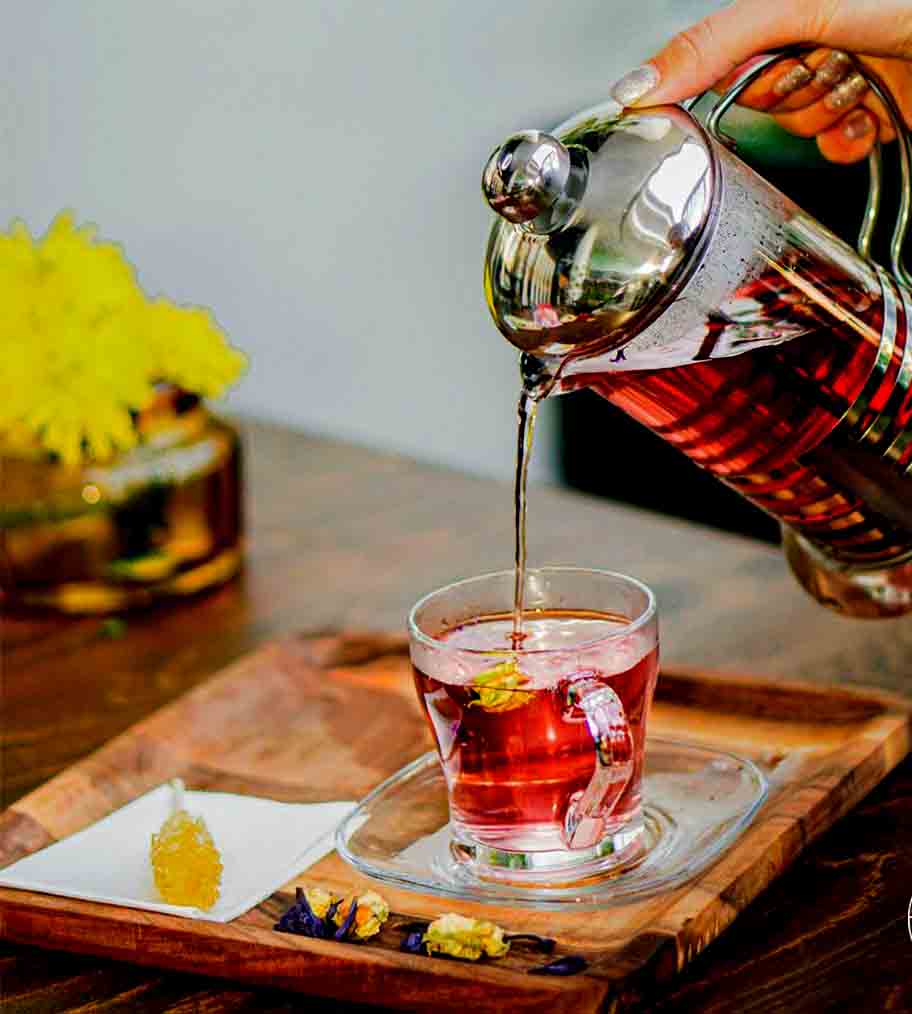
Brewing tea is an art in Iran. To achieve the perfect color and fragrance, the method matters just as much as the quality of the tea leaves themselves.
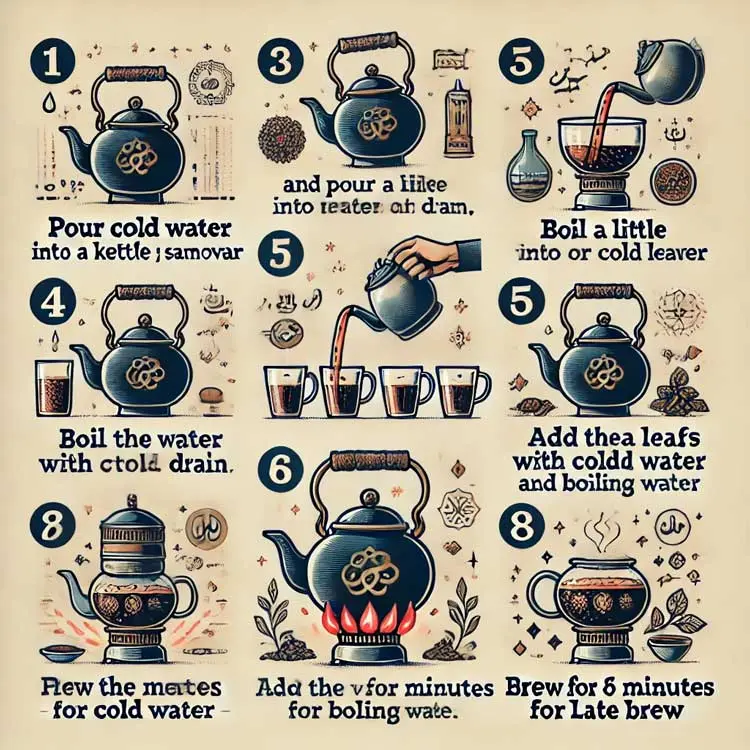
- Prepare the Water: Use fresh, cold water. If using a samovar or kettle, ensure the water reaches a boil. Avoid using pre-heated water.
- Warm the Teapot: Pour a small amount of boiling water into your teapot, swirl it, and drain it. This helps maintain the temperature during brewing.
- Measure the Tea: Add 1 to 2 teaspoons of tea leaves per serving, depending on your preferred strength.
- Rinse (Optional): Some tea drinkers prefer to rinse the dry leaves with a splash of cold water and drain immediately to remove dust and ensure a clearer liquor.
- Steep: Add fresh boiling water to the teapot, filling it about halfway.
- Brew: Place the teapot on top of the samovar or kettle to keep it warm. Let it brew gently over the steam.
- Wait: Black tea typically takes 5 to 10 minutes to brew (often called “early brew”). Some traditional teas may require up to 15–16 minutes for a deeper color and richer body.
The History of Tea in Iran:
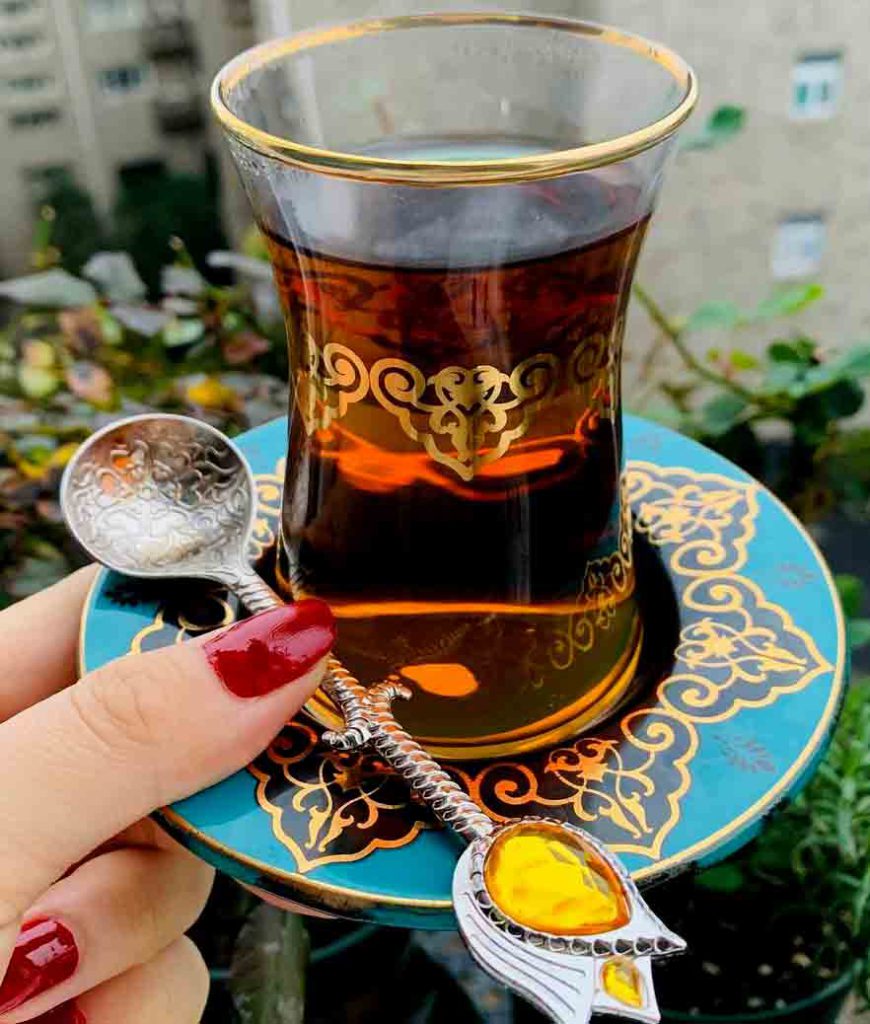
Tea plants were originally brought to Iran from China. While the plant has Chinese origins, it quickly gained a central position in Iranian society, eventually rivaling coffee in popularity.
Its widespread adoption is often attributed to its health benefits and its natural, risk-free profile. Today, the humidity and mountainous climate of northern Iran provide the perfect environment for cultivating some of the most popular black tea varieties in the region.
Types of Persian Tea
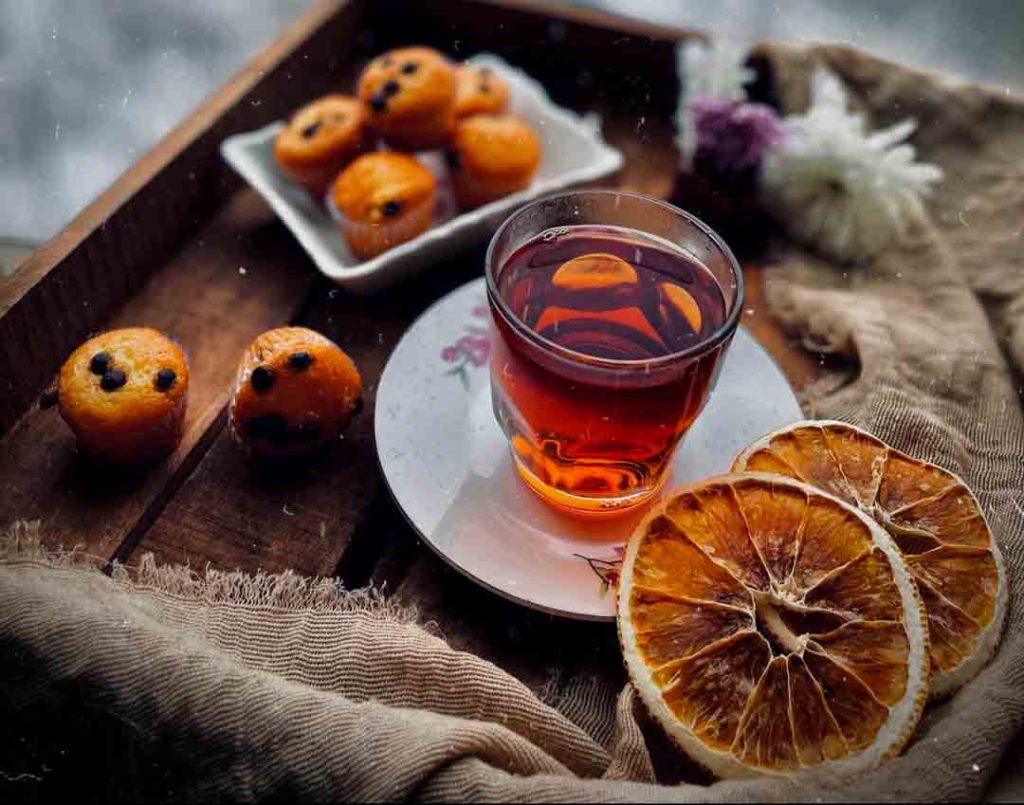
Iranian tea is categorized based on the size of the leaves and the part of the tea bush harvested. The most widely recognized grades include:
- Sargol: Made from the youngest buds and leaves. This is considered the highest quality tea with the best aroma.
- Momtaz: A high-quality grade consisting of slightly larger leaves with a robust flavor.
- Ghalam: Longer, rolled tea leaves are often blended for consistency.
- Shekaste: Broken tea leaves that produce a strong, deep color.
- Barooti: Fine tea particles, often used in blends to add strength.
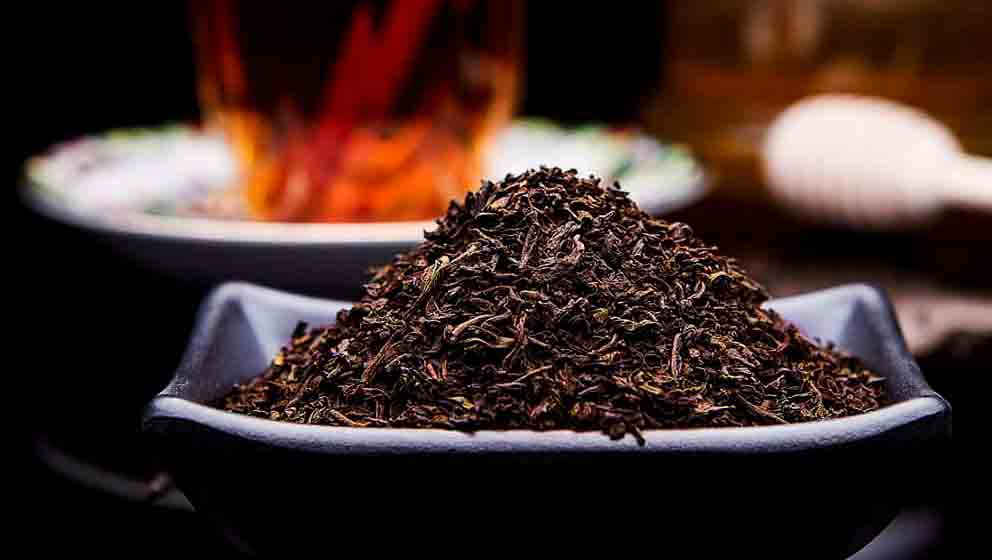
Seasonal Harvests
The quality and flavor of the tea can vary significantly depending on when it is harvested:
- Spring (Sargol): Widely considered the best harvest. The fresh, young leaves produce a delicate, superior aroma.
- Summer: The bush produces a second harvest. While these leaves have a different quality, they are still highly valued and often labeled as “Summer Tea” in northern markets.
- Autumn: The final harvest of the year. This tea typically has a stronger, slightly more bitter taste and is often used in blends to provide a bolder color and deeper body.
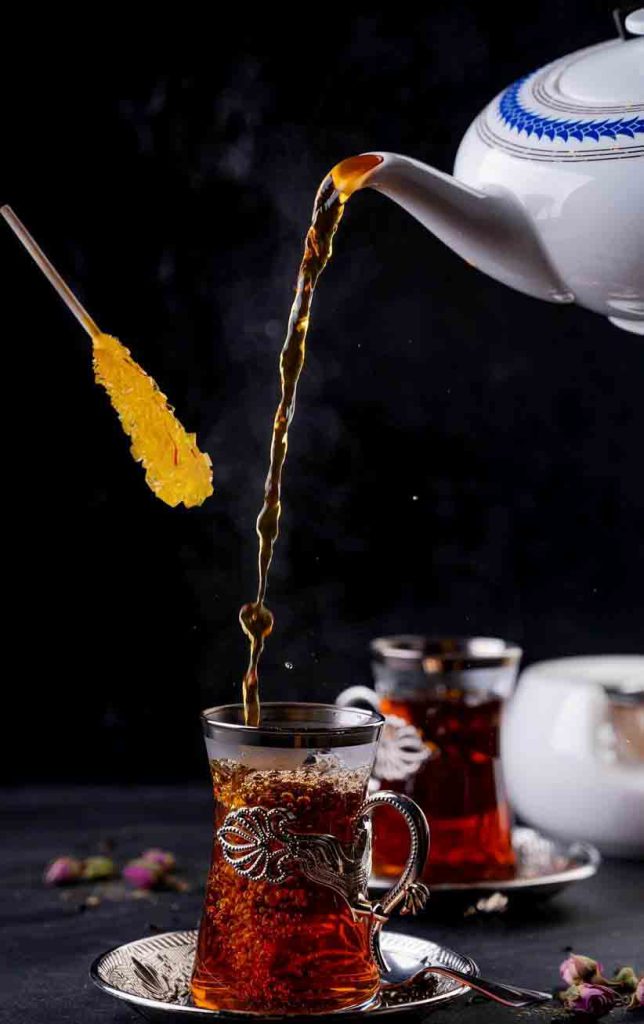
What to Serve with Persian Tea
In Iranian culture, tea is rarely consumed alone. It is traditionally served with sweets and pastries that balance the slight bitterness of black tea. Common accompaniments include:
- Sweets: Persian Fuman Cookies, Noon Khamei, Shirini Napoleoni, and Shirini Keshmeshi.
- Desserts: A warm cup of tea is the perfect finish after a serving of Sholeh Zard.
- Breakfast: Often served with bread, cheese, and fresh herbs to start the day.
- Persian tea is often served with sweets such as dates, rock candy, and Pashmak, a delicate Persian cotton candy.
- Iranian tea is often served as a complementary drink to aid digestion after rich Iranian breakfast dishes such as kaleh pacheh and halim.
FAQ
Why is Persian tea healthier than other teas?
Iranian tea is grown in the northern provinces with minimal use of pesticides. Because it is processed naturally, it does not require artificial colorings or essential oils, resulting in a cleaner, more natural drink.
Which harvest of Iranian tea is the best?
The Spring harvest (Sargol) is considered the best. It consists of the youngest buds and leaves, offering the most delicate aroma and flavor profile.
How long should I brew Persian tea?
For a standard black tea, 5 to 10 minutes is sufficient. Depending on the variety (some require a “late brew”), you can extend the time to 15 minutes for a stronger, darker cup.