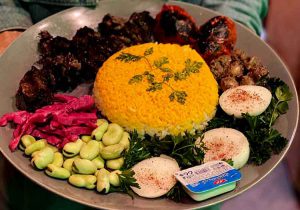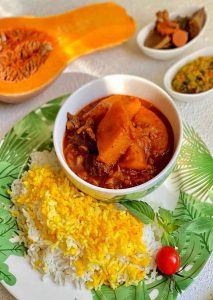


Halim, also spelled haleem, is one of Iran’s traditional dishes. It is commonly prepared for religious ceremonies, Ramadan gatherings, and other special occasions. Many Iranians also enjoy it as a warm and filling breakfast.
There are several ways to prepare haleem, but traditional Iranian haleem requires only a few basic ingredients, including wheat and meat. Although the ingredients are simple, achieving the authentic flavor and stretchy texture requires patience and careful cooking.
Pay attention to this definition of Haleem, which is taken from Wikipedia.
Haleem is a type of stew that is widely consumed in South Asia, the Middle East and Central Asia. Although the dish varies from region to region, it optionally includes wheat or barley, meat and lentils. It is made by blending or mashing the meat in the curry and serving hot with flat breads or on its own. The original Haleem, which is different from this variety, is an ancient Iranian dish served with wheat, meat, cinnamon, and sugar that remains popular in Iran.
What is Haleem?
Haleem is a slow-cooked dish traditionally associated with the Middle East and surrounding regions. Iranian halim is made by cooking wheat and meat for several hours and beating them together until the mixture becomes smooth, thick, and slightly stretchy.
Halim can be served as a hearty breakfast or a complete meal. Because it contains wheat and meat, it is filling and is usually eaten in the morning. It is also a popular dish during Ramadan and is often served for iftar.
Making homemade haleem takes time and patience. The wheat must cook thoroughly without sticking to the bottom of the pot, and the finished mixture must be stirred and beaten well to develop its characteristic texture.
Follow this recipe to prepare traditional Iranian haleem at home.
- Servings: 4
- Preparation time: 3 hours, plus overnight soaking
- Cooking time: Approximately 4 hours
Ingredients:
| Peeled wheat | 0.9 pounds (about 400 grams) |
| Mutton | 0.7 pounds (about 300 grams) |
| Onion | 1 piece |
| Turmeric | 1 teaspoon |
| Liquid Oil | as needed |
| Sugar | as needed |
| Salt | as needed |
Instruction:
1. Soak the Wheat
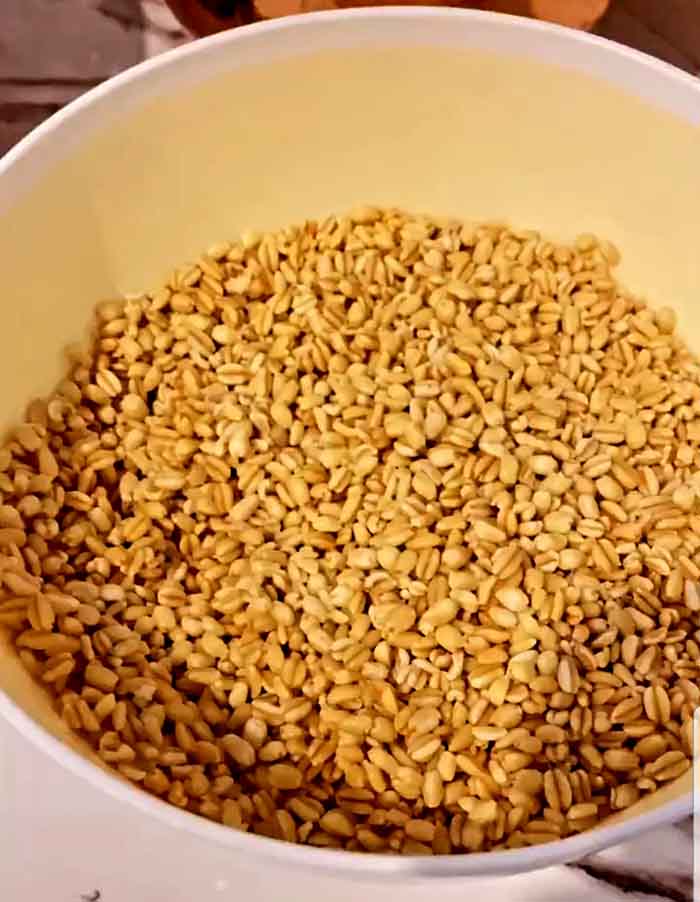
Begin by soaking the wheat. Place it in a large bowl, cover it with plenty of water, and leave it overnight. Soaking softens the wheat and helps it cook more evenly.
2. Cook the Wheat

Drain the soaked wheat and transfer it to a large pot. Add approximately 6 to 7 cups of water.
Place the pot over low heat and allow the wheat to cook slowly until it becomes completely soft. Stir it every few minutes to prevent it from sticking to the bottom of the pot.
3. Cook the Mutton

While the wheat is cooking, wash the meat and place it in a separate pot. Using lamb neck, lamb ribs, or another bone-in cut can give the haleem a richer flavor and better texture.
Add enough water to cover the meat.
4. Add the Onion and Turmeric
Peel the onion and cut it into four pieces. Add the onion and turmeric to the pot containing the meat.
The onion and turmeric help flavor the meat and reduce its strong smell. Cover the pot and cook the meat over low heat until it becomes completely tender.
5. Drain and Shred the Meat
Once the meat is tender, remove it from the cooking liquid and place it in a strainer. Allow it to cool until it is safe to handle.
Remove any bones, then shred or pound the meat into fine strands. Avoid blending it in a food processor, as this can prevent the haleem from developing its traditional stretchy texture.
Keep some of the meat broth in case you need to adjust the consistency later.
6. Combine the Meat and Wheat
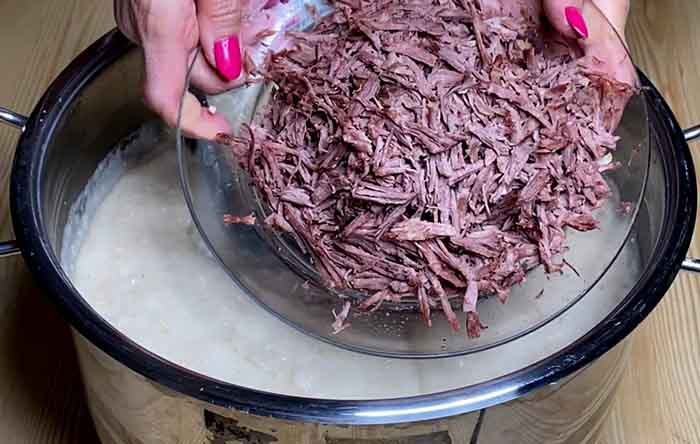
Continue cooking the wheat until it breaks down and develops a soft, porridge-like consistency.
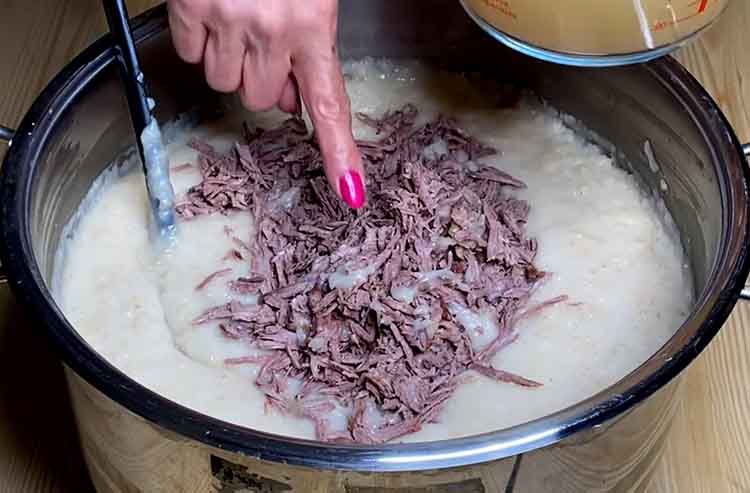
Add the shredded meat to the cooked wheat and season the mixture with a small amount of salt. Stir thoroughly to distribute the meat evenly throughout the wheat.
7. Beat the Haleem
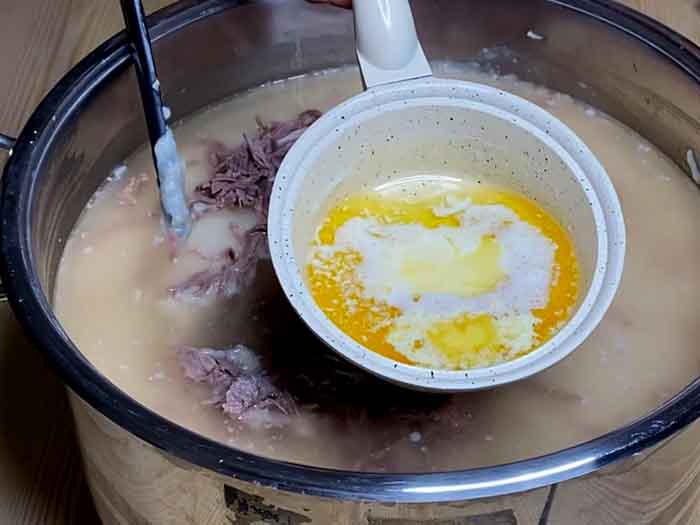
Add one tablespoon of oil or melted butter to the pot. Continue stirring and beating the mixture over low heat.
This is one of the most important stages of the recipe. Proper beating helps the wheat and meat combine and gives Iranian haleem its smooth and slightly stretchy consistency.
Stir the mixture frequently to prevent it from sticking or burning.
8. Reduce the Excess Liquid
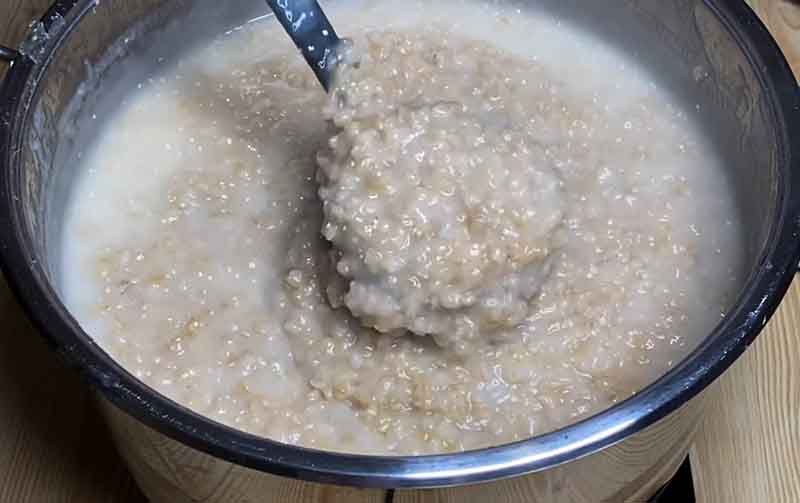
Keep the heat low and continue cooking until some of the excess liquid evaporates and the haleem begins to thicken.
Do not allow all the liquid to evaporate. Haleem becomes noticeably thicker as it cools, so it should still be slightly loose when you remove it from the heat.
If it becomes too thick while cooking, gradually add some of the reserved meat broth or a little hot water.
9. Adjust the Consistency
Continue stirring and beating the haleem until it reaches a thick, smooth, and elastic consistency.
This process requires patience. Cooking the haleem slowly over gentle heat gives it a better texture and helps the flavors blend properly.
10. Serve the Haleem
Once the haleem is ready, remove the pot from the heat and let it rest for a few minutes.
Transfer it to serving bowls and garnish it with cinnamon, sesame seeds, and a little melted butter or oil. You can serve it with sugar or salt, depending on your preference.
Haleem is best served warm.

Notes:

- It is better to use rib meat or lamb neck to make this food.
- To make haleem better, you can use sesame and pour it into the pot at the last minute of cooking.
- Be sure to stir the ingredients of haleem well to prevent them from sticking to the bottom.
- Use onion and turmeric to remove the smell of meat.
Serving Halim with salt or sugar?

Do you eat Halim with sugar or salt? Whether this food is tastier with sugar or with salt depends on your taste.
Some eat this food with sugar and some with salt, which is completely tasty. Naturally, the caloric content of haleem increases with sugar. Usually, cinnamon, sesame, and some coconut powder are used to decorate haleem.
For oil, you can use liquid oil, solid oil, animal oil, and butter. It is better to heat the oil a little and pour a tablespoon on each bowl of haleem while serving.
- Halim bademjan is another type of Halim that is prepared with the same recipe and with eggplant.
- Ash sholeh ghalamkar, Adasi, and Kale Pache are some of the hearty Iranian breakfasts that you must try next to Halim. These dishes are very delicious with fresh Sangak bread.
FAQ :
1. How much of haleem does one kilo of wheat yield?
Usually, for each person, 200 grams of wheat is needed to make haleem. In this case, with 1 kilo of wheat, you can prepare halim for about 5 or 6 people.
Of course, the amount of meat and other ingredients you use in the preparation of haleem also affects this amount.
2. How is Halim Kermanshahi prepared differently?
More salt is used to cook Haleem Kermanshahi. Sugar also has no place in this cooking method.
3. How is Haleem stretched?
The main point of stretching halim is to use red meat with bones in the right way. This means that you should not chop the tender meat, and when cooking the meat, you must remove the bones, and the tender meat must be ground with a meat grinder.
Do not grind halim meat in any way, and do not mix it in a food processor. The more you beat Haleem, the more it will stretch.
4. How to prepare halim with sesame?
Many people use some sesame in it to make it tasty and strengthen the taste of homemade haleem. If you wish, you can add 1 to 2 tablespoons of raw sesame to this food after cooking it. Then mix the haleem well and serve.