

Hello to my dear friends, both my fellow Iranians missing home and my international food lovers eager to explore the Persian confectionery! I am Chef Haghighi, and welcome back to my kitchen.
Today, I am thrilled to share a recipe that is the very definition of nostalgia for us Iranians: Shirini Beheshti.
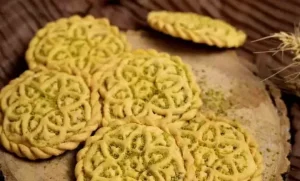
In Farsi, “Behesht” means Heaven, so these are quite literally “Heavenly Sweets.” And believe me, one bite of this incredibly delicate cookie, and you will understand the name. It is famous for its unique texture—so crumbly and tender that it practically dissolves the moment it hits your tongue.
While it looks sophisticated, this authentic Persian sweet is surprisingly made with very few, accessible ingredients. It also has a wonderful advantage: a very long shelf life. Let’s make a batch of these heavenly treats together.
Ingredients

To achieve that perfect, “heavenly” texture, we need to respect the ingredients. This isn’t just mixing; it’s chemistry!
Important Note for my friends abroad: Finding exact Iranian ingredients can sometimes be tough. I have included notes below to help you find the right substitutes in Western supermarkets.
| Ingredient | Amount/Details | Notes |
| Solid Oil | 120 gr | Crucial: This must be solid fat. Traditional Iranian semi-solid shortening will not work well for dry cookies. For the most delicate texture, it is highly recommended to use “confectionery shortening”. Please do not use butter or margarine, as they make the cookie tough and alter the flavor. If you only have regular solid oil, melt it and chill it again to “clarify” it, although commercial shortening still yields better results. |
| Powdered Sugar | 180 gr | You must sift the powdered sugar before measuring to ensure a smooth, lump-free dough. |
| Vanilla | 1/2 Teaspoon | Adds a lovely background aroma. |
| Liquid Oil | 120 gr | Use a neutral oil, like canola or vegetable oil. We will add this in stages. |
| Cardamom Powder | 1/2 teaspoon | The soul of Persian sweets! For the best aroma, buy whole green cardamom pods and grind them fresh yourself just before using. |
| Flour | 280 gr | Use all-purpose flour or pastry flour (known as “Nool” flour in Iran); heavier bread flours will result in tough cookies. It must be sifted (at least 3 times) before use. |
| Cocoa Powder | Optional (1 spoon) | If you want chocolate versions. Must be sifted. |
| Poppy/Purslane Seeds | For garnish | Traditionally, we use “Khorfeh” (Purslane seeds), but black poppy seeds or nigella seeds work beautifully for decoration. |
Step-by-Step: How to Make Authentic Shirini Beheshti
Prep Time: Approximately 20 Minutes
Cook Time: 15 Minutes
Cooling Time (Passive): 3 to 4 Hours
Yield/Servings: Approx. 50–60 Small Cookies (8 to 9 servings)
Follow these steps carefully. Patience during the mixing process is the key to success.
Phase 1: The Creaming Process
Initial Mix: Place your solid oil into a large mixing bowl. Add the sifted powdered sugar and the vanilla.
Start Slow: Using an electric mixer, start beating on the lowest speed.
Increase Speed: As the sugar absorbs into the fat, gradually increase the speed. Continue beating for about 2 to 3 minutes. You want the mixture to look creamy and fluffy.
Phase 2: The Liquid Oil Technique
This is a signature technique for this cookie, ensuring lightness.
Add in Stages: Do not dump all the liquid oil in at once! Add it gradually in three or four separate stages.
Beat Between Additions: After each addition of liquid oil, beat the mixture for a full minute.
Cue: Continue this process until the batter becomes very pale, almost white, and the oil’s yellowish tint is completely gone.

Phase 3: Flavor and Flour
Add Cardamom: Add your freshly ground cardamom powder now. Beat briefly just until it’s incorporated into the batter.
Fold in Flour: Add the sifted flour all at once to the bowl. Using a sturdy spoon or spatula, gently fold and mix the flour into the wet ingredients until a soft dough forms. Do not overmix, as this can cause the oil to separate and result in a tough final product.
Phase 4: Shaping

If you want variety, you can split the dough in half now. Keep one half plain (vanilla/cardamom). To the other half, add sifted cocoa powder until you reach your desired chocolate color and taste.
Fit a piping bag with a star tip (like a Wilton #20 or similar medium star). Note: If you choose to shape by hand or a cutter instead of a piping bag, resting the dough in the fridge for 1-2 hours can help with cohesion.
Line your baking trays with parchment paper or a silicone mat. Light-colored aluminum or galvanized trays are preferred because they transfer heat more gently than dark trays. Fill your piping bag and pipe small rosettes onto the tray. They shouldn’t be too large.
Garnish: For that classic look, sprinkle a pinch of poppy seeds or purslane seeds (Khorfeh) on top of each cookie. Don’t overdo it; just a little touch of elegance.
Other Nowruz sweets include Shirini Zaban, Shirini Keshmeshi, and Shirini Nokhodchi.
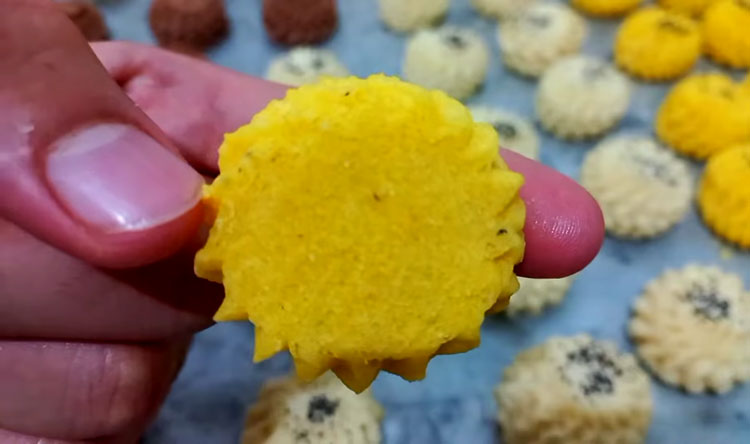
The Most Critical Step: Baking and The “Plaster Statue” Rule
This is where many beginners fail with Shirini Beheshti. Please read carefully!
-
Oven Temperature: Preheat your oven to 170°C (340°F). If you are using your oven’s own thick, dark tray, preheat it slightly before adding the cookies to prevent the bottoms from burning while the centers remain raw.
-
Baking Time: Bake for approximately 15 minutes. Keep an eye on them; they should remain pale and not brown significantly. They are done when the bottoms harden slightly, and they detach easily from the parchment paper after cooling completely. Overbaking makes them dry and hard.
-
Spacing: These cookies hold their shape well and do not spread much, so you don’t need huge gaps between them on the tray, but leave a little breathing room.
Notes:

You must let these cookies get completely, totally, absolutely COLD before touching them.
Think of hot Shirini Beheshti like a delicate, wet plaster statue. If you touch a damp plaster statue, your fingerprint dents it, and it crumbles. But once that plaster dries and sets, it becomes firm and solid. It is the same with these cookies.
When they come out of the oven, they are incredibly fragile. Do not touch them. Let them sit on the hot baking tray on a wire rack for at least 3 to 4 hours until they are completely set. Only then can you safely move them to a serving platter without them crumbling.
Storage and Shelf Life
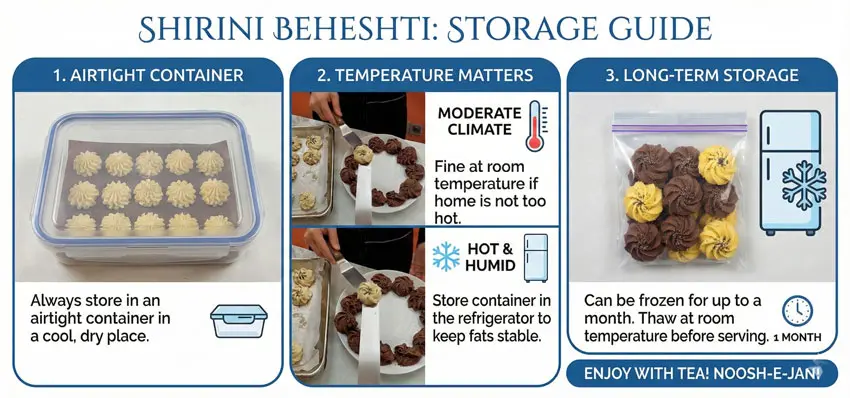
One of the best things about Shirini Beheshti is how well it keeps.
-
Container: Always store them in an airtight container in a cool, dry place.
-
Temperature: If you live in a moderate climate and your home isn’t too hot, they are fine at room temperature. However, if the weather is very hot and humid, it is better to store the container in the refrigerator to keep the fats stable. For longer storage (up to a month), they can be frozen in an airtight container and thawed at room temperature before serving.
Enjoy this taste of Persian heaven with a nice hot cup of Persian tea! Noosh-e-jan!
FAQ
Q: Why do my Shirini Beheshti cookies crumble when I touch them after baking? A: When these cookies come out of the oven, they are incredibly fragile, much like a wet plaster statue. If you touch them while they are hot, they will dent and crumble. You must let them sit on the hot baking tray on a wire rack for at least 3 to 4 hours until they are completely cold and set before attempting to move them.
Q: Can I use butter or margarine instead of solid oil for this recipe? A: No, it is highly recommended to use “confectionery shortening” or solid oil. Butter and margarine should not be used because they make the cookie tough and alter the flavor. If you only have regular solid oil, you should melt it and chill it again to “clarify” it before use.
Q: What is the secret to getting the pale, light texture in the dough? A: The secret is the “Liquid Oil Technique”. Do not dump all the liquid oil in at once; instead, add it gradually in three or four separate stages. You must beat the mixture for a full minute after each addition until the batter becomes very pale (almost white) and the yellowish tint is completely gone.
Q: What type of flour is best for these Persian cookies? A: You should use all-purpose flour or pastry flour (known as “Nool” flour in Iran). Do not use heavier bread flours, as they will result in tough cookies. It is also essential to sift the flour at least 3 times before use.
Q: How should I store Shirini Beheshti, and how long do they last? A: Always store them in an airtight container in a cool, dry place. If you live in a hot or humid climate, it is better to store the container in the refrigerator to keep the fats stable. For longer storage, they can be frozen in an airtight container for up to a month.