


Since childhood, I have loved the soft and sweet texture of masghati. When my father returned from his travels, he always brought us this dessert and Ghotab souvenirs.
That’s why I have loved this sweet since I was a child.
I have very good memories of it. When I was growing up, I said I should make this delicious sweet in memory of my father, who is no longer with us.
This Persian dessert is one of the most delicious Shirazi sweets in Fars Province. The age of this dessert dates back almost two centuries.
Abdullah Dehbashi, the ruler of Larestan at the beginning of the Qajar period, migrated to Sharjah after 24 years of ruling this land.
Now it is time to learn the recipe for the best Iranian dessert, so be with us in this article.
Masghati recipe
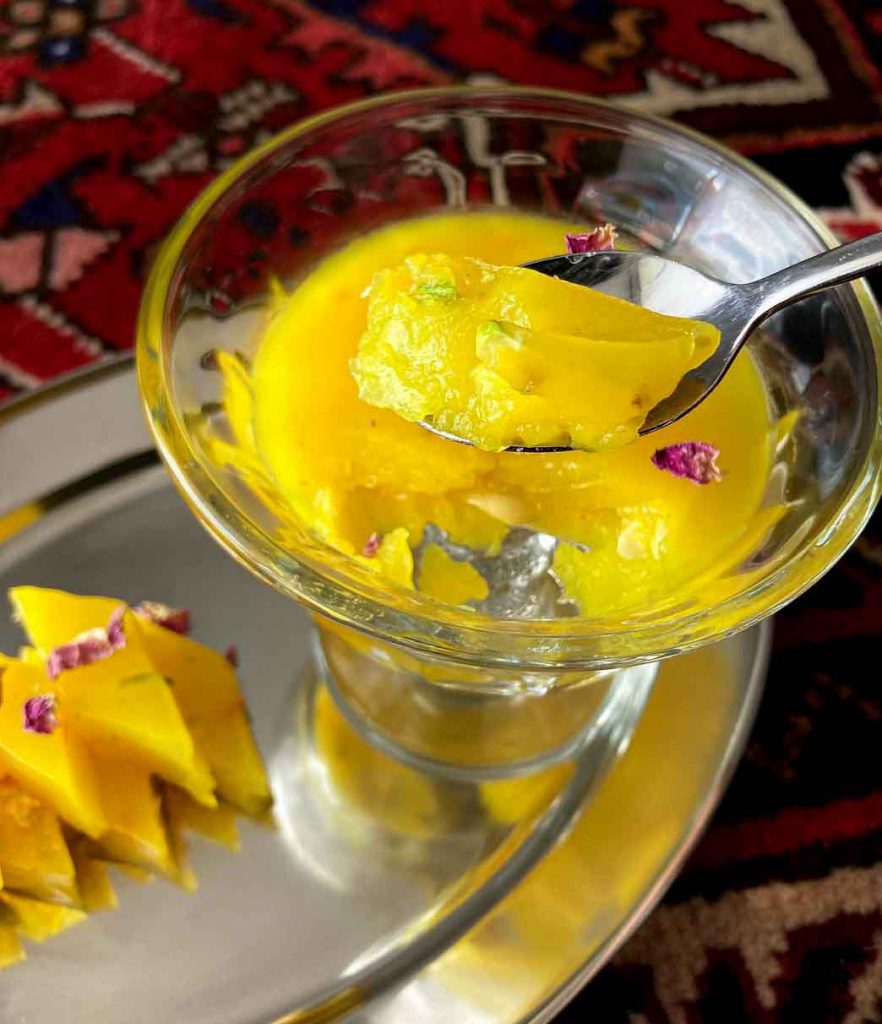
Ingredient:
| Starch | 1 cup |
| Water | 7 cups |
| Sugar | 3 cups |
| Butter | 1/2 cup |
| Rose water | 4 tablespoons |
| Almond slices and pistachio slices | as needed |
| Brewed saffron | as needed |
| Cardamom | as needed |
Instruction:
1. It is better to soak the starch in advance to remove its sourness. To prepare this dessert, first pour a cup of starch into a suitable bowl, then add cold water and stir until the starch is soaked.
2. First, pour the water and soaked starch into a bowl and mix well. After the starch is dissolved in the water, pass it through a strainer until it becomes uniform.
3. Put the filtered starch on medium gas heat and stir constantly until the starch boils.
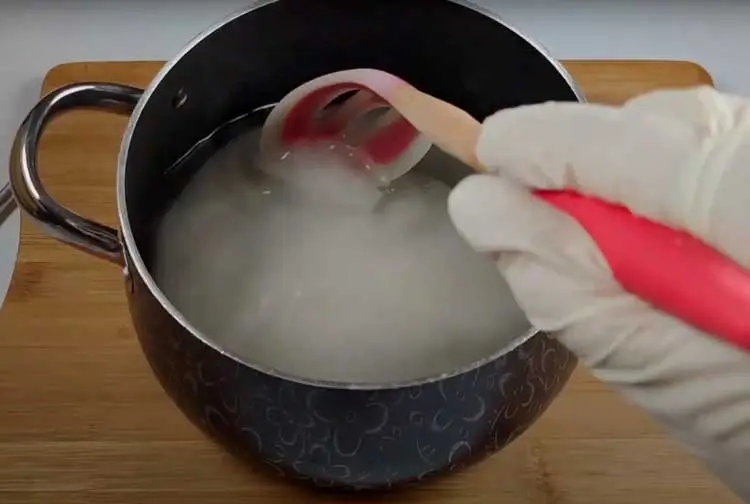
4. After the starch boils, add the sugar and stir until the sugar dissolves a little. Then, add the butter to the mixture and stir.
5. Slowly add the brewed saffron to the above ingredients and stir until the dessert takes on a saffron color. Stir until the concentration of this dessert is more than fereni. Be careful that it does not stick.
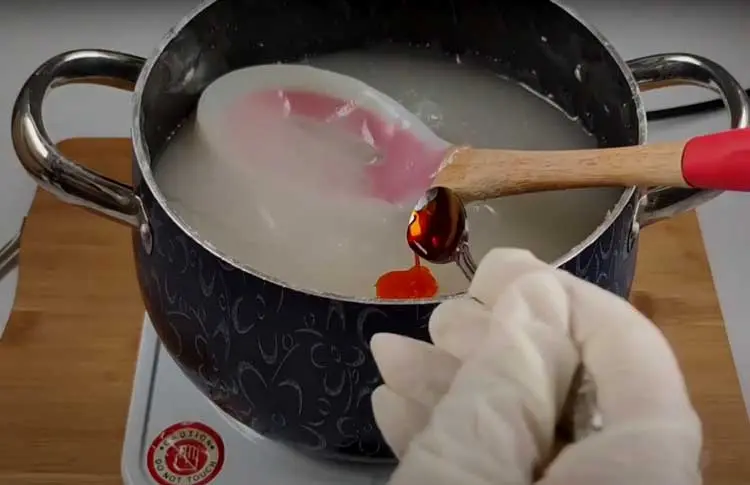
6. After the starch reaches enough consistency, thicker than Fereni, add rose water and cardamom and turn off the heat after 2–3 minutes.
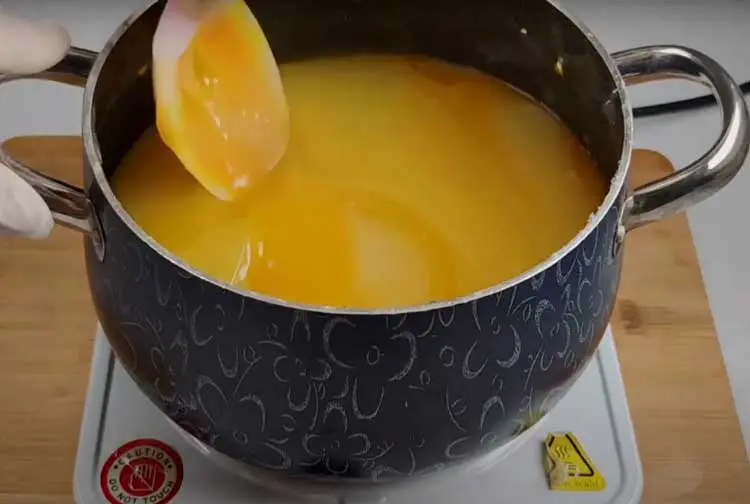
When the ingredients have settled well and separated from the container, grease a rectangular container and pour this dessert into it.
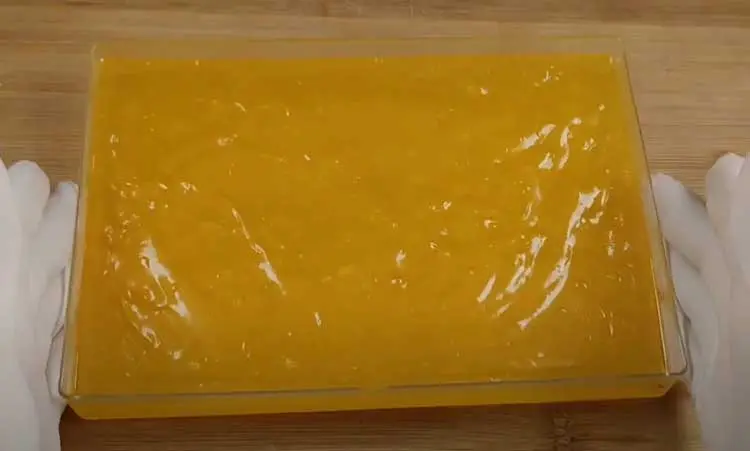
Add as many almond and pistachio slices as you like, and set it aside until it cools.
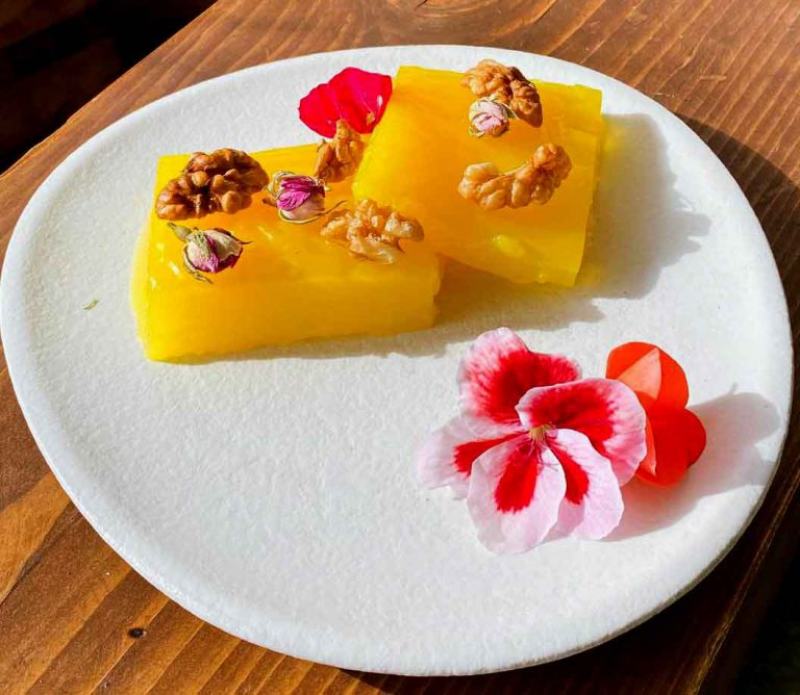
7. After it cools down, leave the dessert in the refrigerator for about 4 hours to set well. When serving, cut it in the desired shape and arrange it in the serving dish.
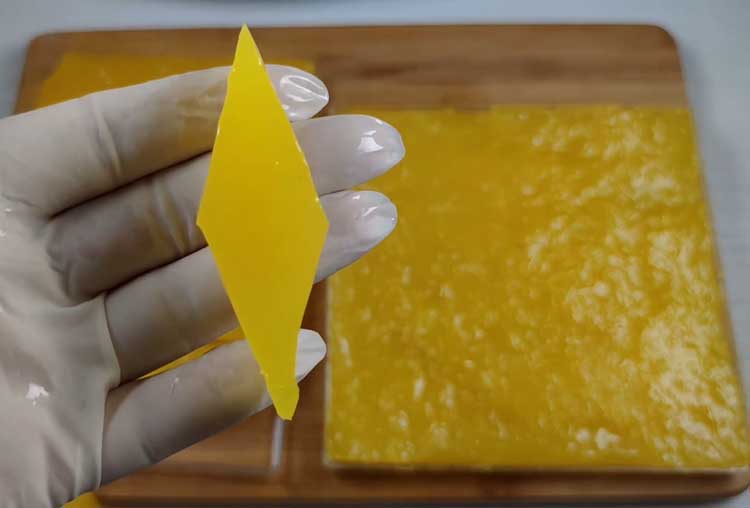
This Iranian dessert has a lot of fans because of its delicious and sweet taste, such as sholeh zard and Tar halva Shirazi.
Types of masghati:
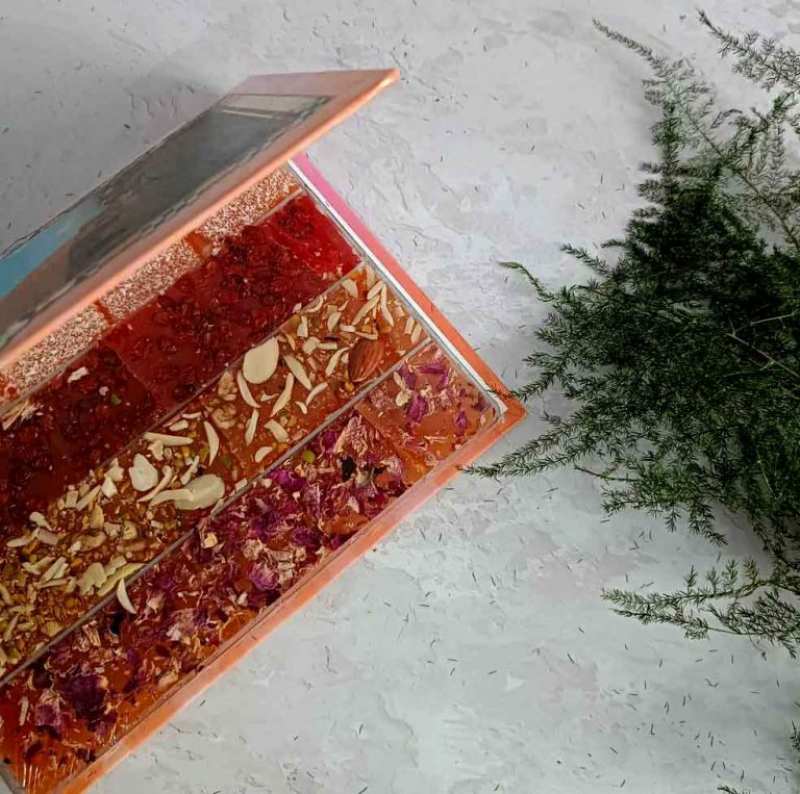
Some models also contain milk, jelly, walnuts, fruit, and other ingredients, which also change their taste.
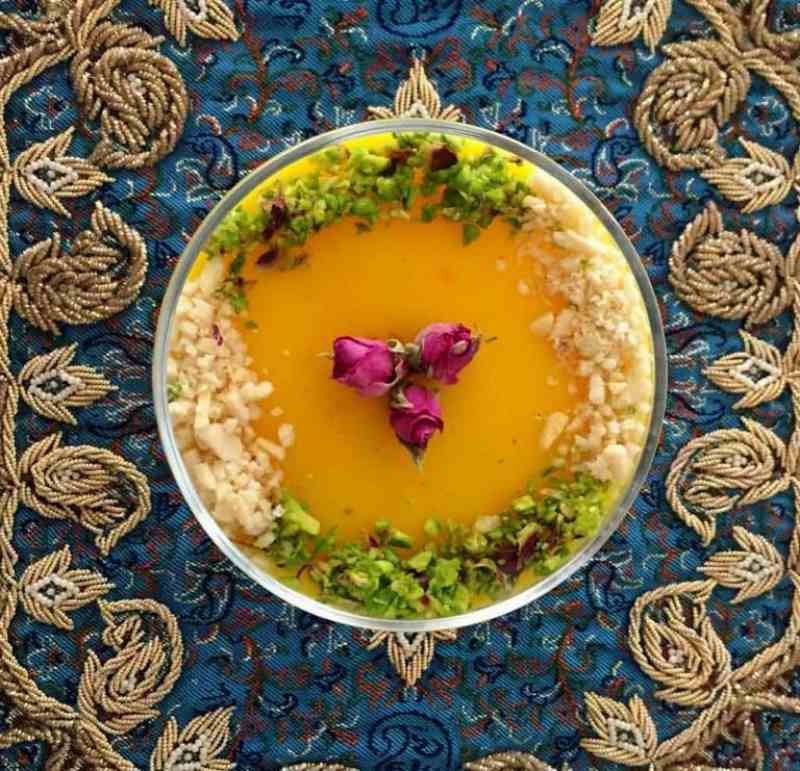
| 1. Saffron | The best and most famous model of this dessert is the saffron model |
| 2. Pomegranate | is a good choice for a party, especially a Yalda night party. Many Iranian cities also make it with pomegranate decoration. |
| 3. Milk | The taste of this simple dessert is very pleasant, but we recommend that people who are allergic to milk or milk lactose use water instead of milk. |
| 4. Two-colour | Some people think it is difficult to make two-color desserts at home. This type of dessert is also fun for children and will be a delicious snack or dessert. |
| 5. Lari | This dessert has a pleasant color and taste. For this reason, it is one of the most important souvenirs in the city of Lar. |
| 6. Coconut | The preparation of this model is a little different from that of the simple one. However, you can make this sweet at home with family and friends. |
| 7. Jelly | It has an attractive color that can be a good substitute for sweets and snacks. You can make a jelly mold for your birthday, child, or party. |
Notes:
| 1 | If this dessert has not reached consistency, throw water in the refrigerator. |
| 2 | It is better to first remove the edges of this from the mold with a wet knife, let it sit at room temperature for a while, and then cut it. |
| 3 | Essential oils are added at the end of the process so that their fragrance does not disappear during cooking. |
| 4 | Powdered starch is not suitable for making this dessert. |
| 5 | This dessert’s cooking temperature should be mild; for this amount, it should take 3 hours to become completely thick. |
| 6 | If the heat is high, the smell of raw starch will remain in this dessert. |
| 7 | Pre-soaking the starch prevents it from going sour. |
| 8 | You can store this muscat in the refrigerator for up to 3 months. |
| 9 | The golden point in preparing Shirazi sweet is its continuous stirring. If you hate this, it’s better not to make this dessert! It has to be stirred continuously until it boils, and this may even take an hour! You need to stir again after this part! |
| 10 | If you want to cut it in a rhombus shape, it is better to use a rectangular mold. |
History

Muhammad Ali, the grandson of Abdullah, who was the son of Abbas, commuted between the country of Oman and the city of Masghat.
The result of these interactions was getting to know the halva of Masghat, which at that time was not in its current form and was very different from today’s halva.
Muhammad Ali learned how to cook it and brought it with him to Bandar Lange about two centuries ago (Bandar Lange was one of the provinces of Larestan at that time).
For many years, he also made changes in the cooking of this dessert, such as adding flavorings such as cardamom, rose water, and saffron.
Finally, more than a century ago, his children started baking masghat in the present form from Lar Shahr Square.
Now, they are the descendants of Muhammad Ali, the Mohibi, and the Confectioner families, who continue the way of their ancestors in the field of baking halva.
It is interesting to know that initially, straw and tin containers were used for packing this type of halwa. Perhaps one reason for using metal containers was that the sharp edges of these containers could be used to cut the halwa into pieces.
For a long time, this halva, along with biscuits, has been an integral part of the parties and celebrations of the people of this land.
What is masghati?
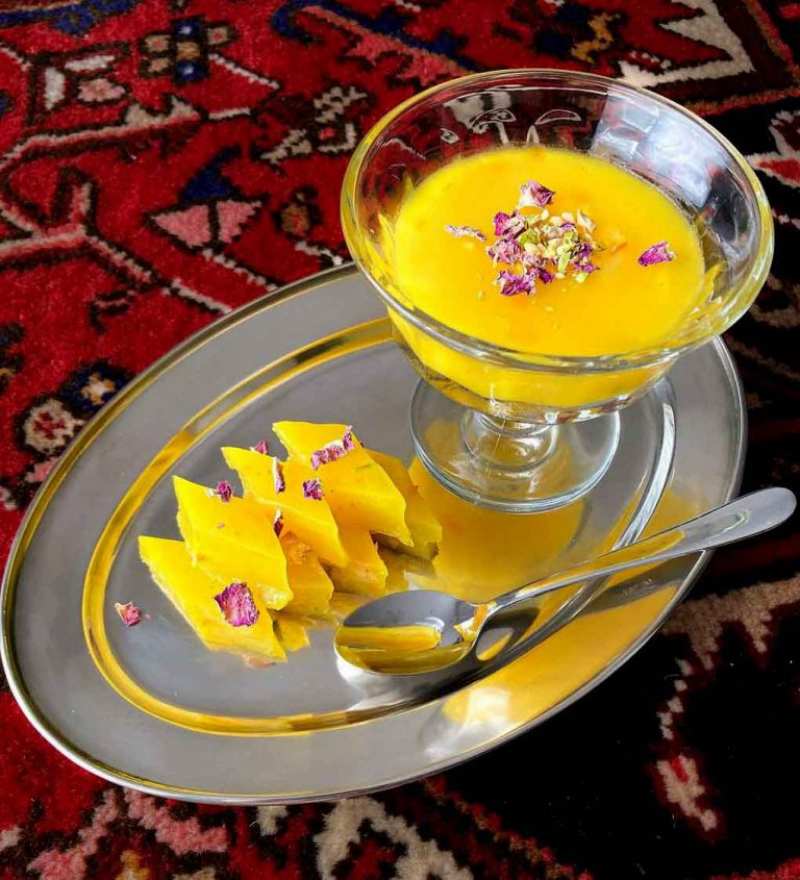
Masqati is a type of sweet whose ingredients are starch, oil, sugar, saffron, cardamom, and rose water.
Various nuts, such as walnuts, pistachios, almonds, roses, barberry, coconut, and sesame, are used to decorate it and are placed over a gentle heat. They should be stirred regularly so that they do not stick.
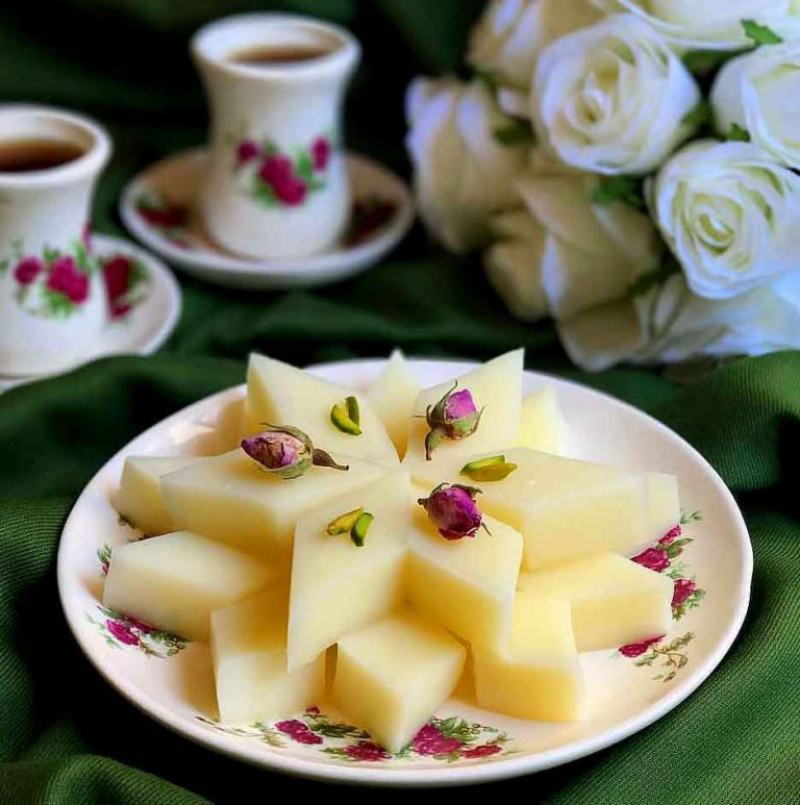
Masghati is a soft and transparent confection in Iran[1] made with rose water, starch, sugar and water. Along with koloocheh, it is a tradition of Nowruz New Year celebrations. Pistachio, saffron, and cardamom can also be used to make masghati.
Sourced:wikipedia.com
FAQ
1. Why does my Masghati taste slightly sour?
A sour aftertaste is usually caused by not properly soaking the starch. To prevent this, always mix your starch with cold water and let it sit before cooking. Additionally, ensure you use low to medium heat; high heat can prevent the starch from cooking through, leaving a raw, acidic flavor in the final dessert.
2. Can I use milk instead of water in this recipe?
Yes, you can substitute water with milk to create a “Milk Masghati,” which has a creamier, more opaque texture. However, if you are looking for the traditional, crystal-clear, and translucent appearance of authentic Shirazi Masghati, sticking to the water-based recipe is recommended.
3. What is the secret to achieving the perfect Masghati consistency?
The “Golden Rule” is continuous stirring. Because of the high starch content, the mixture can stick to the bottom of the pot very easily. You must stir the mixture constantly for a long duration (often up to an hour or more) until it thickens and pulls away from the sides of the container.
4. How long can I store homemade Masghati in the refrigerator?
When stored in an airtight container, Masghati stays fresh and delicious in the refrigerator for up to 3 months. To maintain its texture, avoid leaving it at room temperature for extended periods.
5. Is this dessert suitable for vegetarians or vegans?
The traditional saffron version is vegetarian-friendly. To make it strictly vegan, simply replace the butter with a high-quality plant-based oil or vegan butter. This makes it a wonderful, naturally plant-based treat for parties and celebrations.





I ate this pastry at the age of 25 on a trip to Yazd
It’s been 20 years since that trip but I will never forget the excellent taste of this Muscat
Unfortunately in Australia I didn’t find and I didn’t eat yet
I am very happy that eating this sweet brought back memories of the past
Yes, unfortunately, Masghati is rarely found outside of Iran
But in Toronto, my friends found a shop that has almost all Iranian sweets