

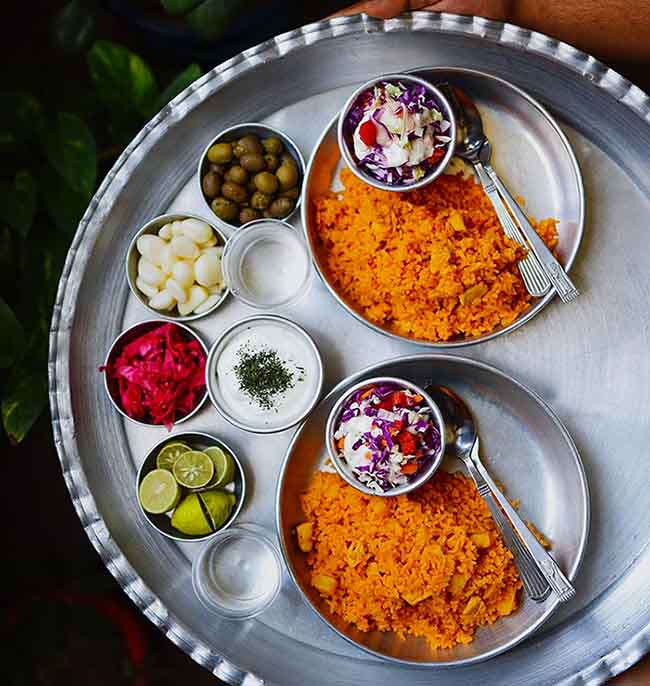
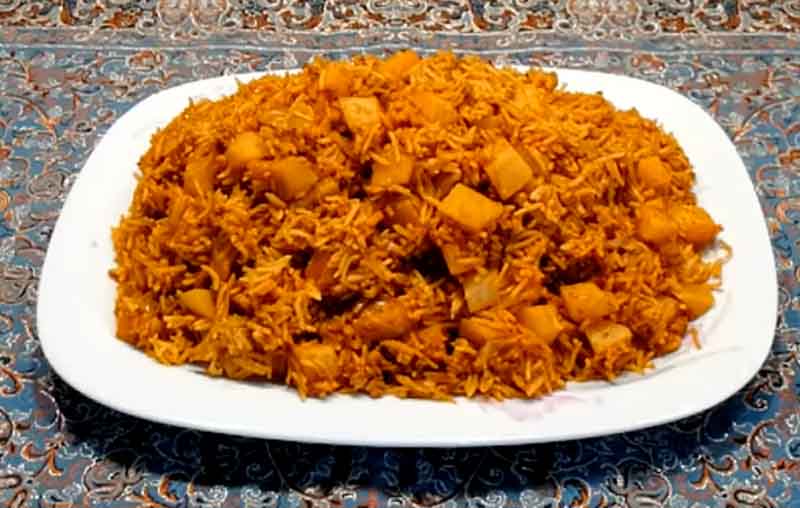
Estamboli Polo is one of the quickest and most comforting Persian pilafs—my mother always turned to it whenever there was no meat or chicken left at home, a familiar sign that tonight’s dinner would be this simple tomato-and-rice dish.
Made with nothing more than fresh tomatoes, Iranian rice, and a few essential spices, it captures the essence of Persian home cooking: budget-friendly ingredients, minimal effort, and warm, nostalgic flavor.
Many families enjoy it plain, while others enrich it with minced beef or small pieces of chicken; since I love minced meat, the recipe shared here follows that version.
Cultural Identity, Naming History & Global Parallels
Estamboli Polo, also known as Eslamboli, Istanboli, or Polo Gojeh, literally means “rice cooked Istanbul-style.” However, despite the name, it has no true connection to Turkish cuisine. It is not commonly eaten in Turkey—rather, the name reflects historical cultural exchanges, trade interactions, and long-standing influence between Iran and the Ottoman Empire.
Across Iran, this pilaf is part of daily life and appears at dinner tables throughout the year. Interestingly, Estamboli Polo belongs to a global family of tomato-and-rice dishes found in many cultures:
– Jollof Rice (Ghana, Nigeria, West Africa)
– Gallo Pinto (Costa Rica)
– Casamiento (El Salvador)
These parallels show how tomato and rice together form universally loved comfort meals—yet Estamboli Polo remains unmistakably Persian in its aroma, spices, and method of preparation.
My experience table:
| Category | Details |
|---|---|
| Interest level (1–10) | 7 |
| Cooking difficulty | Easy |
| Best served | Lunch, dinner |
| Recommended for | Daily meals |
| Served with | Salad Shirazi, Sabzi Khordan, Mast-o-Musir |
| Prep time | 20 minutes |
| Cooking time | 40 minutes |
| Serves | 4 people |
Ingredient
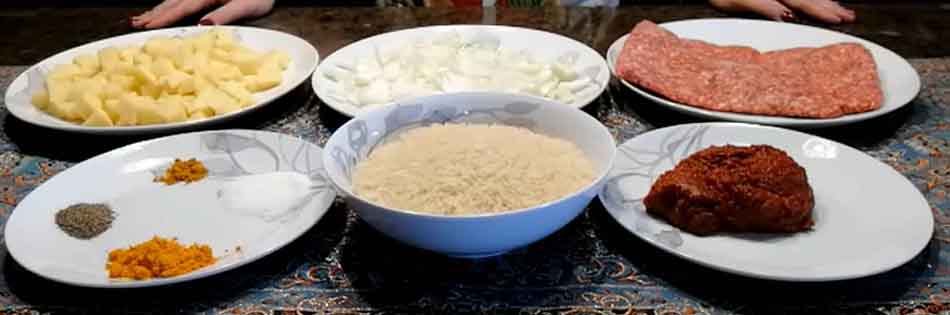
| Persian rice | 0.9 pound |
| Minced meat | 0.6 pound |
| Large onion | 1 pcs |
| Tomato | 5 pcs |
| Liquid oil | as needed |
| Potatoes | 2 medium |
| Persian saffron powder | 1 tsp |
| Salt and black pepper | 1 to 2 tsp |
| Turmeric and cinnamon | half a teaspoon |
Instruction:
1. Soak the rice in a suitable side with water and salt. You should do this 3 to 2 hours before cooking, depending on the type of rice.
2. Then wash the tomatoes well, and then you can grate them or chop them into small pieces. Of course, you can also conveniently chop tomatoes with a food processor and mixer.
3. Now bring the kitchen tray along with a big onion. Cut the onion into wedges with a knife. Heat the pan with a little oil, onion, and turmeric. Put the chopped onions in the pan. Fry the onions until they become light.
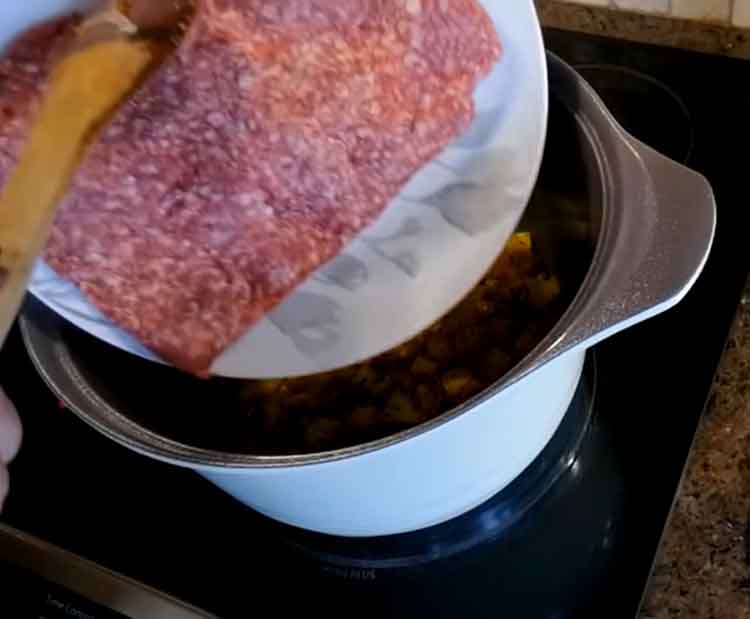
4. Then, add the minced meat to the pan along with a little black pepper and salt. Fry all the ingredients in the pan again until the color of the meat changes and loses its red color.
5. At this stage, it’s time to go to the potatoes. First, peel the potatoes, wash them beforehand, and place them in a clean towel to remove excess water.
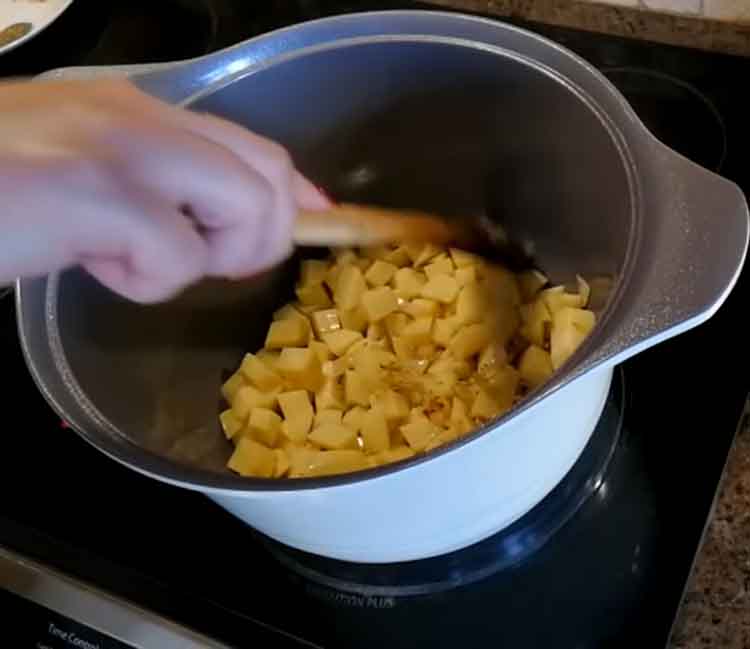
Then, chop them into small cubes to be served easily when mixed with rice. Now put them in another pan with oil and salt and fry them like onions. I usually fry them until they are half-fried.
6. Add tomato puree to the ingredients and fry them. Continue this until the excess tomato juice evaporates. You can also use a little tomato paste to make it more colorful.
7. In the last step of the Istanbul recipe with minced meat, put the rice on the heat until it boils. At this time, the rice foams.
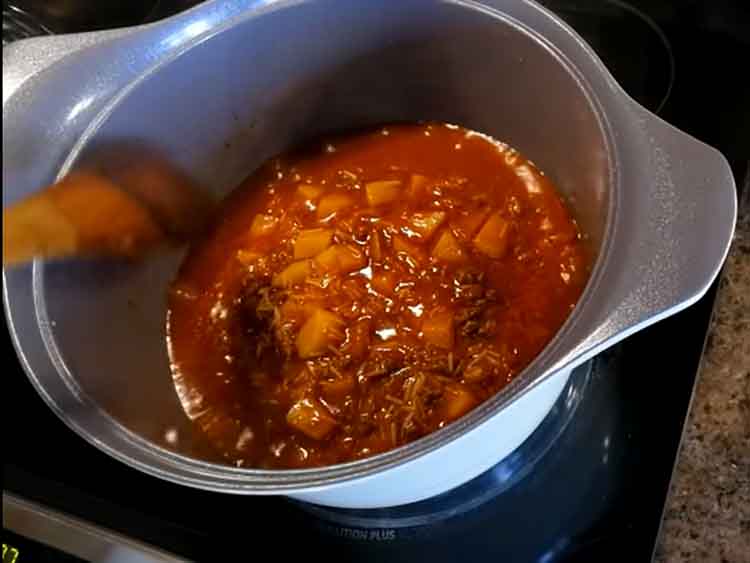
Be sure to get the foam on it and drain it after it becomes soft. Bring a pot and put the necessary amount of oil on the bottom of it. Then, use lavash bread for tahdig and put it at the bottom of the pot. This is completely arbitrary.
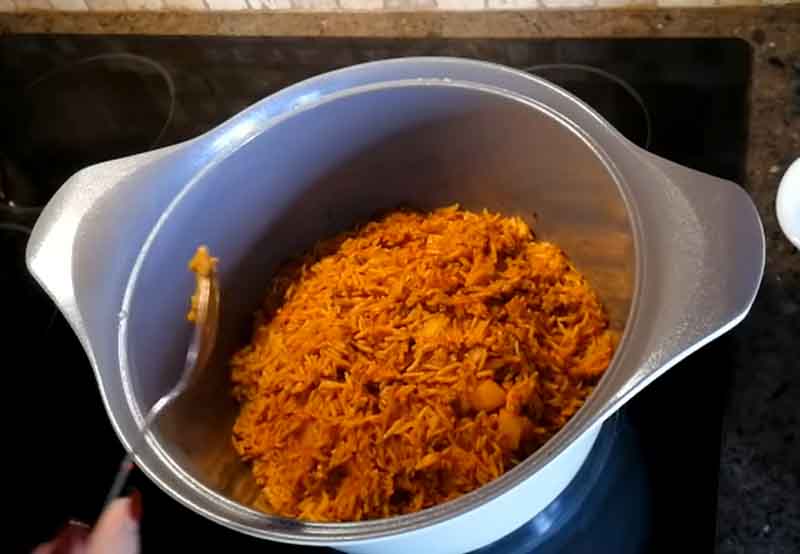
8. Then, pour a little rice and a little of the mixture of tomato and minced meat; do this until the rice and ingredients are finished. Stir the cumin and pilaf spice until all the ingredients are used.
Ultimately, we brew the Estamboli for 40 minutes until the Estamboli polo with minced meat is ready.
This dish is very similar to Dami Gojeh, and many people consider these two dishes to be the same, but this is not the case.
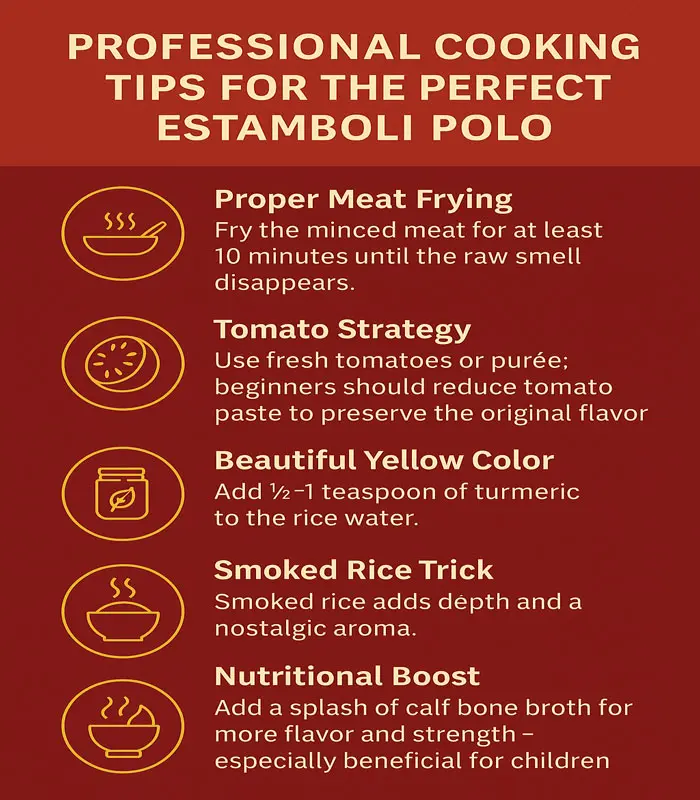
Chef’s Secrets for a Perfect Estamboli Polo
| Secret | Professional Technique |
|---|---|
| Proper Meat Frying | Fry the minced meat for at least 10 minutes until the raw smell completely disappears. |
| Tomato Strategy | Use fresh tomatoes or purée; reduce tomato paste to preserve the authentic flavor. |
| Beautiful Yellow Color | Add ½–1 teaspoon of turmeric to the rice water for a warm golden tone. |
| Smoked Rice Trick | Using smoked rice adds depth, richness, and a nostalgic aroma to the dish. |
| Nutritional Boost | Add a splash of calf bone broth for extra strength and better nutrition, especially for children. |
| Aromatic Herbs | Mixing dried herbs into the tomato mixture enhances aroma and overall complexity. |
Ingredient Variations & Regional Types
Estamboli Polo varies from one region to another. Although tomato, rice, and onion are the foundation, there are two classic versions:
1. Green Bean Version
Includes Persian rice, minced meat, and green beans, creating a heartier and more traditional profile.
2. Potato Version
Uses fried potato cubes instead of green beans, resulting in a milder, softer, and more comforting pilaf—this is the version most common in urban homes.
Other Popular Variations
– With chicken pieces
– Simple white version (no tomato) cooked in meat broth
– Vegetarian & Vegan Estamboli, made with only tomatoes, potatoes, and spices—perfect for plant-based diets
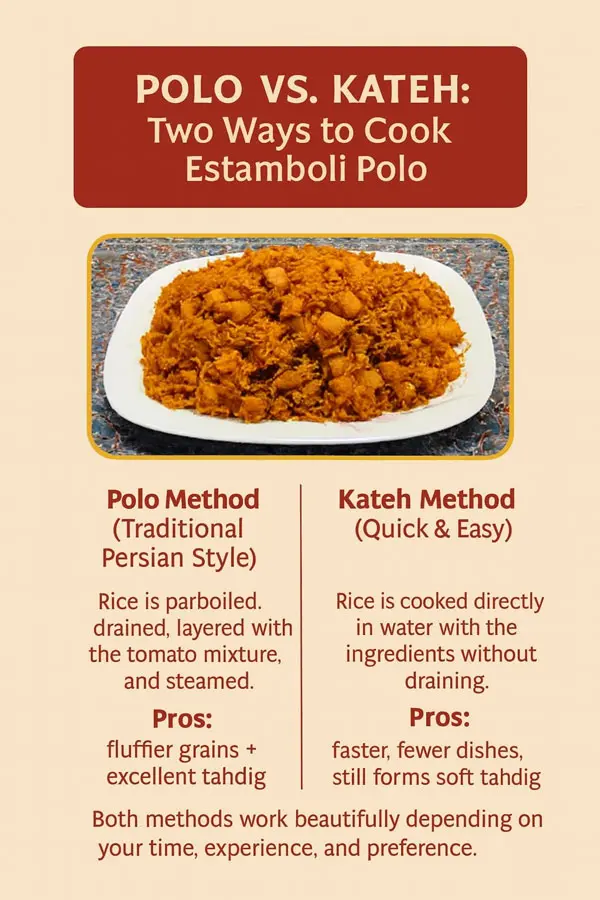
Polo vs. Kateh: Two Ways to Cook Estamboli Polo
There are two main ways to cook this dish:
1. Polo Method (Traditional Persian Style)
Rice is parboiled, drained, layered with the tomato mixture, and steamed.
Pros: fluffier grains + excellent tahdig.
2. Kateh Method (Quick & Easy)
Rice is cooked directly in water with the ingredients without draining.
Pros: faster, fewer dishes, still forms soft tahdig.
Both methods work beautifully depending on your time, experience, and preference.
Traditional Serving & Iranian Side Dishes
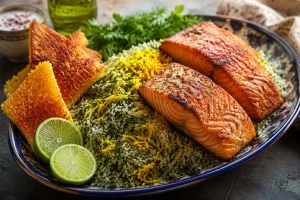
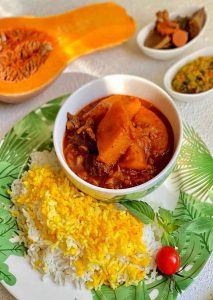
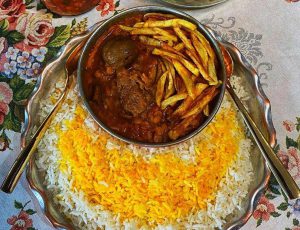
Estamboli Polo shines when paired with traditional Iranian sides:
| Side Dish | Cultural Note |
|---|---|
| Salad Shirazi | A perfect match—light, tangy, refreshing. |
| Yogurt / Mast-o-Musir | Helps balance dryness and aids digestion. |
| Raw Onion | A long-standing Iranian habit, eaten with almost every rice dish. |
| Sabzi Khordan | Fresh herbs like basil, mint, scallion, radish—classic pairing. |
| Doogh | Yogurt drink with mint; balances the warmth of the dish. |
| Torshi (Pickles) | Especially garlic pickle or quick grilled chili pickles. |
Estamboli Polo Around the World
Though uniquely Persian, similar rice-and-tomato dishes exist globally, showing how universally loved this combination is. But Estamboli Polo stands out for its saffron, turmeric, Persian-style frying, and layering techniques.

Notes for Better Results
-
Prefer tomato puree over heavy paste to maintain an authentic taste.
-
Try variations with chicken, vegetarian versions, or green beans.
-
Add calf broth for nutrition.
-
A touch of animal oil enhances aroma.
-
Smoked rice adds a unique Persian flavor.
-
Aromatic dried herbs make the tomato mixture richer.
FAQ
1. What is the main ingredient in Estanboli polo?
Persian rice, tomato, and onion are the main ingredients in this pilaf.
2. What is served with Estanboli polo?
This pilaf is served with Shirazi salad, sabzi khordan, sir torshi, and Persian doogh.
3. How to store Estanboli polo?
You can keep this food in a closed container in the refrigerator for 3-4 days. After you remove it from the fridge, you can heat it in a microwave oven or in a separate container with two spoons of water on the gas flame.
4. Can this food be used for vegans?
In estamboli pilaf, rice without meat and chicken is excellent for vegans because it is made from rice, tomatoes, potatoes, and spices.
5. Is this food good for children?
This Persian pilaf is healthy and full of energy and protein due to the presence of potatoes and tomatoes and very little oil consumption.





Very interesting topic, regards for putting up.Raise your
business
Tnx my dear friend
Can I prepare Estamboli Polo without meat and still have it taste good
Hi dear Nadia Yes — the recipe article shows clearly that you can make Estanboli Polo in a vegetarian version by omitting meat and using tomato, potato and rice. The result remains flavorful and satisfying.