

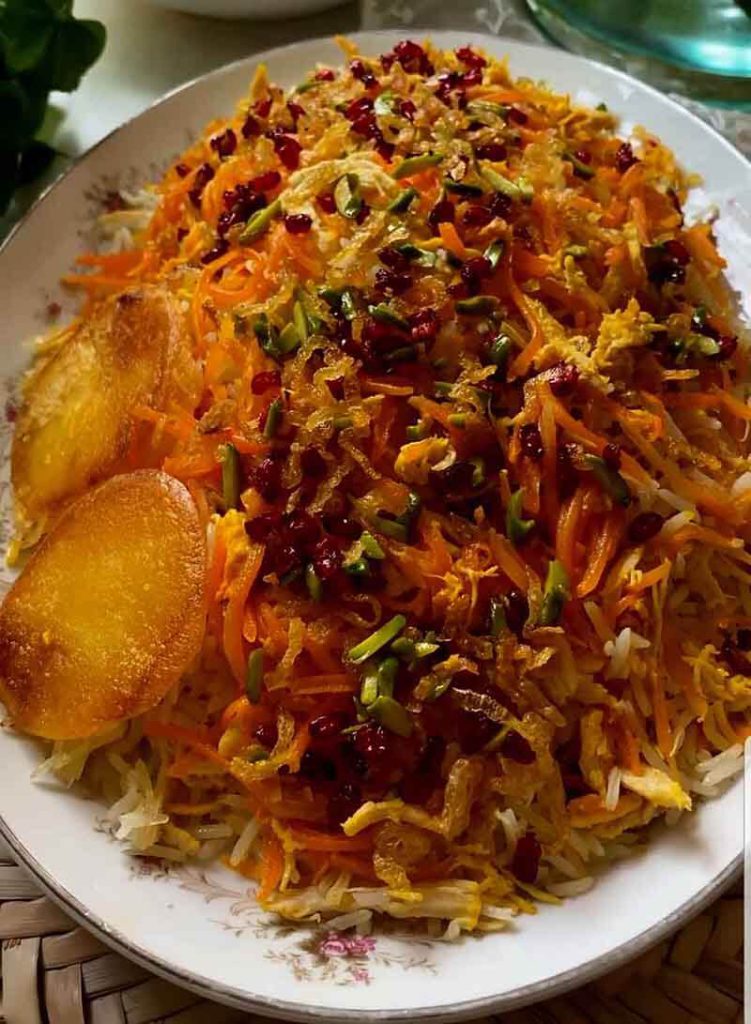
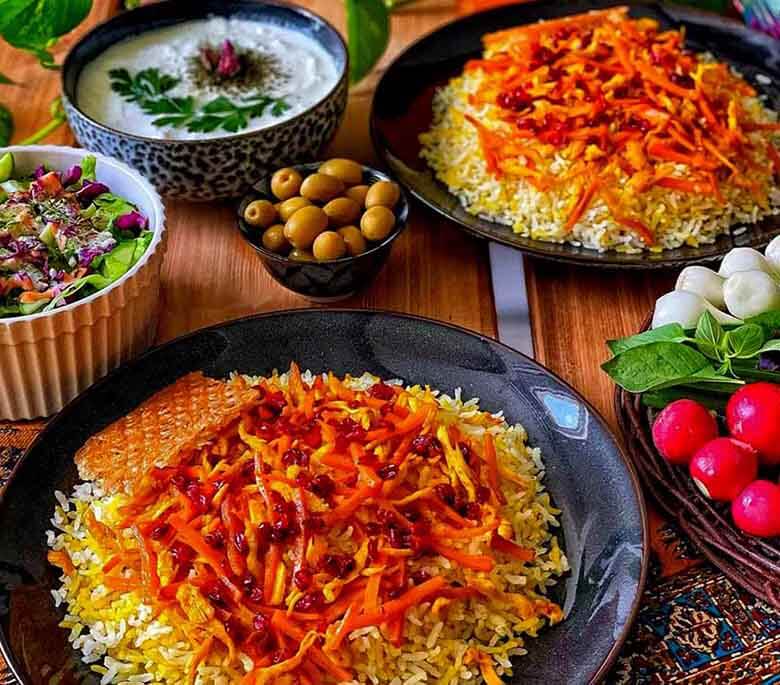
Have you ever tasted a dish that looks like a sunset on a plate? Havij Polo, or Persian Carrot Rice, is exactly that—a stunning combination of golden saffron rice and vibrant orange carrots.
I know what you might be thinking: “Carrots in rice? Is it too sweet?” Trust me, this is one of the most balanced dishes in Persian cuisine. The natural sweetness of caramelized carrots is perfectly offset by the savory, aromatic saffron chicken (or meat) and the subtle sourness of barberries or lemon juice. It creates a “sweet and savory” harmony that is incredibly addictive.
Whether you are planning a fancy dinner party or just want to surprise your family with something unique, this Havij Polo recipe is your ticket to an authentic Persian feast. Plus, we’ll teach you how to get that crispy, golden crust at the bottom of the pot, known as the famous Tahdig!
What is Havij Polo (Persian Carrot Rice)?
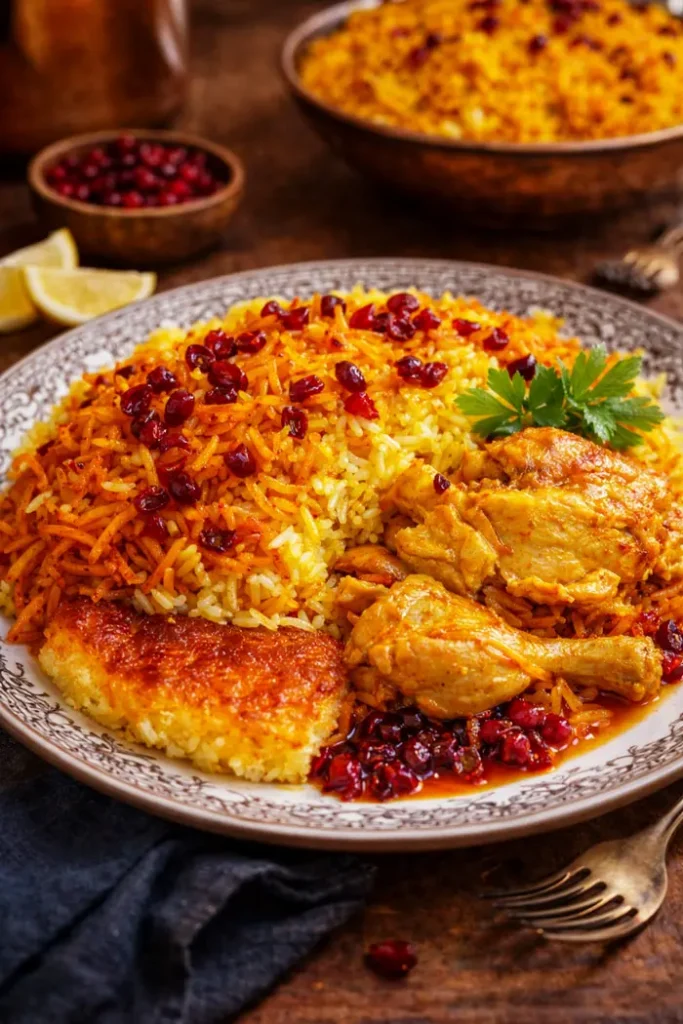
If you are a fan of sweet food, Havij Polo Ba Morgh is one of the most suitable options. This is one of the delicious Iranian dishes and one of the popular Iranian mixed pilafs, which you can prepare with chicken or meat.
This pilaf is prepared from a combination of rice and carrots, and this dish can be made without meat or with meat. You can use minced meat, chicken, and mutton pieces to prepare havich polo.
If you prepare this Persian pilaf for a party, you can replace it with dishes such as Zereshk polo ba morgh or other types of pilaf dishes for your parties.
This pilaf is a low-calorie Iranian dish and completely vegetarian food suitable for people with special diets or those who do not eat meat and chicken for any reason, especially for vegetarians.
Preparing Persian carrot rice is very easy, and you don’t need any cooking skills. The best advantage is that you can add or reduce the ingredients you like to this dish according to your taste, and finally, after cooking and tasting this dish, it becomes one of the best rice dishes you have ever eaten.
You don’t need special ingredients to make a different pilaf made with carrots, and it’s better to know that this dish is easy to prepare and takes a little time. If you are planning to make this low-calorie and tasty dish, we have prepared for you how to prepare this Iranian pilaf, which you will like.
Be liberal in using saffron in preparing this delicious rice, giving the food a good color and glaze. With the number of ingredients included in this recipe, you can prepare this pilaf for 4 people. To make more or less, multiply or divide the ingredients.
Persian carrot rice recipe

For: 4 people
Preparation time: 20 minutes
Cooking time: 45 minutes
Ingredients:
| Ingredient | US Customary | Metric |
|---|---|---|
| Rice | 4 cups | 800 g |
| Onions | 2 medium | – |
| Chicken Breast | 2 pieces (~1.2 lb) | ~550 g |
| Large Carrots | 5 pcs (~1.1 lb) | ~500 g |
| Butter | 3.5 oz | 100 g |
| Brewed Saffron | 2 tablespoons | 30 ml |
| Lemon Juice | 1 tablespoon | 15 ml |
| Spices* | As needed | As needed |
*Spices: Salt, black pepper, turmeric, and cinnamon.
Instruction:

1. Soak rice for 2 to 3 hours, then prepare the chicken meat. For this purpose, put the chicken meat in a pot with 2 glasses of lukewarm water, add onion, salt, black pepper, and cinnamon, and put it on the heat until the chicken is completely cooked.

2. Check the chicken meat with a fork; if it is completely soft, remove it from the heat and let it cool. Cut the cooked chicken into pieces and set aside. Please do not throw away the chicken broth at this stage; pass it through a filter and keep it to add to the food.

3. Chop a medium onion into small pieces and fry it in a relatively large pan with a little oil. After the onion becomes golden, add turmeric to it and stir well. Then add chopped chicken meat to it.

4. Grate the carrots with a coarse grater, add them to the pan, and mix well with the ingredients. Add spices, including salt, black pepper, and cinnamon, to the ingredients in the pan and stir well.

5. Add the saffron you brewed to the chicken and carrot mixture. Note that your saffron should have a high concentration. Next, add lemon juice and a few tablespoons of strained chicken broth to the ingredients and fry well.
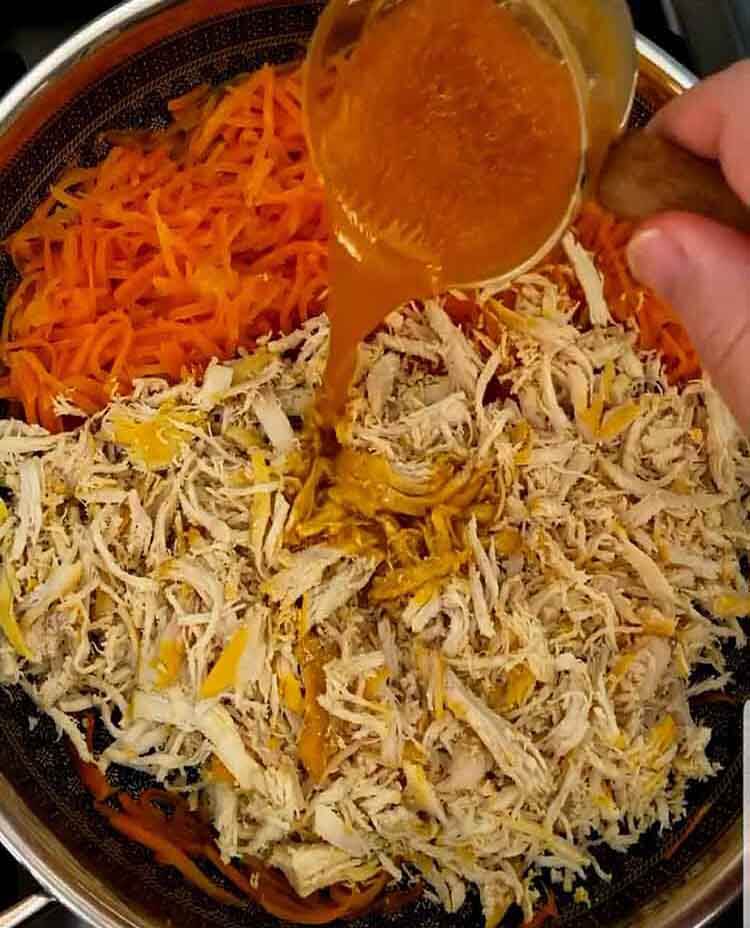
6. Pour the soaked rice with a teaspoon of salt and some oil into a pot of boiling water. When the rice kernels are completely soft and the rice core is firm, you should rinse the rice.
7. Choose the desired pot and pour some oil into its bottom. Put any Tahdig Sibzamini according to your taste (with potatoes or lavash bread) on the bottom of the pot and pour some rice on it.
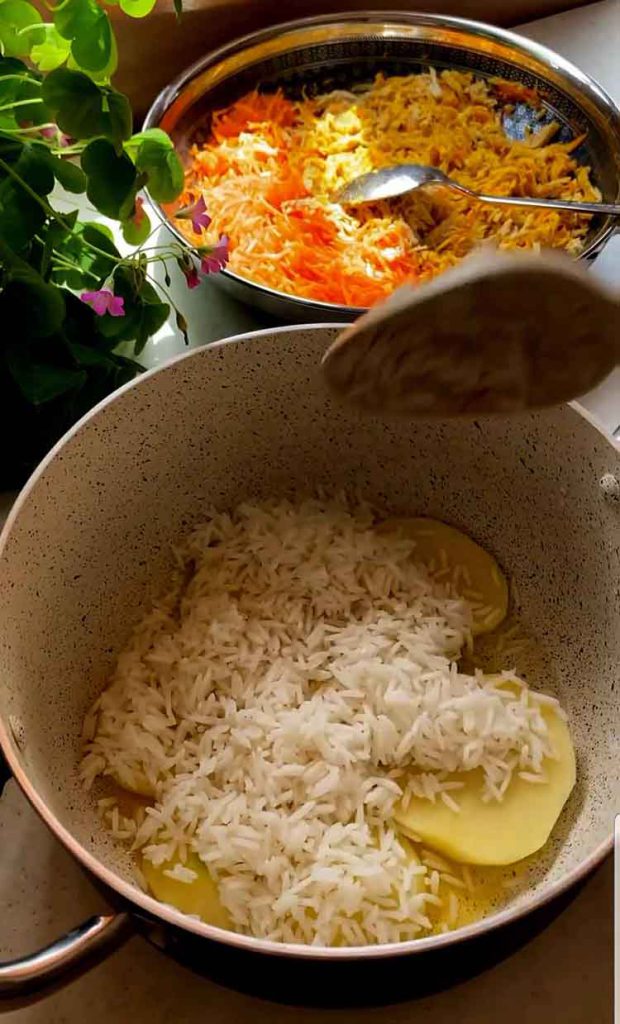
8. Now, pour some of the carrot and chicken mixture on the rice, and in the same way, add the rice and the chicken and carrot mixture to the pot layer by layer. Fill the last layer with rice and put the chopped butter on the surface of the rice.
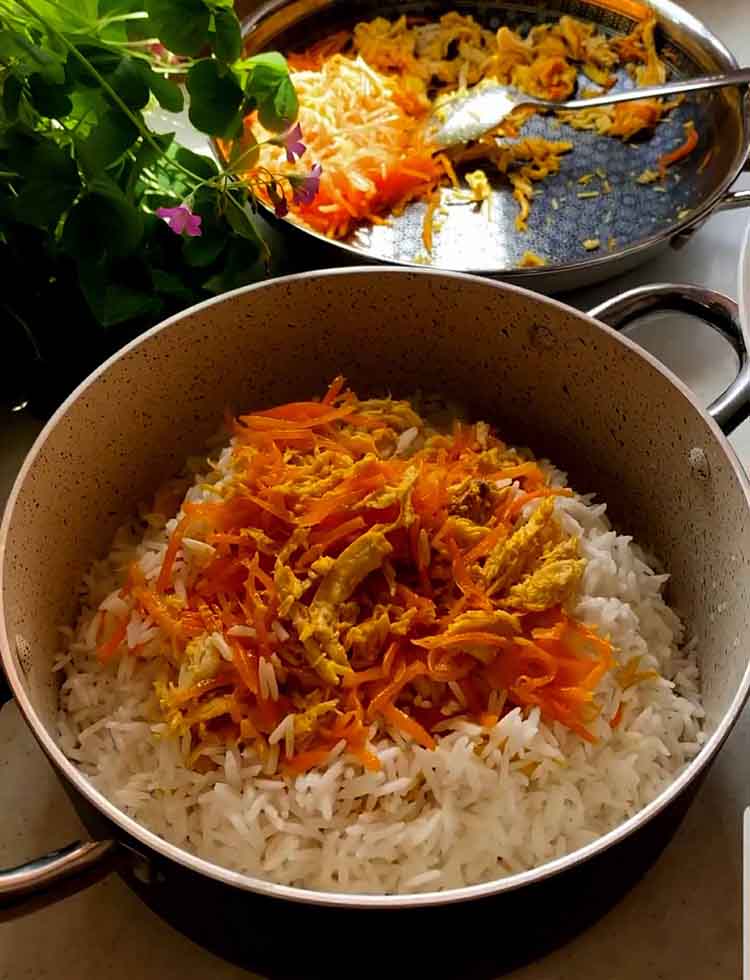
9. Place a steamer on the pot lid and let the rice brew. After 45 minutes to an hour, your food is ready. Mix the pilaf in the pot until it is completely uniform, pour it into the desired dish, and decorate it with pistachio slices and barberry.
Secrets to the Perfect Havij Polo (Chef’s Notes)
Making this Persian Pilaf is easy, but making it perfect requires a few simple tricks. Here are the secrets to ensuring your rice is fluffy and your carrots keep their texture:
-
-
1. The Cut Matters (Don’t Grate!): Never use a grater for the carrots. Grated carrots will melt and turn mushy during the steaming process, making your rice sticky. Instead, use a sharp knife or a mandoline slicer to cut them into thin, uniform matchsticks (Julienne cut). This keeps the texture intact and looks much more professional.
-
2. Fry the Carrots Well: Sauté the carrot matchsticks in oil until they are slightly soft but still hold their shape. This process, known as “caramelization,” brings out their natural sugar and vibrant orange color. If your carrots aren’t sweet enough, you can sprinkle a teaspoon of sugar while frying them.
-
3. The Magic of Cinnamon: Cinnamon is the hidden hero of this dish. It bridges the gap between the sweet carrots and the savory chicken. Don’t skip it! You can sprinkle some cinnamon powder over the layers of rice and carrots before steaming.
-
4. Don’t Overcook the Rice: When parboiling the rice, drain it when the grains are al dente (firm to the bite). Since the carrots release a bit of moisture and oil during the steaming process, softer rice might become doughy.
-
5. Saffron Blooming Technique: To get the maximum color and aroma, grind your saffron threads with a pinch of sugar, then brew it over a piece of ice (instead of hot water). The thermal shock releases a deeper red color, making your Havij Polo look like a jewel.
-
- Nokhod polo and Mash polo are very delicious Iranian dishes and are close to this dish