
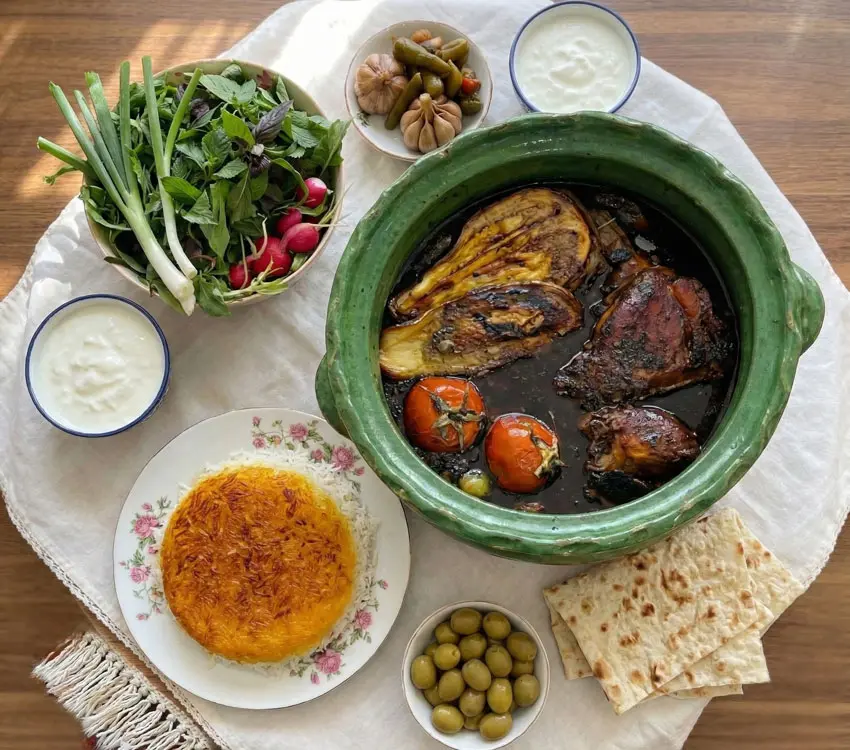
Torshe Vash Stew Recipe (Gilan Style): A Sour & Savory Gem
Torshe Vash Stew (locally known as Khoresht-e Torsh Vash) is the green gem of Northern Iranian cuisine (Gilan province). It is a rich, aromatic dish that combines chicken, fried eggplants, and unique local herbs to create a delightful sour and savory (Malas) flavor profile.
If you live outside Iran or are seeking a culinary adventure beyond the famous Ghormeh Sabzi, this stew is the perfect choice. It is packed with iron and phosphorus and is naturally appetizing. The golden key to this dish is the “Torshe Vash” herb (Creeping Wood Sorrel), but don’t worry—if you can’t find it, we have included the best substitute herbs for you.

Quick Cooking Facts
-
Prep Time: 30 minutes
-
Cook Time: 1.5 to 2 hours (for the stew to settle and release oil)
-
Servings: 4 People
-
Difficulty: Medium
-
Calories: ~350 kcal per serving (without rice)
Ingredients:
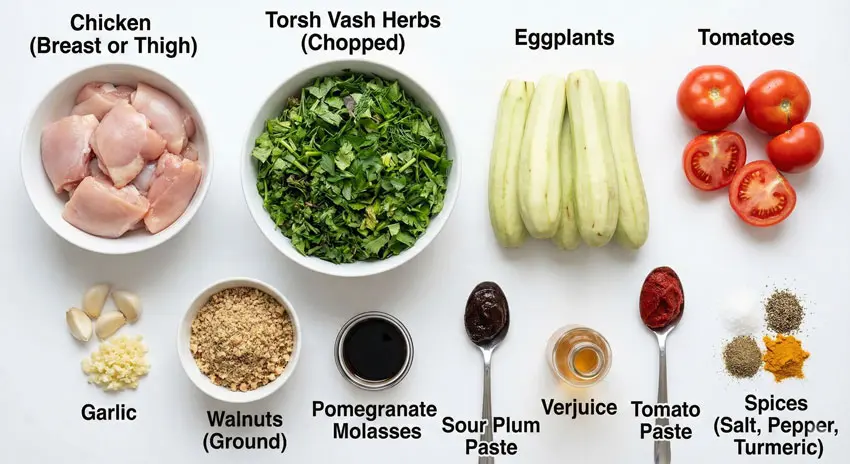
We have calculated the measurements in both Grams and Pounds/Ounces for your convenience, wherever you are in the world.
| Ingredient | Amount (Metric) | Amount (Imperial) | Notes & Substitutes |
|---|---|---|---|
| Chicken (Breast or Thigh) | 800 g | 1.76 lbs | Chopped or whole pieces |
| Torsh Vash Herbs (Chopped) | 500 g | 1.1 lbs | Includes: Sorrel, Cilantro, Mint, Garlic chives |
| Eggplants | 4-5 Medium | – | Long/Chinese eggplant, peeled (Seedless preferred) |
| Tomatoes | 4-5 Medium | – | Half for the stew, half fried for garnish |
| Garlic | 5 Cloves | – | Minced or crushed |
| Walnuts (Optional) | 120 g | 0.26 lbs (4.2 oz) | Ground finely (adds thickness) |
| Pomegranate Molasses | 2 tbsp | – | Sour or sweet-and-sour, adjust to taste |
| Sour Plum Paste (Rob-e Aloocheh) | 1 tbsp | – | Or Green Gage paste (essential for authentic taste) |
| Verjuice (Abghooreh) | 2 tbsp | – | Or Bitter Orange Juice (Narenj) |
| Tomato Paste | 1 tbsp | – | For color and consistency |
| Spices | As needed | – | Salt, Black Pepper, Turmeric |
Step-by-Step Instructions
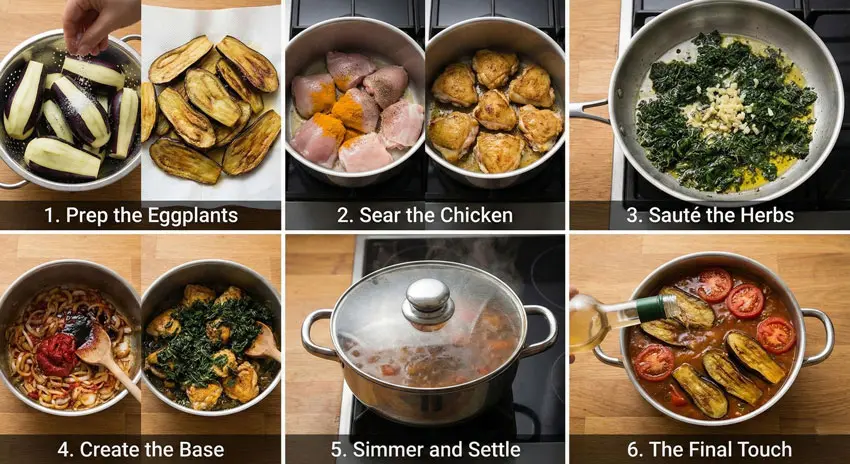
1. Prep the Eggplants (The Secret to No Bitterness):
Peel the eggplants, sprinkle them generously with salt, and let them rest for 30 minutes. This draws out the bitter water and significantly reduces oil absorption during frying. Rinse them, pat dry, and fry until golden brown. Set aside.
2. Sear the Chicken:
Season the chicken pieces with turmeric, black pepper, and a pinch of salt. In a pot, sear the chicken in oil on both sides until golden. Remove the chicken and set it aside.
3. Sauté the Herbs:
If your herbs are raw, fry them in oil until the water evaporates, and they turn a dark green color (similar to Ghormeh Sabzi). Add the minced garlic towards the end of frying so it releases its aroma but doesn’t burn.
Tip: If using ground walnuts, sauté them briefly with the herbs here.
4. Create the Base:
In the same pot, sauté the chopped onions until translucent. Add the tomato paste, pomegranate molasses, and sour plum paste. Sauté briefly to remove the raw scent of the pastes. Return the fried herbs and chicken to the pot.
5. Simmer and Settle:
Add about 3 cups of boiling water. Lower the heat, cover the pot, and let it simmer gently for about 1.5 hours. The stew needs to thicken and release its natural oils (“Ja Aftadan”).
6. The Final Touch:
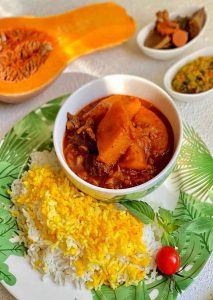
In the last 15 minutes, add your souring agent (Verjuice or Bitter Orange juice) and adjust the salt. Gently place the fried eggplants and halved fried tomatoes on top of the stew (do not stir them in too much to keep their shape). Serve warm.
Chef’s Secrets & Notes for Torshe Vash
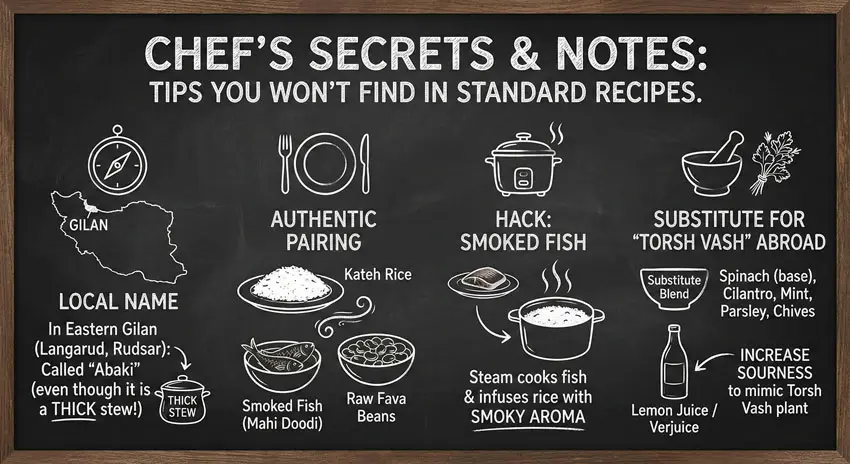
Here are the tips you won’t find in standard recipes:
-
Local Name: In Eastern Gilan (Langarud and Rudsar), this dish is often called “Abaki”, even though it is a thick stew!
-
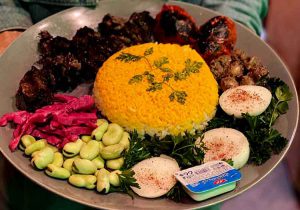
The Authentic Pairing: In Gilan, this stew is traditionally served with Smoked Fish (Mahi Doodi) and Raw Fava Beans on the side of Kateh rice.
-
Hack: To cook the smoked fish, place a small piece in a saucer and set it on top of your rice while it steams. The steam cooks the fish and infuses the rice with a smoky aroma.
-
-
Substitute for “Torshe Vash” Abroad: If you cannot find the specific local herb, use this blend: Spinach (base), Cilantro, Mint, Parsley, and Chives. To mimic the natural sourness of the Torsh Vash plant, simply increase the amount of lemon juice or verjuice slightly.
How to Serve: The Full Experience
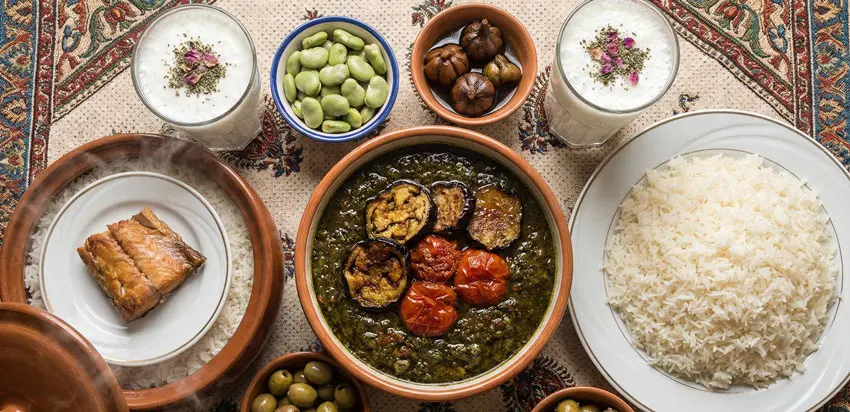
Serving Torsh Vash is a ritual in Gilan. It’s not just about the stew; it’s about the table spread.
-
The Rice (Kateh): This stew must be served with Kateh (Persian sticky/steamed rice), not the fluffy, strained rice (Chelo). The softer texture of Kateh absorbs the rich, sour sauce perfectly.
-
The “Holy Trinity” of Sides: To eat like a local, you need a balance of flavors:
-
Smoked Fish (Mahi Doodi): A small piece of salty smoked fish is essential. Pro Tip: Place the fish in a small saucer on top of your rice pot while it steams. The steam cooks the fish and infuses the rice with a smoky aroma.
-
Raw Persian Fava Beans: Fresh, peeled raw fava beans add a necessary crunch.
-
Pickles: Aged Garlic Pickle (Sir Torshi) or Marinated Olives (Zeytoon Parvardeh) are standard accompaniments.
-
-
The Drink: Wash it all down with a glass of Doogh (yogurt drink) mixed with dried mint and rose petals.
Nutrition & Health Benefits
The Torsh Vash herb (Oxalis/Wood Sorrel) is more than just flavor; it’s medicinal.
| Nutrient | Status | Main Benefit |
| Iron | Very High | Excellent for treating anemia |
| Phosphorus | Rich | Strengthens bones and brain function |
| Vitamin C | Abundant | Boosts immunity and skin health |
| Protein | Medium | Muscle maintenance (from Chicken) |
Health Note: Due to its sour and savory nature, this stew is a powerful appetite stimulant and helps with nutrient absorption.
(FAQ)
1. What if I can’t find Torshe Vash herbs?
You can substitute it with a mix of aromatic herbs like cilantro, mint, parsley, and spinach. Since the original herb is sour, add a bit more souring agent (like lime juice) to balance the flavor.
2. Can I make this with red meat?
Yes. While chicken is the authentic protein, some regions cook it with lamb or beef chunks. Just remember that red meat requires a longer cooking time.
3. What is the best rice to serve with this?
Definitely Persian Kateh (sticky-style steamed rice). The soft texture of Kateh pairs perfectly with the thick sauce of the stew.
4. How do I get that dark, rich color?
You must sauté the herbs patiently until they are very dark green (but not burnt). Also, using a dark, high-quality Pomegranate helps achieve that appetizing dark color.