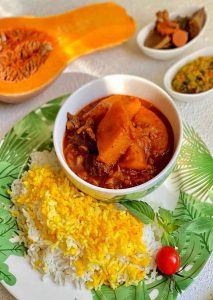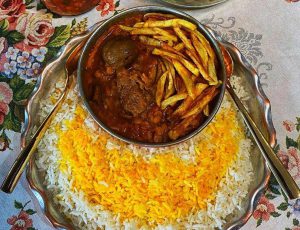


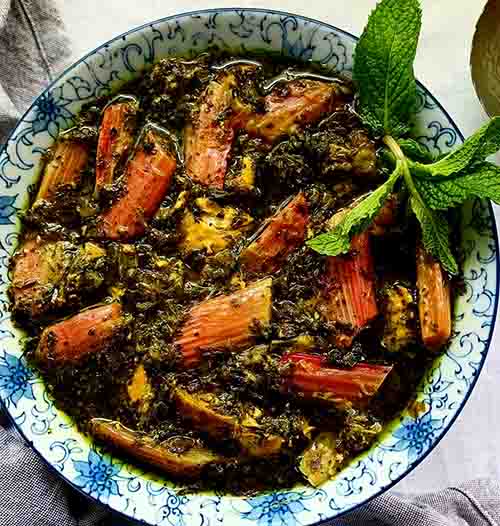
Khoresh Rivas, also known as Persian Rhubarb Stew, is a bright, tangy spring dish made with tender rhubarb stalks, herbs, and slow-cooked meat. It is especially popular in parts of western and northeastern Iran, including Kermanshah, Kurdistan, and Mashhad.
The stew combines the natural tartness of rhubarb with lamb, beef, or chicken, along with parsley, mint, onions, warm Persian spices, and optional brewed saffron. The result is a fragrant, lightly sour stew with a fresh seasonal flavor.
Khoresh Rivas is traditionally served with Persian steamed rice, especially basmati rice. If you enjoy tangy Persian stews such as Ghormeh Sabzi or Aloo Esfenaj, this recipe is definitely worth trying.
Below, you will find a simple traditional method, along with practical tips for keeping the rhubarb tender without letting it fall apart.
Prep Time: 15 minutes
Cook Time: 2 hours
Total Time: About 2 hours and 15 minutes
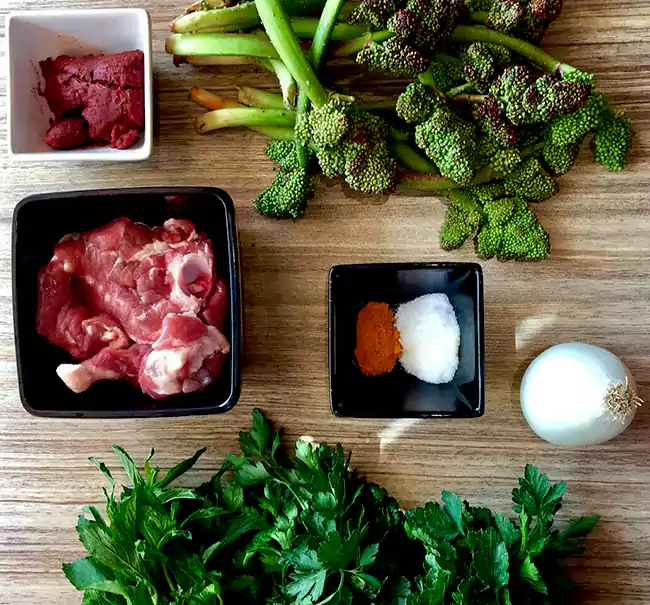
Ingredients:
| Ingredient | Quantity |
|---|---|
| Fresh rhubarb stalks | 1.1 lb (500 g) |
| Fresh parsley | 0.4 lb (180–200 g) |
| Fresh mint | 0.1 lb (45–50 g) |
| Medium onions | 2 |
| Lamb, beef, or veal stew meat | 0.9 lb (400 g) |
| Tomato paste | 1 tbsp (optional) |
| Dried limes (Limoo Amani) | 2 |
| Ground turmeric | 1/2 tsp |
| Ground black pepper | To taste |
| Salt | To taste |
| Neutral cooking oil | As needed |
| Hot water | About 3 cups |
| Brewed saffron | Optional, to taste |
Important: Use only rhubarb stalks in this recipe. Rhubarb leaves should not be eaten.
Instruction :
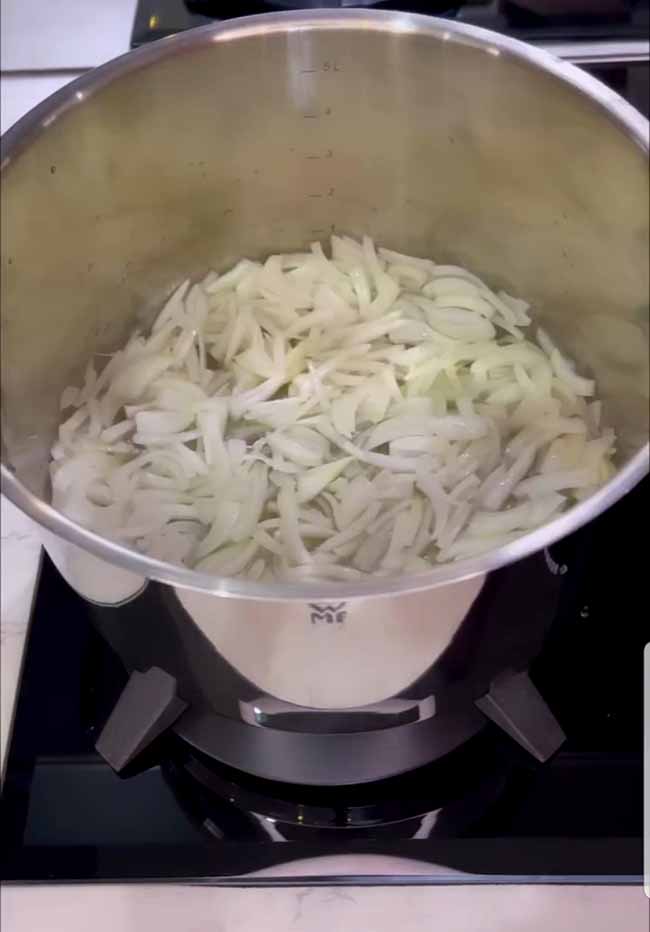
1. Cook the onions
Finely chop the onions. Heat a little oil in a pot over medium heat, then add the onions and cook until soft and lightly golden.
Add the turmeric and stir for about 30 seconds until fragrant. Avoid frying the turmeric for too long, as it can develop a bitter taste.
2. Add the tomato paste
Add the tomato paste, if using, and cook it with the onions for 1 to 2 minutes. Stir continuously until the paste darkens slightly and loses its raw flavor.
Add black pepper and mix well.
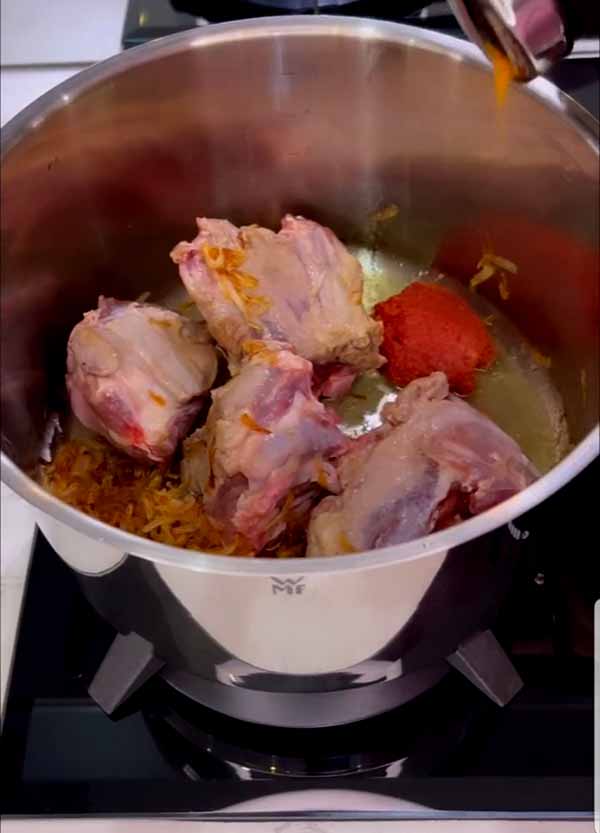
3. Sauté meat
Add the cubed meat to the pot. Stir and cook for several minutes until the outside of the meat changes color and is lightly browned
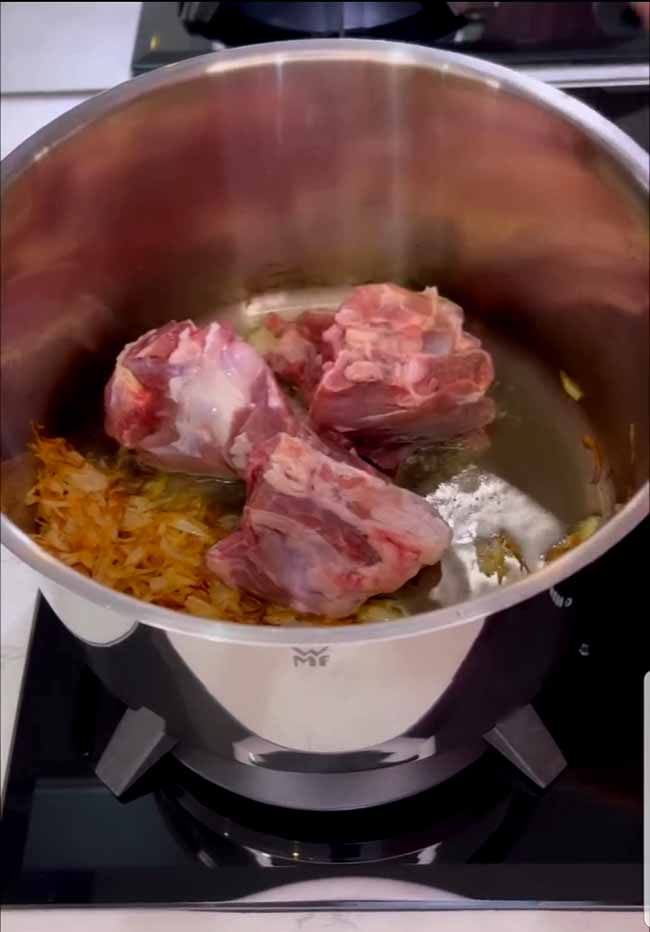
4. Simmer the stew
Pour in about 3 cups of hot water. Cover the pot and bring the stew to a gentle simmer.
Cook over low heat for about 1½ to 2 hours, or until the meat is tender. Add more hot water only if needed.
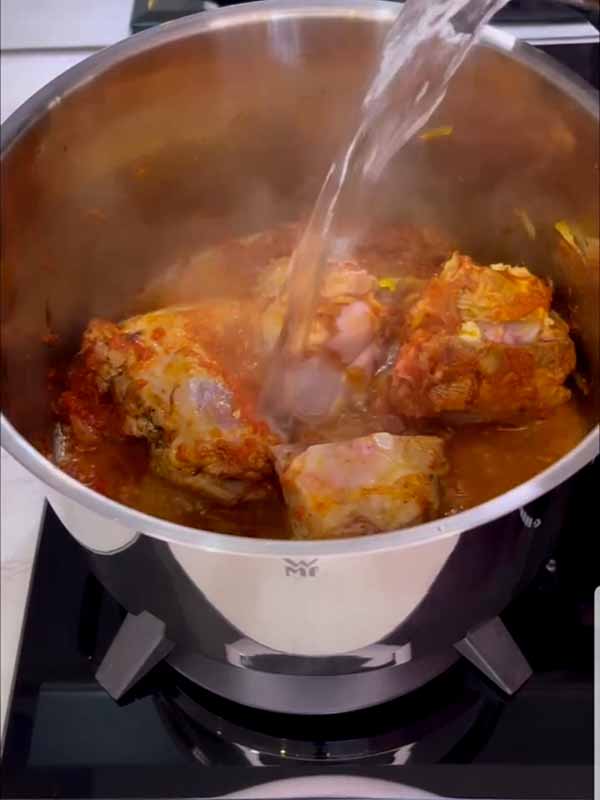
5. Prepare and add the herbs
While the meat cooks, wash and finely chop the parsley and mint.
Heat a small amount of oil in a separate pan and sauté the herbs briefly over medium-low heat. Do not fry them for too long, especially the mint, as it can become bitter.
Add the sautéed herbs to the pot once the meat has started to soften.
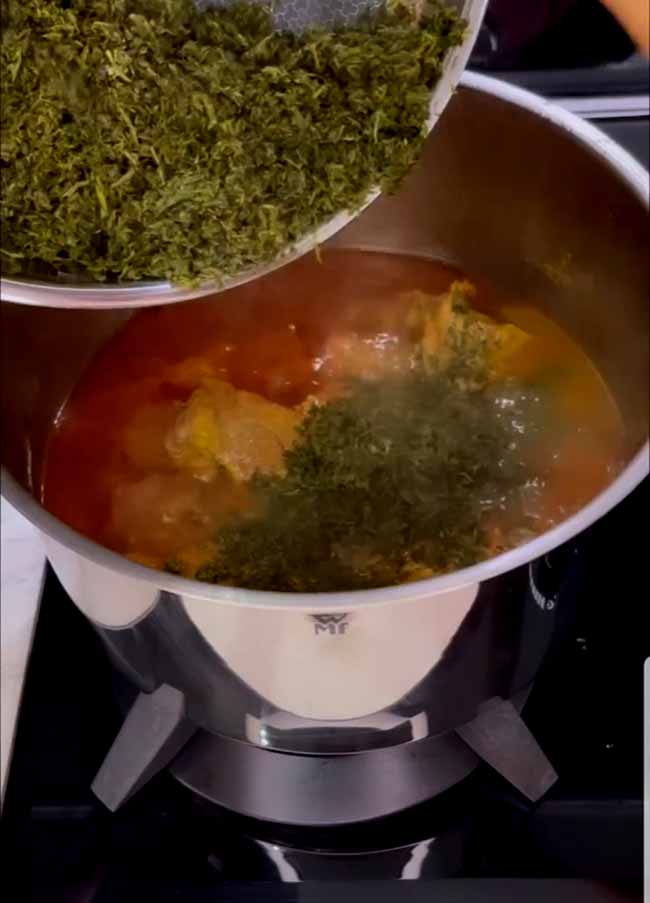
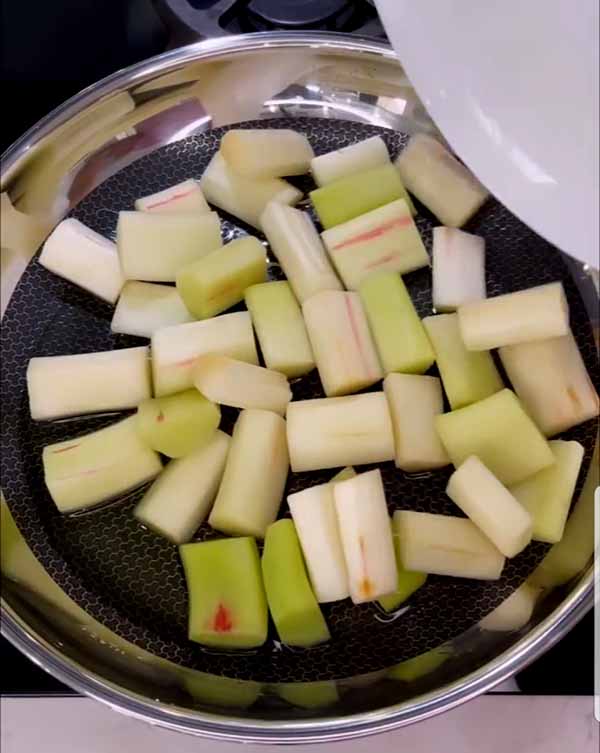
6. Prepare the rhubarb
Wash the rhubarb stalks carefully and trim off any tough ends. If the outer skin is thick or stringy, peel it gently.
Cut the stalks into pieces about 1½ to 2 inches (3 to 5 cm) long.
7. Lightly sauté the rhubarb
Heat a small amount of oil in a pan and sauté the rhubarb for only 1 to 2 minutes.
This step is optional, but it can help the rhubarb hold its shape. Be gentle, as rhubarb softens very quickly.
8. Add the dried limes and rhubarb
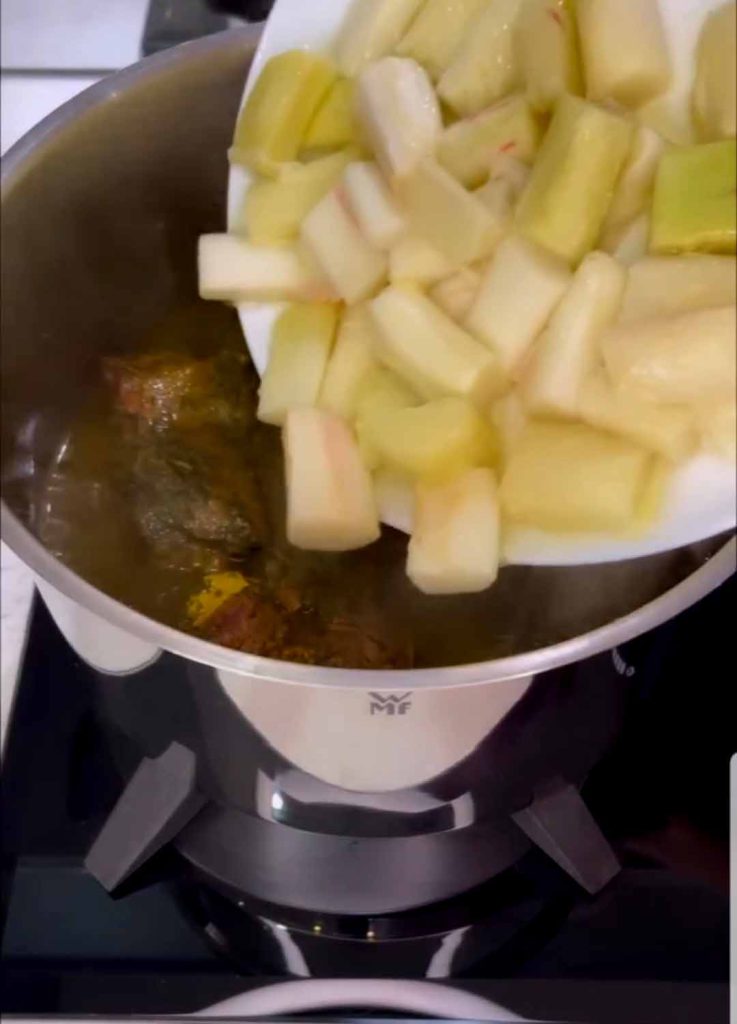
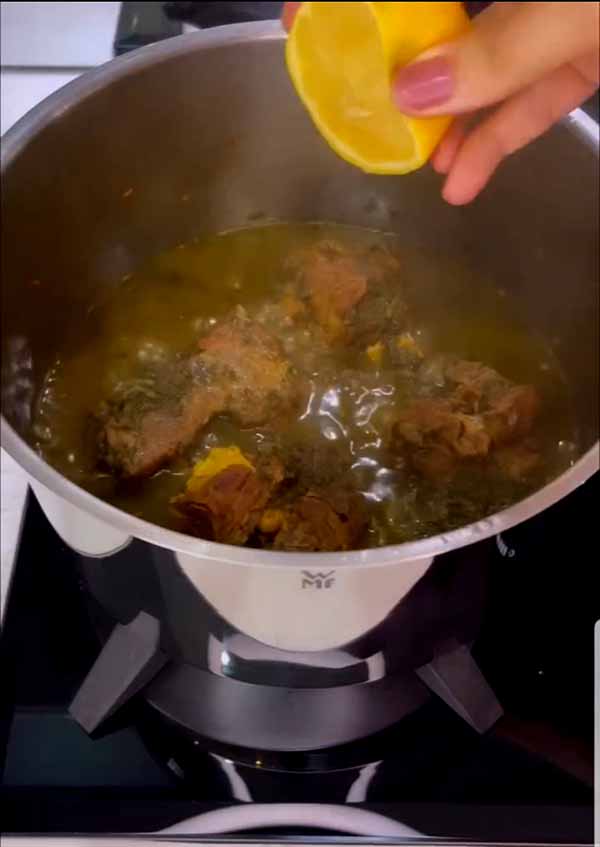
Pierce the dried limes with a fork and add them to the stew during the last 15 minutes of cooking.
Taste the stew before adding salt, as both rhubarb and dried limes contribute acidity. Add salt gradually and adjust the sourness to your preference.
Add the rhubarb during the final 5 to 10 minutes of cooking. If using brewed saffron, stir it in at this stage as well.
9. Serve
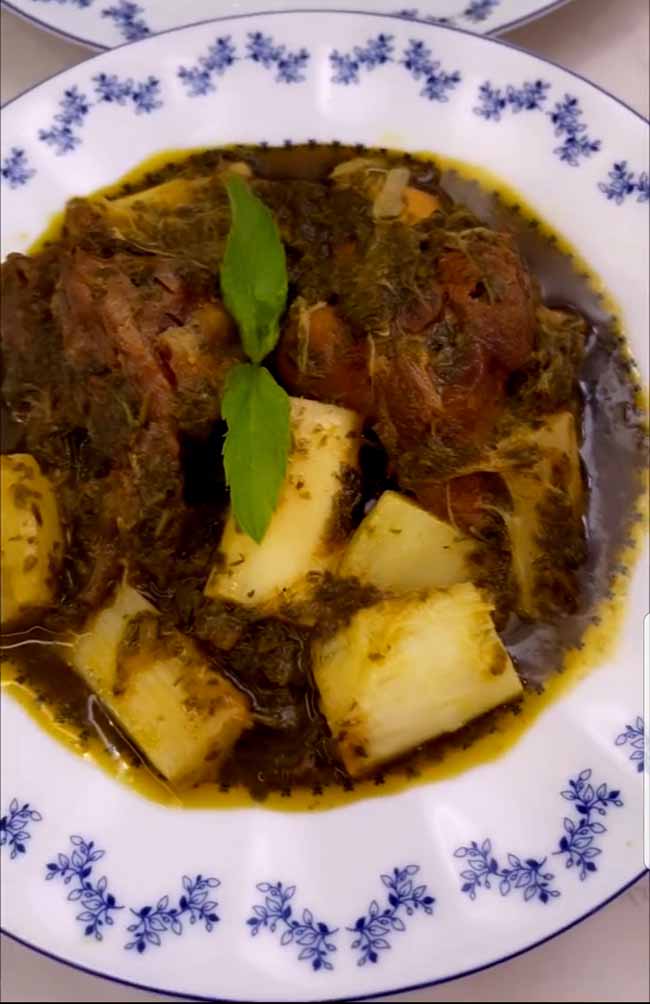
Once the rhubarb is just tender but still holds its shape, remove the stew from the heat.
Serve Khoresh Rivas hot with Persian steamed rice, Mast-o-Khiar, fresh Sabzi Khordan.
Chef Haghigh Personal Tip
In my experience, the key to a good Khoresh Rivas is adding the rhubarb only at the very end, after the meat is tender and the stew has reduced.
I lightly sauté the rhubarb for about a minute before adding it to the pot, which helps it keep its shape without becoming too soft. I also taste the stew before using Limoo Amani, because fresh rhubarb often provides enough natural sourness on its own.
What is Rivas(Rhubarb)?
Rhubarb is one of the mountain vegetables that is special for the spring season; it grows naturally and does not need watering.
Rhubarb has a sour, juicy, and very special stem that is used in rhubarb stew. Therefore, rhubarb stew has a very different and delicious taste compared to other stews. Rhubarb is used raw and cooked in Iranian cuisine.
Rhubarb is the fleshy, edible stalks (petioles) of species and hybrids (culinary rhubarb) of Rheum in the family Polygonaceae, which are cooked and used for food.[2] The plant is a herbaceous perennial that grows from short, thick rhizomes. Historically, different plants have been called “rhubarb” in English.
Notes :
- Add brewed saffron near the end of cooking for extra aroma and color.
- Rhubarb is naturally tart. If you prefer a milder flavor, use fewer dried limes or omit them entirely.
- Some cooks add 1 to 2 teaspoons of sugar to balance the tartness; this is optional.
- Tomato paste is optional. It adds color and a mild savory depth, but many traditional versions are made without it.
- You can use pomegranate paste or plum paste in small amounts for a different sweet-sour flavor profile.
- A small amount of grated garlic can be added with the onions if you enjoy its flavor.
- Chicken or turkey can replace red meat. Use approximately 500 to 700 g (1.1 to 1.5 lb) of boneless chicken or turkey and reduce the simmering time accordingly.
- Add rhubarb only near the end of cooking. Overcooking will make it very soft and cause it to lose its shape.
- Use mint sparingly. Too much mint can overpower the stew and create bitterness.
- For a thicker stew, allow it to simmer uncovered for a few minutes at the end rather than adding extra water.
FAQ
1. How do you make Khoresh Rivas with minced meat?
To make this stew with minced meat, season ground meat with grated onion, turmeric, black pepper, and salt. Shape the mixture into small meatballs and fry them lightly. Prepare the herb and rhubarb stew as usual, then add the meatballs near the end and simmer gently until cooked through.
2. Where does Khoresh Rivas originate?
Khoresh Rivas is associated with several regions of Iran where rhubarb is available in spring, particularly Kermanshah, Kurdistan, and Mashhad. Recipes vary from one region and household to another.
3. Can I make this stew with chicken?
Yes. Boneless chicken pieces or turkey can be used instead of lamb or beef. Since chicken cooks faster, simmer it for less time and add the rhubarb only in the final minutes.
4. Should I use Limoo Amani in rhubarb stew?
Limoo Amani is optional. Because rhubarb is already naturally sour, use dried limes sparingly or leave them out if your rhubarb is particularly tart.
5. Why did my rhubarb fall apart in the stew?
Rhubarb becomes soft quickly when heated. To help it keep its shape, add it only during the last 5 to 10 minutes of cooking and avoid stirring the stew too vigorously.