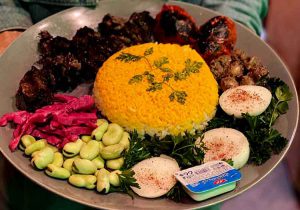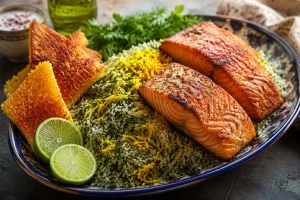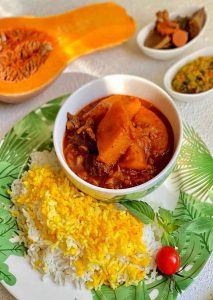


Ghafghazi Kebab is a traditional Iranian mixed skewer that alternates pieces of marinated beef or lamb with chicken breast and bell peppers. Similar to Bakhtiari kebab, this dish offers a contrast of flavors and textures on a single skewer, kept moist and aromatic with a saffron-butter baste.
Below is the step-by-step recipe to prepare Ghafghazi kebab on the grill, along with a quick stovetop pan method.
My experience table:
| My level of interest is from 1 to 10 | 8 |
| The ease of cooking | Medium |
| Served for | Dinner, Lunch |
| Suggest for | Daily meal, party meal |
| What is served with? | Lemon, Orange, onion |
Ingredient:

| Butter | 1.8 ounce |
| Onions | 2 pcs |
| Chicken breast | 0.9 pound |
| Bell peppers | 4 pcs |
| Veal | 0.9 pound |
| Yogurt | ½ glass |
| Olive oil or liquid oil | 2 tablespoons |
| Salt and black pepper | as needed |
| Brewed saffron | 1 tablespoon |
Instruction:
1. Prep the Meat and Chicken
Cut the beef (or lamb) and chicken breast into uniform, bite-sized cubes, similar to the size used for Joojeh Kabab. Ensure the chicken pieces are not cut too thin so they do not dry out during grilling. Wash the pieces and pat them dry with paper towels, then place them in a large mixing bowl.
2. Marinate the Meat
Add the sliced onions, olive oil, and plain yogurt to the bowl. The yogurt acts as a natural tenderizer for the meat fibers. Season with black pepper. Mix the ingredients thoroughly by hand until every piece of meat and chicken is evenly coated.
3. Add Saffron and Rest
Pour half of the brewed saffron over the mixture and toss again. Cover the bowl tightly with plastic wrap and place it in the refrigerator. Let the meat marinate for 4 to 6 hours to allow the flavors to penetrate.
Note: Do not add salt at this stage, as salt draws out moisture and can make the red meat tough when grilled.
4. Skewer the Kebab
Take the marinated meat out of the refrigerator. Cut the bell peppers into square pieces matching the size of the meat. Thread the ingredients onto flat metal skewers, alternating one piece of red meat, one piece of bell pepper, and one piece of chicken.
5. Grill and Baste
Prepare your charcoal grill or gas grill to medium-high heat. Place the skewers on the grill. Melt the butter and mix it with the remaining brewed saffron.
As the kebabs cook, brush this saffron-butter mixture onto both sides of the skewers to keep the meat juicy. Turn the skewers regularly to ensure even cooking. Grilling typically takes about 10 to 12 minutes. Add salt to the kebabs during the final 2 minutes of grilling.
6. Serve
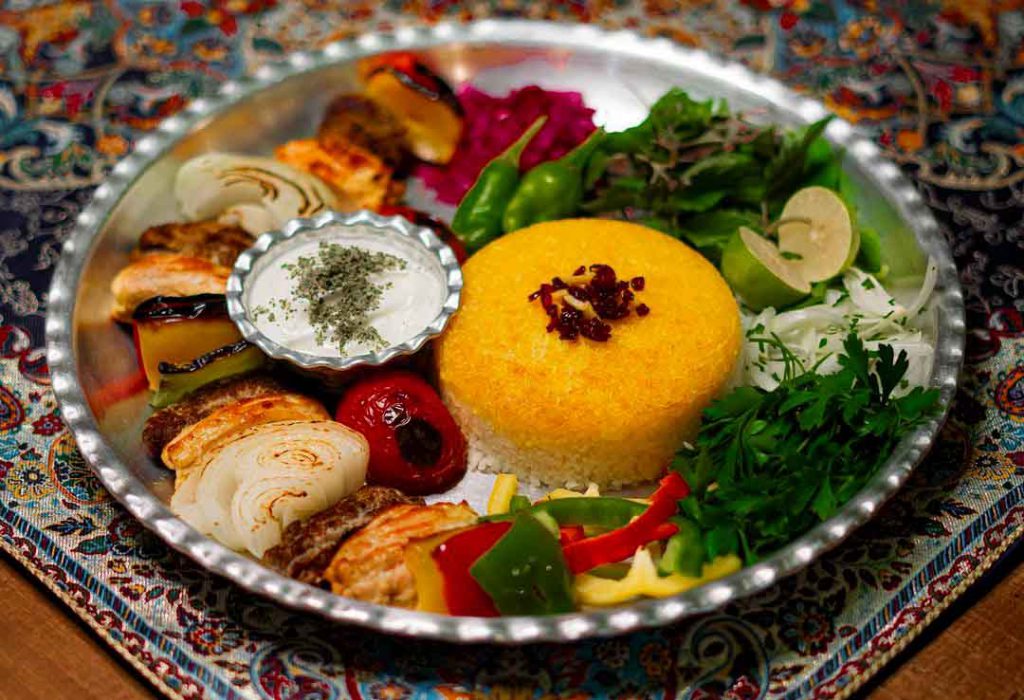
Slide the kebabs off the skewers. Serve hot alongside grilled tomatoes, green peppers, fresh herbs (Sabzi Khordan), and Persian doogh or fresh Sangak bread.
What is ghafghazi kebab?
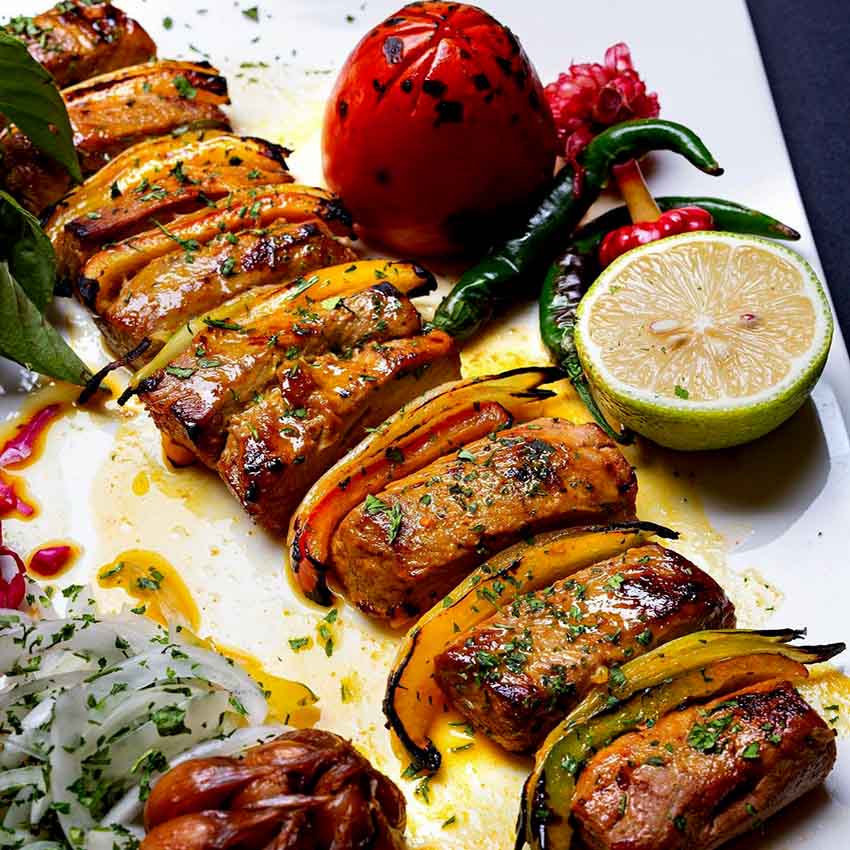
Ghafghazi kebab is named after the Caucasus region (Ghafghaz) but has been fully integrated into Iranian culinary culture. Unlike standard single-meat kebabs, Ghafghazi features a combination of red meat (usually veal or lamb fillet) and white poultry meat.
The addition of bell peppers between the meat pieces provides a sweet, smoky aroma that cuts through the richness of the meats.
Ghafghazi Kebab vs. Bakhtiari Kebab
While both are popular Iranian mixed kebabs, they differ in preparation:
- Bakhtiari Kebab: Traditionally alternates pieces of lamb fillet and chicken breast. In its classic version, it does not include vegetables like bell peppers on the skewer. The marinade typically uses onion juice, saffron, and sometimes soy sauce or lemon juice, without yogurt.
- Ghafghazi Kebab: Always includes bell peppers threaded between the meat and chicken pieces. The marinade traditionally incorporates yogurt or cream to tenderize the red meat, and the skewers are finished with a rich saffron-butter glaze.
Serving Suggestions for Iranian Rice (Chelo)
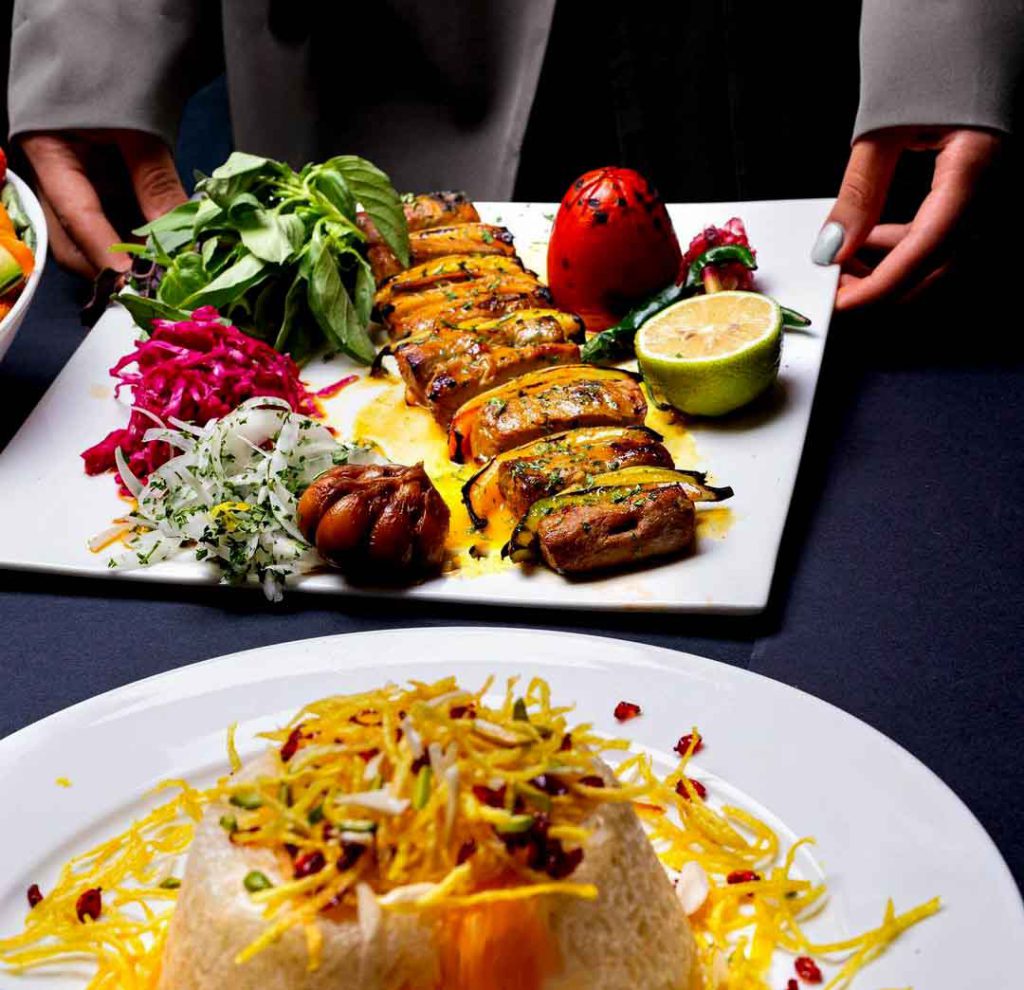
To serve Ghafghazi kebab restaurant-style, pair it with Persian steamed rice:
- Preparation: Rinse basmati rice several times until the water runs clear. Soak it in salted water for at least 2 to 3 hours.
- Cooking: Boil the rice in a large pot of salted water until the grains are tender on the outside but still firm in the middle (parboiled). Drain the rice in a colander.
- Steaming: Pour a little oil and water into the bottom of the pot (add flatbread or potato slices for Tahdig if desired). Mound the drained rice back into the pot, cover with a tight lid, and steam on low heat for 35 to 40 minutes.
Golden Tips :
- Salt Timing: Always add salt toward the end of the marinating process or during the final minutes of grilling. Salting red meat too early draws out its natural juices, resulting in a dry, tough texture.
- Onion Removal: When removing the meat from the marinade to skewer it, make sure no loose pieces of onion stick to the meat. These pieces will burn quickly over the coals, leaving a bitter taste.
- Uniform Cutting: Cut the chicken and meat to similar thicknesses so they reach safe internal temperatures at the same time.
- Basting: Do not skip the saffron-butter baste. Since chicken breast and veal fillets are lean cuts, the fat from the butter prevents them from drying out over the high heat of the grill.
FAQ
What is Ghafghazi kebab made of?
It is made of marinated veal fillet or lamb loin, chicken breast, and bell peppers, threaded alternately onto skewers and grilled over charcoal.
What is the difference between Ghafghazi and Bakhtiari kebab?
Ghafghazi kebab features bell peppers on the skewer and utilizes a yogurt-based marinade, whereas Bakhtiari kebab typically consists of only lamb and chicken without vegetables between the meat pieces.
How do you keep the meat tender?
Tenderizing is achieved by using full-fat yogurt in the marinade for at least 4 hours, keeping the grill heat at medium-high to seal in juices, and adding salt only at the very end of cooking.