

Persian breakfast is simple, fresh, and deeply satisfying. A traditional spread usually includes warm bread, cheese, butter, jam, honey, eggs, and hot tea. Alongside these, warm, nourishing dishes like adasi or halim are also very popular.
Unlike heavier Western breakfasts, Iranians usually lean toward bread, dairy, herbs, and tea. Some of these choices are light and quick, making them ideal for busy weekdays, while others are fuller and warmer, especially welcome on holidays or during the colder months.
In this guide, you will get to know the main elements of an authentic Persian breakfast, the most popular dishes, and the morning eating habits of people in Iran.
The Most Popular Foods on a Persian Breakfast Table
What do Iranians usually eat in the morning? Here are some of the most common choices:
1. Bread and cheese(Nan o Paneer), often with walnuts, cucumbers, or tomatoes
2. (Kareh Morabba)Butter with different kinds of jam
3. (Khameh Asal)Cream or clotted cream with honey
4. Tahini with grape or date syrup
5. Nimroo: Fried eggs, sunny-side up or crisped
7. Hot adasi

What Does a Traditional Persian Breakfast Include?
A traditional Persian breakfast is usually a combination of bread, dairy, something sweet, and freshly brewed tea. It can be as simple as bread and cheese with walnuts and fresh herbs, or it can become a complete, energizing meal with hot dishes like adasi, halim, or tomato omelette.
Iranians like to enjoy breakfast together and without rushing. Instead of one plated dish for each person, the table is usually filled with several different items so everyone can build their own bite the way they like it. That variety and freedom of choice are part of what makes Persian breakfast so warm and inviting.

Is a Cold Breakfast Better or a Hot One?
The Iranian breakfast table is usually divided into two main types, each with its own fans:
- Cold breakfasts: These include bread, cheese, butter, jam, cream, honey, walnuts, and fresh herbs. They are quick to prepare, perfect for busy weekdays, and found in almost every home.
- Hot breakfasts: Dishes like fried eggs, tomato omelette, adasi, halim, and even kale pache fall into this category. They are more often served on weekends, during road trips, or at traditional eateries and are especially comforting in autumn and winter.

Cold Iranian breakfast foods are among the simplest yet most nutritious morning meals in Persian cuisine.
These meals include various dairy products, such as cheese and butter, served with Iranian jams, honey, and walnuts.
Stay with me as I explain these meals to you in detail. In addition, I will explain the benefits of these breakfasts, which are very useful for a healthier diet.
Fresh Bread: The Backbone of Persian Breakfast
Without fresh bread, Persian breakfast would not feel complete. Sangak, Barbari, Lavash, and Taftoon are the staples of this meal. Buying hot bread early in the morning is a long-standing Iranian habit, and the bakery lines at the start of the day still show how important it is.
Each bread has its own purpose. Sesame-topped Sangak and thick Barbari are excellent with omelettes and fried eggs, while thinner Lavash and Taftoon are often preferred for bread-and-cheese bites with walnuts.

What Do Iranians Drink in the Morning?
Nothing really replaces a glass of freshly brewed, amber-colored tea on the breakfast table. Hot black Persian tea sweetened with sugar cubes, sugar, or rock candy is an essential part of the meal and helps shake off the sleepiness of the night.
Warm milk is also used, especially for children, and some people drink fresh juice as well, but tea remains the undisputed king of morning drinks in Iran.

Seven Traditional Iranian Breakfast Dishes
1. Nan o Pneer: Bread and Cheese
The simplest, quickest, and most nostalgic Iranian breakfast is the bread-and-cheese bite. It usually includes local cheese or Tabrizi white cheese served with walnuts, fresh herbs, cucumbers, or tomatoes to balance the salty, cool taste of the cheese.
This light and tasty combination, paired with a glass of sweet tea, provides enough energy to start a workday.

2. Kareh Morabba (Butter and jam)
Those who enjoy sweeter flavors often go for this option. Spreading butter on hot Barbari bread and adding a spoonful of sour cherry, carrot, quince, orange blossom, or citron jam creates an irresistible combination.

The most famous Iranian jams, which are very delicious when combined with butter, are Moraba Albaloo, Moraba Havij, strawberry jam, and Moraba Beh. Other common flavors include Rose and Carrot Jam.
3. Cream and Honey
This is a rich, almost royal breakfast that often appears on Thursday and Friday mornings. Local clotted cream or breakfast cream with natural honey on hot Sangak bread is an energizing treat and is loved by both children and adults.

4. Ardeh Shireh(Tahini and Syrup)
This traditional and highly nourishing combination is made by mixing sesame tahini with grape or date syrup. It has a warm quality and is an excellent choice for cold winter days, keeping the body full and warm for hours.

5. Nimroo(Fried Eggs)
The quickest hot breakfast you can make is fried eggs. Cooking eggs in local butter with a little salt and black pepper gives off an inviting aroma that opens up the appetite. This dish is usually eaten with Taftoon or Barbari bread.
6. Persian Tomato Omelette
The tomato omelette is one of the most beloved hot breakfasts in Iran. The secret to a good omelette is to properly fry tomato paste or grated tomatoes in plenty of oil before adding the eggs. It is usually served in small metal pans with onion, fresh herbs, and hot Barbari bread.

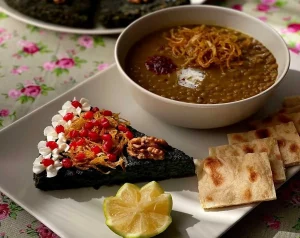
7. Adasi
A bowl of hot adasi with a little shahresh, lemon juice, and olive oil makes for a very healthy, nourishing breakfast rich in iron. This thick and flavorful dish is especially comforting on rainy or cold mornings.

Other Iranian Breakfast Foods You Should Know
Besides the main staples, other dishes hold a special place on Iranian breakfast tables. Halim is one of them — a thick blend of wheat and meat that is usually served in cold weather and has many devoted fans. Fereni is a light, delicate pudding made with milk and rice flour, typically enjoyed warm.
In different cities across Iran, more traditional and heavier dishes may also appear at breakfast on weekends or at special gatherings.
Still, if you want to experience a typical everyday Iranian breakfast, the best choices are bread, cheese, tea, eggs, jam, clotted cream, and adasi.
What Makes Persian Breakfast Special?
The most important thing about Persian breakfast is the balance of flavors and the lack of heaviness. It usually consists of traditional bread, dairy, fresh herbs, tea, and a few simple side dishes. As a result, it feels light, fresh, and easy on the stomach, with very little processed food involved.
This way of eating reflects the spirit of Iranian hospitality and the importance of gathering as a family — where even a simple meal is arranged with care and variety.
What Is Served With a Persian Breakfast?
A complete Persian breakfast table usually includes:
- Traditional bread such as Sangak, Barbari, Lavash, or Taftoon
- Fresh herbs
- Walnuts
- Sliced cucumbers and tomatoes
- Brewed Iranian tea
- Honey, seasonal jams, or clotted cream
To create an authentic breakfast at home, you do not need to overcrowd the table. Bread and cheese with walnuts, hot bread, and sweet tea are enough to make a complete breakfast.
FAQ
What do people in Iran usually eat for breakfast?
The base of an everyday Iranian breakfast is fresh bread, cheese, butter, jam, honey, and tea. On weekends or for warmer meals, omelette, adasi, and halim are especially popular.
Is Iranian breakfast more sweet or savory?
It includes both. Bread and cheese, along with omelette, represent the savory side, while cream, honey, and different jams make up the sweet side.
What is the best bread for Persian breakfast?
Traditional breads like Sangak and Barbari are the best choices because of their texture and thickness. Thinner breads like Lavash and Taftoon are also commonly used.
What hot Iranian breakfast is the most popular?
Cafe-style tomato omelette, adasi with shahresh, and wheat halim are among the most popular hot breakfast dishes in Iran.